
IC Caprino

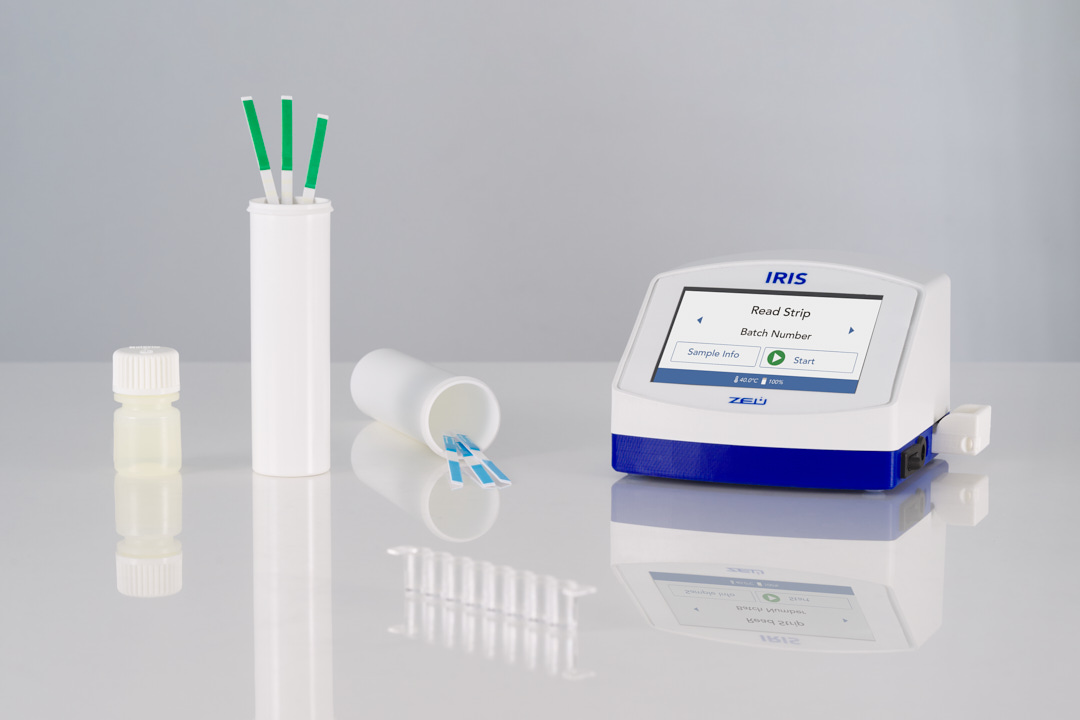
Detecta la presencia de leche de cabra en tan sólo unos minutos. Cualquier operario podrá analizar la leche en el lugar que sea necesario y los resultados estarán disponibles en tiempo real en la nube, en el móvil o en la planta.

¿Quieres comprobar que tu leche de oveja no está contaminada con leche de cabra?
¿Necesitas verificar que tu queso es puro de oveja?
¿Quieres verificar la mezcla de leche antes de que pueda modificar las características organolépticas de tu producto?


¿CÓMO TE AYUDA?

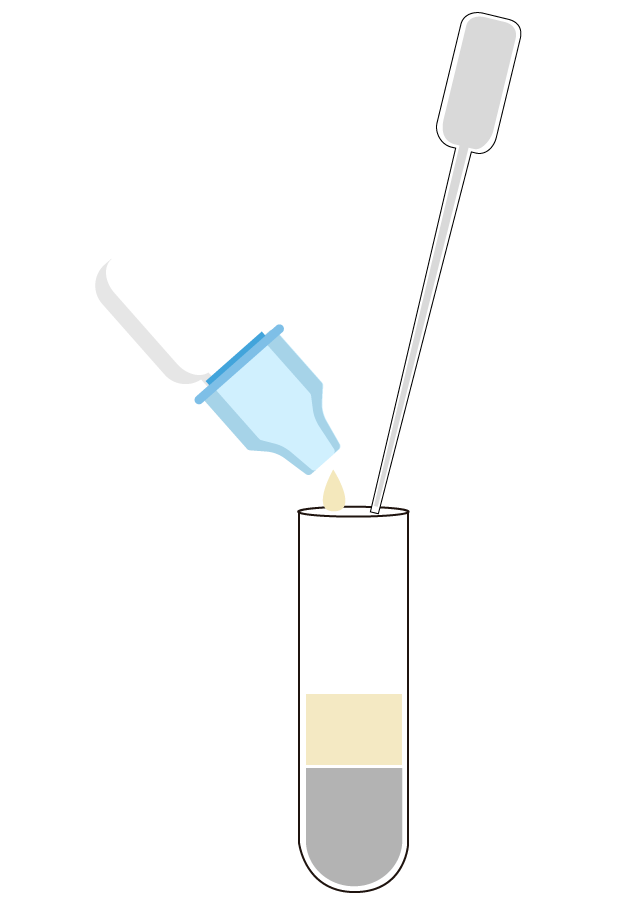
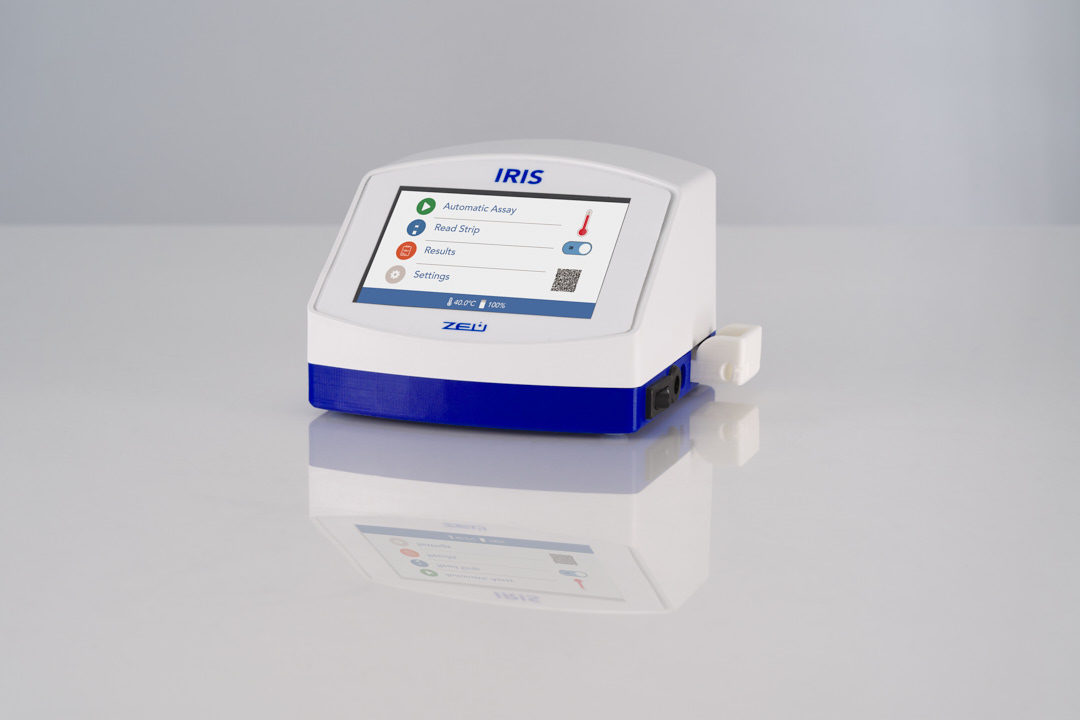
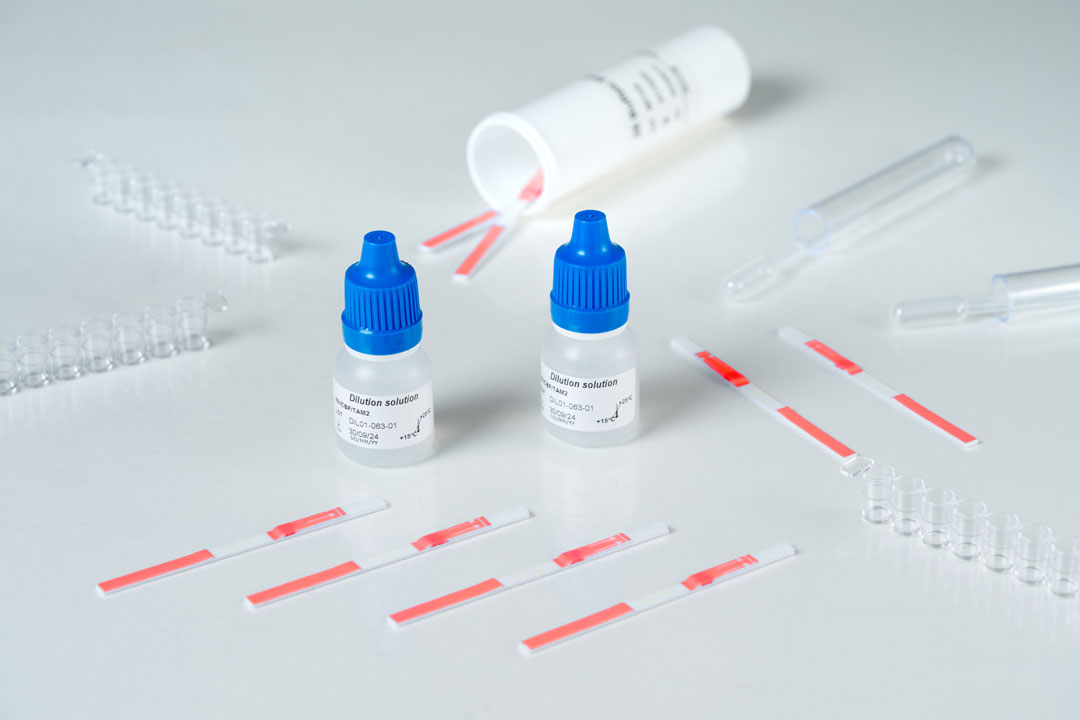
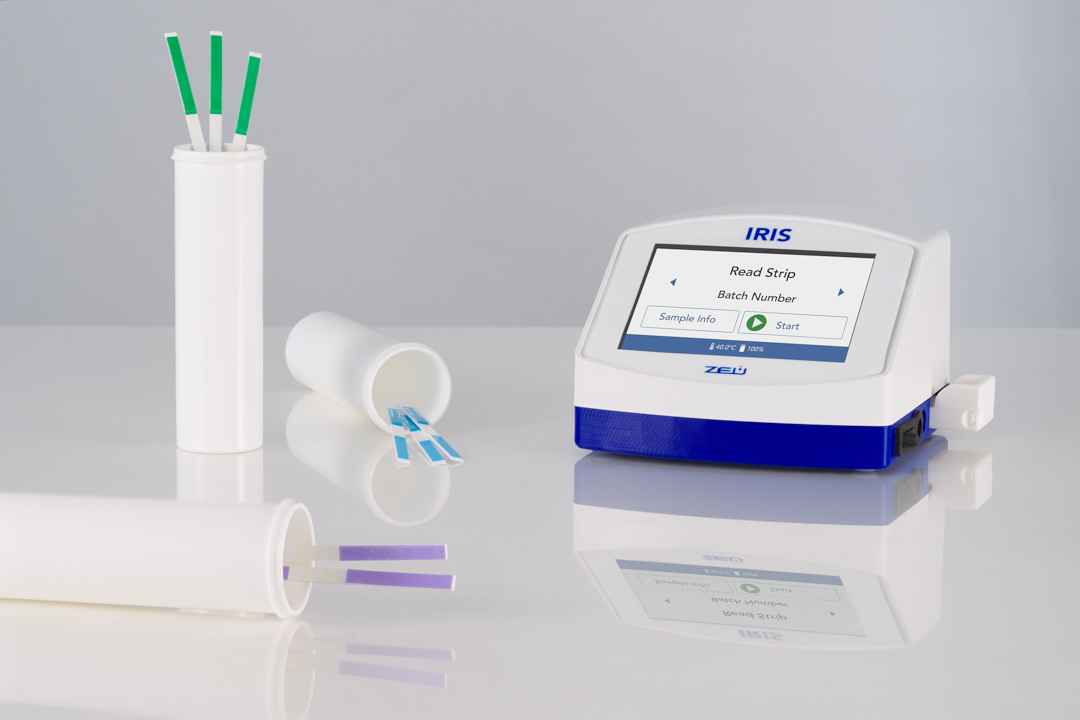
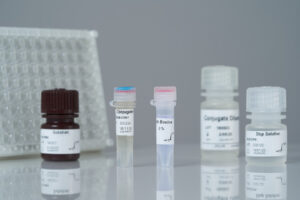
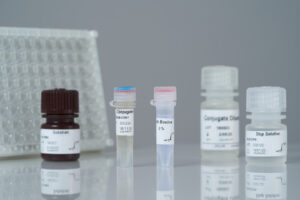
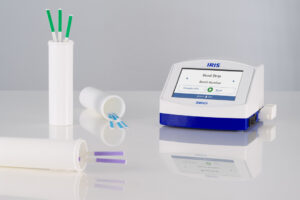
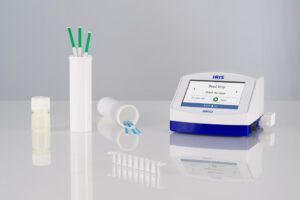
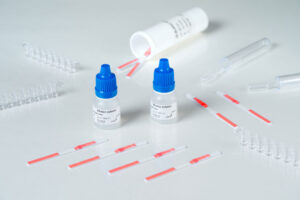
El test IC Caprino te ayuda a verificar la presencia de leche de cabra a la entrada de la fábrica y antes de la elaboración de tus productos. También puedes realizar el control durante la recogida de leche, en la granja o en el camión. Y verificar la limpieza correcta de cisternas e instalaciones para evitar contaminaciones cruzadas. Solo hay que mezclar una gota de leche con unas gotas de la solución de análisis e introducir la tira reactiva. Gracias a la integración del test IC en la plataforma Test4all podrás leer la tira automáticamente, recibir y almacenar los resultados en tu móvil o tablet en tiempo real y asegurar su trazabilidad total.


MATRIZ

LECHE CRUDA

QUESO

SUERO LECHE

YOGUR

LECHE PASTEURIZADA

APLICACIONES Y USUARIOS

TANQUE

CAMIÓN

PLANTA

PROCEDIMIENTO DE ENSAYO

IC Caprino

1. Mezclar:
Muestra y solución.

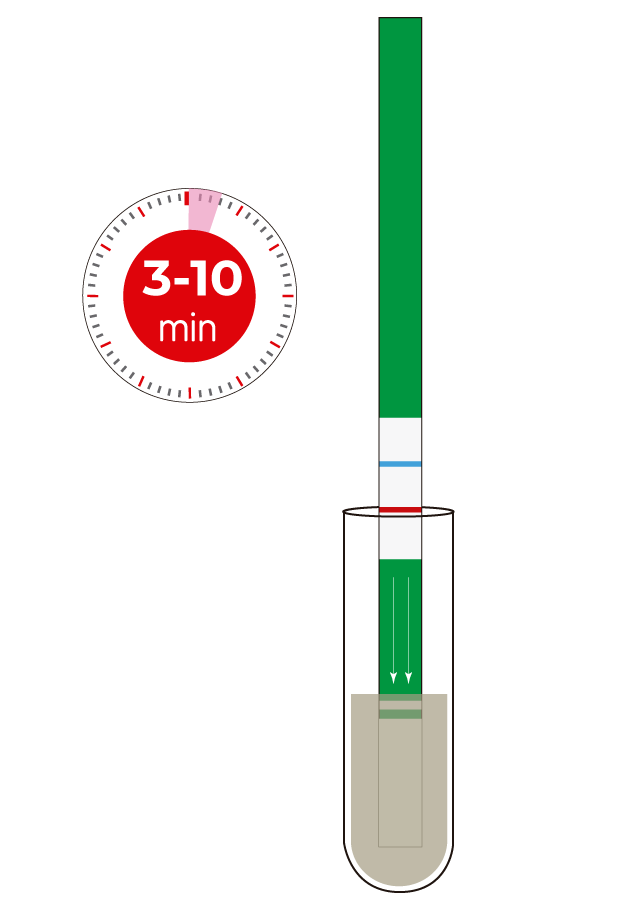
2. Esperar:
De 3 a 10 minutos.

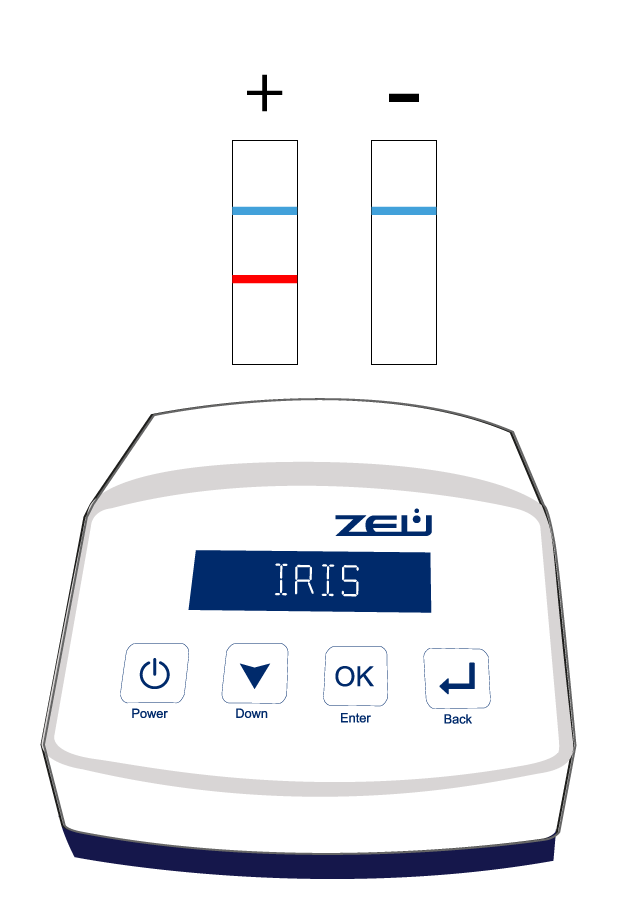
3. Resultados:
Visual (positivo & negativo o cualitativo) Lector IRIS (lectura objetiva)

PRINCIPIO DEL TEST

Test rápido inmunocromatográfico basado en la detección de inmunoglobulinas G (IgG) caprinas mediante anticuerpos específicos.


DATOS TÉCNICOS

Rango de detección: 0,25% hasta el 100%
Límite de detección: 0,25 %
Tiempo de ensayo: 3-10 minutos.
Lectura objetiva: Lector IRIS o lectura visual.

Validaciones:

Validación interna siguiendo las recomendaciones de la AOAC:
Appendix F: Guidelines for Standard Method Performance Requirements. Official Methods of Analysis (2016), AOAC INTERNATIONAL, Rockville, MD, USA (www.eoma.aoac.org)
Appendix N: ISPAM Guidelines for Validation of Qualitative Binary Chemistry Methods. AOAC (2013) (www.eoma.aoac.org) Wehling P, LaBudde RA, Brunelle SL, Nelson MT, 2011. Probability of Detection (POD) as a statistical model for the validation of qualitative methods. J AOAC Int 2011, 94:335-347.

Productos relacionados

Artículos relacionados

IC Caprino

Detects the presence of goat’s milk in just a few minutes. Any operator will be able to analyse milk wherever it is necessary, and the results will be available in real time, uploaded on to the cloud, a mobile device or on location.


Want to check that your sheep’s milk isn’t contaminated with goat’s milk?
Need to verify that your cheese is pure sheep cheese?
Do you want to check the milk mixture before it will modify the organoleptic characteristics of your product?


[button size=»small» icon=»fa-phone» target=»_self» hover_type=»default» text_align=»center» text=»CONTACT US» background_color=»#1e73be» border_color=»#1e73be» hover_background_color=»#fc634a» hover_border_color=»#fc634a» link=»#seccion-contacto»]
[button size=»small» icon=»fa-download» target=»_self» hover_type=»default» text_align=»center» text=»TECHNICAL SHEET» hover_background_color=»#fc634a» hover_border_color=»#fc634a» background_color=»#1e73be» border_color=»#1e73be» link=»https://www.zeulab.com/en/landing-ic/»]

HOW DOES IT HELP YOU?


The IC Caprino test helps you to easily detect the presence of goat’s milk in sheep’s milk upon arrival at the plant or before the production of your products. You can also carry out checks during milk collection, on the farm or in the truck.
Check the correct cleanliness of tanks and installations to avoid cross-contamination. Just mix a drop of milk with a few drops of the analysis solution and dip the test strip. Thanks to the integration of the IC test on the Test4all platform you will be able to read the strip automatically, receive and store the results on your mobile or tablet in real time and ensure its full traceability.

MATRIX
[icon_text box_type=»normal» icon_type=»normal» icon_position=»top» icon_size=»fa-2x» use_custom_icon_size=»no» title_tag=»h6″ separator=»no» title=»RAW MILK» image=»2470″]
[icon_text box_type=»normal» icon_type=»normal» icon_position=»top» icon_size=»fa-2x» use_custom_icon_size=»no» title_tag=»h6″ separator=»no» image=»2478″ title=»CHEESE»]
[icon_text box_type=»normal» icon_type=»normal» icon_position=»top» icon_size=»fa-2x» use_custom_icon_size=»no» title_tag=»h6″ separator=»no» image=»2512″ title=»MILK SERUM»]
[icon_text box_type=»normal» icon_type=»normal» icon_position=»top» icon_size=»fa-2x» use_custom_icon_size=»no» title_tag=»h6″ separator=»no» image=»2513″ title=»YOGHURT»]
[icon_text box_type=»normal» icon_type=»normal» icon_position=»top» icon_size=»fa-2x» use_custom_icon_size=»no» title_tag=»h6″ separator=»no» image=»2477″ title=»PASTEURIZED MILK»]
APPLICATIONS AND USERS
[icon_text box_type=»normal» icon_type=»normal» icon_position=»top» icon_size=»fa-2x» use_custom_icon_size=»no» title_tag=»h6″ separator=»no» title=»TANK» image=»2471″]
[icon_text box_type=»normal» icon_type=»normal» icon_position=»top» icon_size=»fa-2x» use_custom_icon_size=»no» title_tag=»h6″ separator=»no» title=»MILK TRUCK» image=»2473″]
[icon_text box_type=»normal» icon_type=»normal» icon_position=»top» icon_size=»fa-2x» use_custom_icon_size=»no» title_tag=»h6″ separator=»no» title=»PLANT» image=»2474″]

ASSAY PROCEDURE

[qode_elements_holder number_of_columns=»two_columns» columns_proportion=»25_75″][qode_elements_holder_item advanced_animations=»no» item_padding=»0px 15px 0px 0px» item_padding_1280_1440=»0px 15px 0px 0px» item_padding_1024_1280=»0px 15px 0px 0px» item_padding_768_1024=»0px 15px 0px 0px» item_padding_600_768=»0px 0px 15px 0px» item_padding_480_600=»0px 0px 15px 0px» item_padding_480=»0px 0px 15px 0px»][qode_video_box video_link=»https://www.youtube.com/watch?v=h5NPzXShp_A» video_image=»5097″]

IC Caprino

[/qode_elements_holder_item][qode_elements_holder_item advanced_animations=»no» background_color=»#f5f6f6″ item_padding=»10px 20px 10px 15px» item_padding_1280_1440=»0px 0px 0px 0px» item_padding_1024_1280=»0px 0px 0px 0px» item_padding_768_1024=»0px 0px 0px 0px»]

1. Mixt:

Sample and Dilution solution.

2. Wait:

From 3 to 10 min.

3. Results:

Visual (positive & negative or qualitative) IRIS reader (quantitative)

[/qode_elements_holder_item][/qode_elements_holder]

TEST PRINCIPLE

Rapid immunochromatographic test based on the detection of caprine (IgG) immunoglobulins G by specific antibodies.

TECHNICAL DATA

  • Range of detection: 0,25 %
  • Limit of detection: from 0,25% up to 100%
  • Assay time: 3-10 minutes.
  • Objective reading: Visual and objective reading with the IRIS reader.


Validations:

Internal validation following the AOAC guidelines:
Appendix F: Guidelines for Standard Method Performance Requirements. Official Methods of Analysis (2016), AOAC INTERNATIONAL, Rockville, MD, USA (www.eoma.aoac.org)
Appendix N: ISPAM Guidelines for Validation of Qualitative Binary Chemistry Methods. AOAC (2013) (www.eoma.aoac.org) Wehling P, LaBudde RA, Brunelle SL, Nelson MT, 2011. Probability of Detection (POD) as a statistical model for the validation of qualitative methods. J AOAC Int 2011, 94:335-347.

Related articles

[latest_post type=»boxes» number_of_colums=»4″ number_of_rows=»1″ text_from_edge=»yes» order_by=»date» order=»DESC» title_tag=»h4″ display_category=»0″ display_time=»1″ display_comments=»0″ display_like=»0″ display_share=»0″ text_length=»0″ category=»adulteraciones»]
Scroll al inicio