Conferences & Events

Conferences & Events, RSC

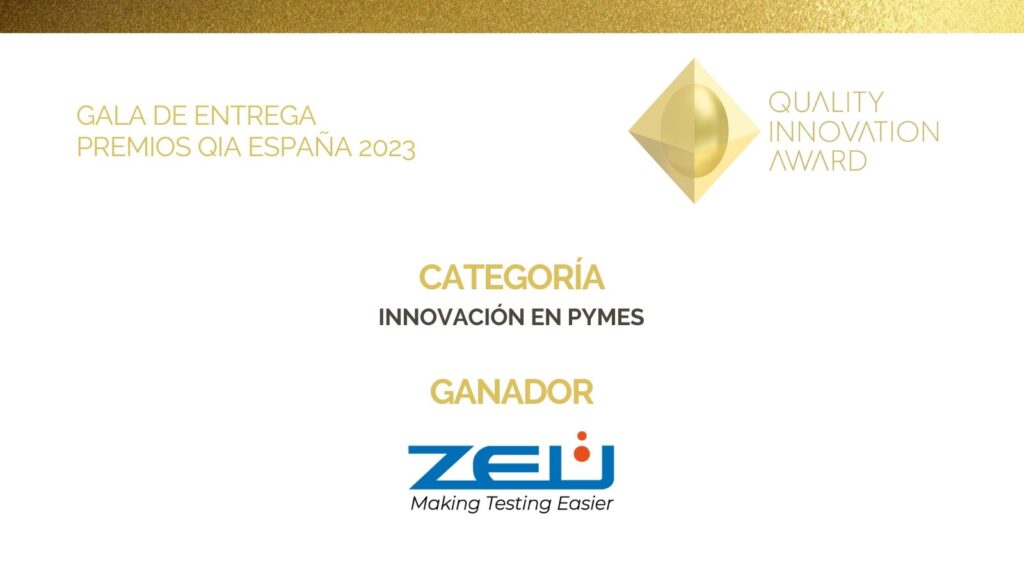
ZEULAB receives QIA award in the SME Innovation Category

We are pleased to inform you that ZEULAB, S.L. has been awarded in the QIA (Quality Innovation Award) where we were awarded in the SME category for our innovation with our Test4all system. An analysis system for farmers and industry to carry out a control of antibiotics in milk automatically and easily through the use of a portable device that shares and notifies the results in real time. The QIA23 Awards gala was held in Madrid for the fifth time in its national phase. The award-winning innovations were evaluated by experts convened by the Association of Centres for the Promotion of Excellence, made up of public and private organisations from 12 autonomous communities. Now it is time to compete in the international phase to be held in 2024 in China. We at Zeulab are very happy to have received this recognition. It endorses the work we are doing.   Translated with DeepL.com
Conferences & Events

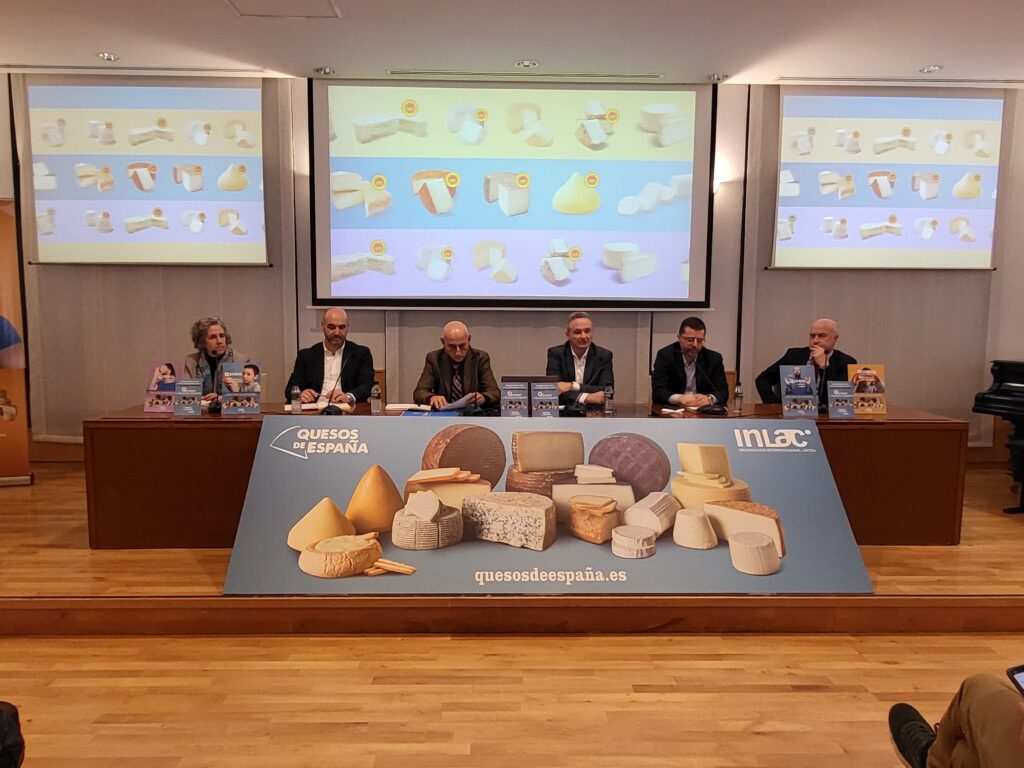
ZEULAB, InLac and CSIC present in Madrid the first revolutionary method to quantify the milk of different species contained in blended cheeses.

The Interprofessional Dairy Organisation (InLac), Zeulab and the National Biotechnology Centre of the Spanish National Research Council (CSIC) have presented today in Madrid the results of the ambitious R&D&I project that has allowed the development of a technique for quantifying milk from different species in mixed cheeses that can be applied by analysis laboratories. The method is revolutionary, given that the techniques available until now were of a detection nature, allowing only the absence or presence of cow's, sheep's or goat's milk to be determined, but without being able to precisely quantify the percentage of each of them. Inlac has promoted this innovative R&D&I project with the support of Zeulab, the National Biotechnology Centre of the CSIC, Laboratorios Arroyo, the companies Queserías Entrepinares, Grupo Lactalis, Central Quesera Montesinos, Reny Picot, Grupo TGT and MAPA. During today's presentation, a first opening session was attended by the managing director of InLac, Nuria María Arribas; the deputy director of the National Biotechnology Centre, Ana Cuenda and the deputy director general of Quality Control and Agri-Food Laboratories of the MAPA, Javier Maté Caballero. Meanwhile, the presentation of the method for quantifying milk from different species in mixed cheeses was given by the director of Zeulab, Pedro Razquin, and his team. Finally, José Carrión (Central Quesera Montesinos), Óscar Esteban (Queserías Entrepinares), Ignacio Bernáez (Lactalis Group), Gema Barceló (TGT Group) and Manuel Viaño (Reny Picot) took part in a round table discussion. "This PRM targeted proteomics technique has a high specificity, high sensitivity, a wide dynamic range of detection and is independent of the maturity stage of the cheese sample", explained Zeulab's director, Pedro Razquin. As a result, "it is able to determine, in terms of protein, the amount of milk of each species in the cheese samples. The results of the validation, carried out in accordance with the guidelines of the Association of Official Analytical Collaboration (AOAC), demonstrated the performance, robustness and reliability of the method for the analysis of Iberian-type cheeses," added Razquin. Currently, the method is being consolidated by analysing other types of cheeses and a larger number of commercial Iberian-type cheeses. "Cheeses made from a mixture of milk from different species are mainly produced in Mediterranean countries such as Spain, and many of them are protected by designations of origin or geographical indications. In fact, 40% of the cheese produced in our country is a blend," explained InLac's managing director, Nuria María Arribas, during her speech. In the future, manufacturers will have a powerful weapon," she said, "to be able to certify blended cheeses and enhance their value and prestige in national and international markets. The analytical technique used is a targeted proteomics method called PRM (Parallel Reaction Monitoring) and employs liquid chromatography coupled to Orbitrap mass spectrometry equipment (LC-Q-Orbitrap-MS/MS). This technique makes it possible to identify and quantify the abundance, either relative or absolute, of proteins present in a complex sample by selectively monitoring fragments of these proteins or peptides. When these peptides are protein and/or species specific, they are called proteotypic and can be considered the "fingerprint" of the milk of each species used. Therefore, their detection certifies the presence of the milk corresponding to each of the species in the composition of the blended cheese analysed. It is a technique with high specificity, high sensitivity and a high dynamic range of detection. Moreover, it is independent of the state of the sample, being able to work with denatured proteins. Translated with DeepL.com

Conferences & Events

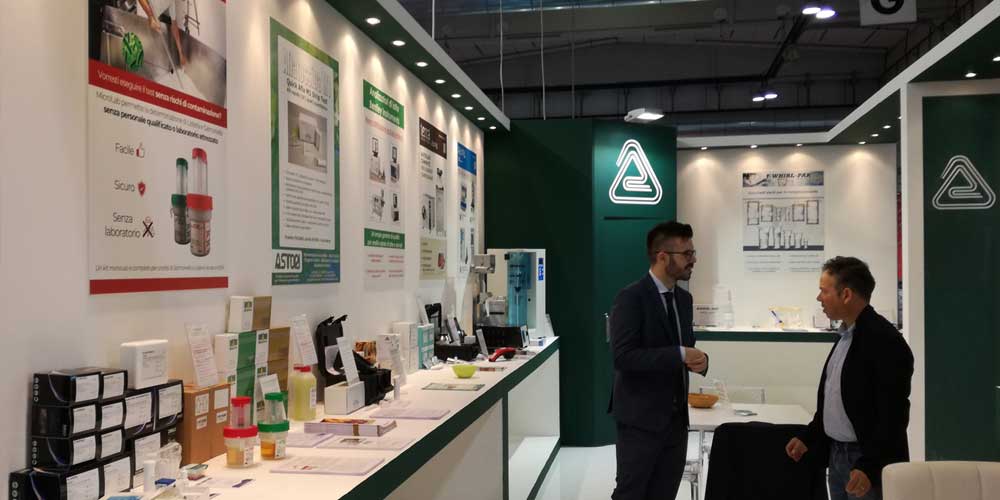
Astori Tecnica, Zeulab’s distributor in Italy, present at CIBUS TEC

CIBUS TEC is among the most innovative food technology exhibitions and a complete showcase of the best solutions from ingredients to processing technologies, from packaging to logistics for all segments of the food and beverage industry. The Italian distributor of Zeulab, ASTORI TECNICA, has been present at CIBUS TEC fair sharing among the 35,000 professionals the new solution for pathogens testing, MicroLab. The new MicroLab device allows to detect the presence of Salmonella or Listeria in food samples in a simple and safe way. IC products for the identification of species in milk were also exhibited at the fair. The IC strip kits are qualitative tests, based on specific IgG, for milk species identification. They are on-site tests easily used by any operator without additional equipment. If you need more information about our Italian distributor and its services click here.

Antibiotic Residues, Conferences & Events

Zeulab has been granted with the TESTACOS project

The project will take place between 2018 and 2020. One of the project’s targets is developing a new test for antibiotics detection in live animals. Zeulab has more than 20 years of experience in vitro diagnostic tests for antibiotics detection in food. The biotechnological company has more than 20 tests for detection of antibiotics in food and a novel system, E-READER, which works with microbial tests (Eclipse or Explorer), controls assay time and reads the results in an automated way. The project was presented the 24th of January in the University of Zaragoza (UNIZAR) with all the partners. The project TESTACOS will help to increase the meat quality in France and Spain. During the three years’ project more than 4000 samples will be analyzed looking for antibiotics. Besides, new antibiotic tests for live animals will be developed to minimise contaminated products. The study will be carried out in the POCTEFA region (north-east of Spain and south of France). The project partners are: Agroalimentary Institute of Aragon (IA2-UNIZAR), the University of La Rioja, the University of Perpignan, the National Veterinary School of Toulouse, Public Health Laboratory of Bilbao, Biosentec (Toulouse) and Zeulab (Zaragoza). Read the complete news here.
Conferences & Events

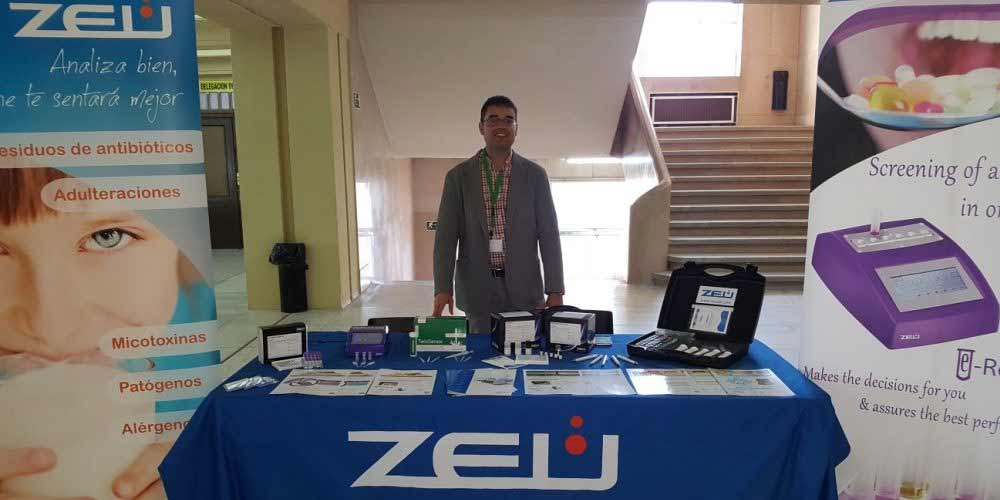
Zeulab takes part in the IV Food Quality & Safety International Congress Acofesal

The overall level of the presentations and round tables, as well as the participation, was elevated, demonstrating the great interest aroused by the proposed subjects. The presence of representatives of the food industry, distribution, catering industry, research centers, public and private laboratories, as well as certification entities, consulting companies and consumer associations, shows once again that food safety is a very topical issue. The Congress opened on the 14th with an initial conference focused on trends and global challenges in food production. Topics related to animal welfare, quality, vegetable certificationand antibiotic resistance requirements generated a great interest throughout the morning of the 15th. Sessions related to new technologies applied to food hygiene, quality laboratories and certification were also developed during that morning. The afternoon session was focused on allergen management and generated an interesting and active subsequent discussion. In relation to this issue, our colleagues from the Zeulab technical department, Luis Mata and Patricia Galán, presented two poster about allergen detection on work surfaces and allergens incidence in kitchenware in school canteens. Day 16 began with three sessions related to food analytical control and certification to ensure the quality and R&D&I in food security. During the round table regarding food analytical control, José A. Valares, Key Account Manager of ZEULAB, presented the paper «control of antibiotics residues throughout the food chain». This paper approached the attendees to the known concept «from the farm to the table» which implies that all operators in the food chain, from primary producer to processing industry or distribution, are responsible for ensuring the food safety. It is therefore necessary to put analytical tools of self-control within the reach of all. In this context, ZEULAB has developed “e-Reader”, a simple method for antibiotics detection in food. Finally, the Congress was closed with a general round table involving all attendees focused on online trade food.

Scroll al inicio