Antibiotic Residues Dairy

Antibiotic Residues Dairy

Benefits for dairies of DUPLEX&IRIS compared to old generation tests

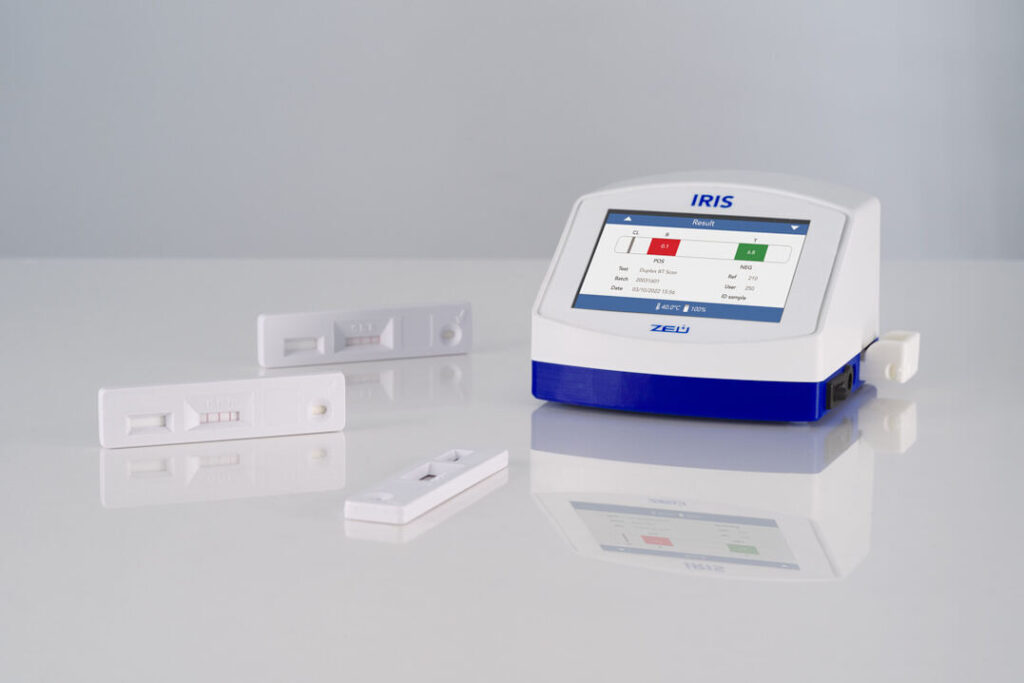
A dairy industry can receive up to 40 tanks of milk per day. The control of antibiotics at the reception of the plant is a very critical moment, both due to the economic consequences and the management of contaminated milk. Moreover, the stress that can generate in responsible personnel (operators, quality manager, plant manager, etc.) who must make important decisions should not be underestimated. When a tank gives a positive result, the alarms go off, the truck is blocked and a rapid process of evaluating the information begins to verify that: The operator has not made an error when carrying out the test. The visual interpretation of the results is correct. Reagents or test equipment have not failed.   When using older generation tests the risks may be due to: The user has not properly resuspended the lyophilized pink reagent with the pipette. The user has not well controlled the 2 assay steps of 3 + 3 minutes, placing the test strip at the wrong time. The visual interpretation was not clear. The reagents and materials were difficult to handle due to their small dimensions.   Duplex&Iris solves all these problems: The test is ready to use, with an easy-to-use and one-step format. The test is automatic, it is not dependent on the qualification of the operator. The interpretation is objective, numerical and independent of the person. The results are shared in real time for evaluation by quality personnel.   The implementation of the new generation Duplex&Iris tests provides immediate and important benefits: The credibility of the quality director will not be questioned because errors in analysis are minimized. Staff stress due to the uncertainty about the reliability of the results will be considerably reduced. The analysis information will be clear and easy to verify.   The cheapest price is not always the most cost-effective and beneficial solution. Minimizing daily problems due to errors can represent a great benefit and peace of mind for all the staff involved. Do you need information about the product? Request the leaflets, product instructions and/or Power Point presentations to marketing@zeulab.iatic.es [button target="_self" hover_type="default" font_weight="400" text_align="center" text="Discover Zeulab's complete line for antibiotic control in the dairy sector" link="https://www.zeulab.iatic.es/en/milk-testing-antibiotics-dairy-sector/"] Leer más Residuos antibióticos para el sector lácteo BT Scan Strip & IRIS Leer más Leer más Residuos antibióticos para el sector lácteo Duplex BT Scan & IRIS Leer más

Antibiotic Residues Dairy

Understanding qualitative test results leads to a simple interpretation of the results

Some food chain analyses are performed with qualitative or binary response tests; that is, they provide a positive or negative (compliant or non-compliant) result for a sample, with respect to its limit of detection. Some well -known examples are microbial inhibition tests (Eclipse) or rapid tests (e.g. Proteon, Duplex BT Scan or IC). Despite the fact that the interpretation of these tests is simple (+/-), sometimes the analyst may find situations that are more difficult to understand. This is the case with samples that contain the analyte at a concentration close to the test detection limit, when the result may be positive or negative if the test is repeated several times. This is not a reflection on the performance of the test or the quality of the product, but rather due to a universal principle on which multiple events in nature are based (e.g. chemical reactions, freezing and thawing processes, the growth of organisms or the evolution of a pandemic or neuronal transmission). All of these processes, as well as the response of qualitative tests, follow a sigmoidal or “S –shaped” curve model. Understanding this curve helps us to easily understand the response of the tests. The example below is the response of the Eclipse Farm 4G test for detecting antibiotic residues in milk. This is equally valid for rapid tests, with only the analyte dose on the x-axis having to be changed in the range of its detection limit. Figure: Graph of the Eclipse test response (positive/negative) with increasing doses of amoxicillin in a milk sample being analysed. The ordinate (y) axis represents the % positive results obtained in the milk sample at a given amoxicillin concentration, represented along the abscissa (x) axis. After looking at the graph, the following can be concluded: All samples with an amoxicillin concentration < 0.5 ppb will give a negative result in all replicates. All samples with an amoxicillin concentration > 4 ppb will give a positive result in all replicates. For samples in the narrow concentration range of 0.5-4 ppb, the response depends on the dose: 15% of samples with 1 ppb of amoxicillin will test positive. 50% of samples with 2 ppb of amoxicillin will test positive. 95% of samples with 3 ppb of amoxicillin will test positive. This S-shaped dose-response curve is common in all qualitative trials. Understanding this behaviour, it can be seen why: High analyte concentrations (in this example, of amoxicillin) will always give a very clear positive result. Very low analyte concentrations (including its absence, i.e. at zero concentration) will always give a very clear negative result. At concentrations around the limit of detection (in this example between 0.5 and 4 ppb of amoxicillin) either positive or negative results can be obtained, depending on the analyte dose or concentration. Another important point is to know how a test detection limit is established. International reference organisations (e.g. AOAC, EU-CRL, IDF) have established that the detection limit is the lowest concentration of the analyte capable of being detected 95% of the time, i.e. with 95% of test repetitions. Looking at the graph and considering the definition of a test detection limit, it can be seen that: The detection limit is designed to give a very high level of security or confidence (95% of the time, i.e. almost all the time). For example, after testing 20 samples at the test detection limit (3 ppb Amoxicillin in the Eclipse test), 19 of them will give a positive result; with 1 sample being negative. Analyte values close to the detection limit in its lower range may give either positive or negative results in proportions depending on the analyte dose. For example, samples with 2 ppb will give 50% positive and 50% negative results. Therefore, from now on, if you analyse a sample several times and all duplicates do NOT give either a positive or negative result, there is a high probability the sample contains the analyte at a concentration at, or just below, the limit of detection. [button target="_self" hover_type="default" font_weight="400" text="Leer este artículo en español" link="https://www.zeulab.iatic.es/centro-de-conocimiento/modelo-respuesta-test-cualitativo-interpretaremos-todos-sus-resultados/"] Leer más Residuos antibióticos para el sector lácteo Eclipse FARM4G & COMET4 Leer más Leer más Residuos antibióticos para el sector lácteo Duplex BT Scan & IRIS Leer más Leer más Residuos antibióticos para el sector lácteo Eclipse4G & COMET32 Leer más [button target="_self" hover_type="default" font_weight="400" text="Discover Zeulab's complete line for antibiotic control in the dairy sector" link="https://www.zeulab.iatic.es/en/sector-lacteo/"] Artículos relacionados: [latest_post type="boxes" number_of_colums="4" number_of_rows="1" text_from_edge="yes" order_by="date" order="DESC" title_tag="h4" display_category="0" display_time="1" display_comments="0" display_like="0" display_share="0" category="Residuos Antibióticos Lácteo" text_length="0"]
Antibiotic Residues Dairy

Eclipse Farm4G & Comet approved by the Belgium Federal Agency for the Safety of the Food Chain (AFSCA-FAVV)

La solución Eclipse Farm4G & Comet4 permite la detección automática de una amplia gama de antibióticos en la leche cruda de vaca. Los resultados se envían y comparten en tiempo real y están disponibles en la nube en cualquier momento. Eclipse4G & Comet4 cumple con los criterios de Bélgica para las pruebas microbiológicas para la detección de antibióticos (lista AFSCA-FAVV en el Anexo 4) y se puede utilizar para el autocontrol de los agricultores y para la confirmación de las lecherías y estaciones de control de la leche. Además, el sistema ha sido aprobado por los métodos de prueba de rendimiento (PTM) de la AOAC-RI (número de licencia PTM 022101) Eclipse Farm4G & Comet4 ayuda a los agricultores a realizar controles diarios de antibióticos, lo que reduce el tiempo necesario para el ensayo y evita errores de interpretación de resultados. Eclipse & COMET4 permite a cualquier usuario realizar el análisis, recibir y compartir los resultados en tiempo real desde cualquier lugar. [button target="_self" hover_type="default" font_weight="400" text="Read this article in english" link="https://www.zeulab.iatic.es/en/knowledge-center/eclipse-farm4g-comet-approved-by-the-belgium-federal-agency-for-the-safety-of-the-food-chain-afsca-favv/"] Leer más Residuos antibióticos para el sector lácteo Eclipse FARM4G & COMET4 Leer más Leer más Residuos antibióticos para el sector lácteo QuinoScan Leer más Leer más Residuos antibióticos para el sector lácteo Duplex BT Scan & IRIS Leer más [button target="_self" hover_type="default" font_weight="400" text="Discover Zeulab's complete line for antibiotic control in the dairy sector" link="https://www.zeulab.iatic.es/en/sector-lacteo/"]
Antibiotic Residues Dairy

Steps to follow when you find a positive antibiotics result on arrival at the plant or during milk collection

Daily milk collection on the different routes takes place throughout the day, even at dawn. This requires continuous management of the antibiotic residue testing and quick decisions based on the results upon arrival at the plant. Testing these residues on the farm by the driver can prevent contaminated milk from reaching the plant. This second option is being implemented by many industries. Although the probability of having a contaminated tank or cistern (positive test result) is very low, resolving it is not at all simple, with thousands of litres at stake. Such circumstances require a strict procedure to confirm the result and make decisions based upon it. The following procedure is recommended: Repeat the test to rule out human error or a technical artefact: Re-sample using a new bottle and pipette. Check the sample is representative. If taken from the surface, the high fat content can interfere with the result. Check the analyst is not performing antibiotic treatment which could contaminate the sample. Check the test has been performed according to the kit instructions. Make sure the test kit has been stored properly, is within its expiry date and the measuring equipment is not damaged. Whenever possible, perform a test with a negative control to check the test system is working properly. Check the result value. Analytical systems that provide numerical data offer an interpretation of the result. For example, you can find out if the result is close to the positive/negative limit or is perhaps a high positive. The action taken depends on whether the repeat test is positive or negative, as follows: Positive: The milk is probably contaminated with antibiotic residues. If possible, perform an assay with an alternative method before disposal; for example, an automated microbiological assay with Eclipse4G&Comet. You have to wait less than 3 hours. Negative: The first positive test result may be due to human error, a test artefact or because the sample was close to the positive/negative cut-off point. You should perform a third test to confirm this negative result. Additional information about the farmer, the route or its history, as well as external advice, can also provide valuable guidance: Check the previous records of the route, the analyst and the farmer. Having an online platform with direct access from any device can facilitate this process to assess the statistics. Rely on the support of experts in this analysis. Zeulab staff can guide and advise you on the interpretation and guidelines to follow. Technological developments have provided new analysis systems that help to guarantee good control and error minimisation. Advanced equipment, such as small portable automatic test devices, also provide information in real time and can be very important for minimising risks. Discover all the advantages of our new Test4all system. [button target="_self" hover_type="default" font_weight="400" text="Read this article in english" link="https://www.zeulab.iatic.es/en/knowledge-center/steps-to-follow-after-a-positive-antibiotics-result-on-arrival-at-the-plant-or-during-milk-collection/"] Leer más Residuos antibióticos para el sector lácteo Eclipse FARM4G & COMET4 Leer más Leer más Residuos antibióticos para el sector lácteo QuinoScan Leer más Leer más Residuos antibióticos para el sector lácteo Duplex BT Scan & IRIS Leer más [button target="_self" hover_type="default" font_weight="400" text="Discover Zeulab's complete line for antibiotic control in the dairy sector" link="https://www.zeulab.iatic.es/en/sector-lacteo/"]
Antibiotic Residues Dairy

Eclipse Farm 4G & COMET system receives AOAC approval (PTM 022101)

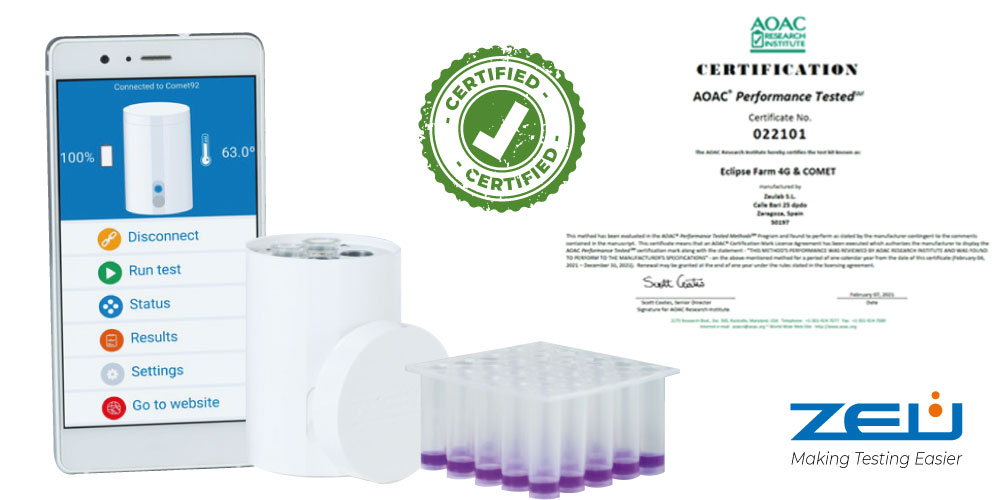
The solution integrated by Eclipse Farm 4G test and COMET device, both developed and manufactured by Zeulab, has been recently validated and certified by the AOAC-RI (Association Of Official Analytical Collaboration - Research Institute) to detect antibiotics in raw cow milk. The Eclipse Farm 4G test, used with COMET, has shown adequate sensitivity to detect most antibiotics used by the dairy industry in Europe at levels below the maximum residue limit established in European legislation in Regulation (EU) No. 37/2010. To assess the test sensitivity, both limits of detection (LoD) and detection capability (CCβ) were determined for several representative molecules of the main families of antimicrobials, such as penicillins, cephalosporins, tetracyclines, sulfonamides, macrolides and aminoglycosides. The false positive rate and the effect of potentially interfering substances, showed a great selectivity and specificity of the test. The effect of the milk composition on the test sensitivity was also evaluated, obtaining minimal deviations in the results, even with unusual amounts of fat, protein or somatic cells. In addition, the test was shown to be robust, consistent and stable throughout its shelf life. The independent laboratory that performed the validation assays, was ILVO (Flanders Research Institute for Agriculture, Fisheries and Food). This independent scientific research center of the Government of Flanders, in Belgium, is currently one of the most important reference laboratories in Europe for the analysis of veterinary residues in milk. In addition, ILVO verified that the Eclipse Farm 4G & COMET system meets the approval criteria established by the Federal Agency for the Safety of the Food Chain (FASFC) of Belgium. The Eclipse Farm 4G & COMET system has been designed to be used by anyone, without any specific training, because the test is very simple and the results are obtained automatically. The sensitivity of the test obtained in the validation is similar or superior to other tests in its category, making it a highly recommended test for all farmers, or the dairy industry in general, who want to have a high degree of safety and reliability in the quality of their milk. Eclipse Farm 4G & COMET is the first system on the market that allows to perform an antibiotic screening test automatically and in single mode, that is, without the need to analyze a negative control simultaneously. After adding a drop of milk into the test tube Comet will perform the test automatically in less than 2 and a half hours. The COMET device has four positions for simultaneous or individual analysis of 4 Eclipse Farm 4G tests. The device is compact and portable and handles all the assay steps: the incubation of the test at constant temperature, the end of the test at the exact moment, the result reading and the objective interpretation. In addition, the test is controlled from a smartphone or tablet with an App and allows you to receive and share the results in real time regardless where you are. The results are stored on the Test4all platform and can be set up so that the results are sent to your email or to other people. The certification process began in April 2020 and, in less than a year, all the validation, review and approval steps have been carried out in an agile and efficient way. From Zeulab we want to thank the staff of both AOAC-RI and ILVO, for their dedication and professionalism throughout the entire process, which have undoubtedly contributed to the success of the project. Leer más Antibiotic residues for the dairy sector Eclipse FARM-4G & COMET4 Leer más Leer más Antibiotic residues for the dairy sector QuinoScan Leer más Leer más Antibiotic residues for the dairy sector Rapid antibiotic test milk: Duplex BT Scan & IRIS Leer más [button target="_self" hover_type="default" font_weight="400" text="Discover Zeulab's complete line for antibiotic control in the dairy sector" link="https://www.zeulab.iatic.es/en/sector-lacteo/"]
Antibiotic Residues Dairy

QuinoScan: Rapid quinolone test in milk

Quinolones are a group of antimicrobial compounds widely used in human and veterinary therapeutics. However, due to the increasing resistance of bacteria to this family of molecules and their critical importance in human medicine, they have been included in category B for responsible and prudent use in animals. Thus, their use has to be restricted to reduce the risk to public health. However, there is a considerable group of medicines authorised in cattle that contain a quinolone family compound. They are surpassed only by the beta-lactam family (penicillin and cephalosporins) and tetracyclines. At ZEULAB, we have developed a very simple and rapid method to test for the presence of quinolones in milk, outside of a laboratory. QuinoScan is a rapid test in a single stage, with results in just 6 minutes, and the best sensitivity on the market for detecting all quinolone family compounds below their MRLs, including flumequine. This test was recently validated by MQD, Institut für Analytik, Hygiene und Produktqualität GmbH (Institute for analytics, hygiene and product quality) in Germany with the following results: Leer más Antibiotic residues for the dairy sector QuinoScan Leer más Leer más Antibiotic residues for the dairy sector BT Scan Strip & IRIS Leer más Leer más Antibiotic residues for the dairy sector Eclipse FARM-4G & COMET4 Leer más [button target="_self" hover_type="default" font_weight="400" text_align="center" text="Discover Zeulab's complete line for antibiotic control in the dairy sector" link="https://www.zeulab.iatic.es/en/sector-lacteo/"]
Antibiotic Residues Dairy

Quinolone testing methods in milk

Quinolones are a group of antimicrobial compounds widely used in human and veterinary therapeutics. However, due to the increase in bacteria resistant to this family of molecules and their critical importance in human medicine, they have been included in category B for responsible and prudent use in animals. This means that their use should be restricted to reduce the risk to public health, being considered only when there are no clinically effective antibiotics in categories C and D, and exclusively after an antimicrobial sensitivity test. When we consult authorised drug databases, we check for antibiotics authorised for use in cattle that contain a quinolone family compound in their composition. Although the use of quinolones is mainly directed at other treatments not related to mastitis, their transfer to milk is possible and should be controlled. Currently, the dairy sector in many European countries has a two-level control system for antibiotics in milk. Firstly, the Interprofessional Dairy laboratories carry out daily microbiological tests to control the quality of the milk from farms. These tests, like the Eclipse test, have a wide detection spectrum and are based on the inhibition of the bacterium Geobacillus stearothermophilus. Secondly, the industry performs a rapid test analysis before unloading in the plant with (e.g. Duplex BTScan) to detect antibiotics from the beta-lactam and tetracycline families. However, microbiological tests have a low sensitivity to quinolones, and do not reach the levels required by European legislation, while the rapid tests used in routine control are very selective and do not detect quinolone family compounds. Therefore, tests to detect quinolones in milk need to be introduced as part of the current screening system. The available methods and their properties are described below: Rapid tests, e.g. QuinoScan, are simple, fast, sensitive and therefore easily applied by the industry as part of the control routine when receiving milk. Microbiological tests, such as Equinox , are based on inhibiting the growth of Coli. Equinox works analogously to the method used for quinolone screening in official controls, but via a very simple procedure. These tests should be carried out in microbiology laboratories. ELISA tests are more laborious and methodologically complex, but are quantitative.   The following table summarises and compares the general performance of the 3 methods: Leer más Residuos antibióticos para el sector lácteo Eclipse FARM4G & COMET4 Leer más Leer más Residuos antibióticos para el sector lácteo QuinoScan Leer más Leer más Residuos antibióticos para el sector lácteo Duplex BT Scan & IRIS Leer más [button target="_self" hover_type="default" font_weight="400" text="Discover Zeulab's complete line for antibiotic control in the dairy sector" link="https://www.zeulab.iatic.es/en/sector-lacteo/"]
Antibiotic Residues Dairy

Solutions for farmers: How to avoid losing over €2,000 after a positive antibiotics residue test.

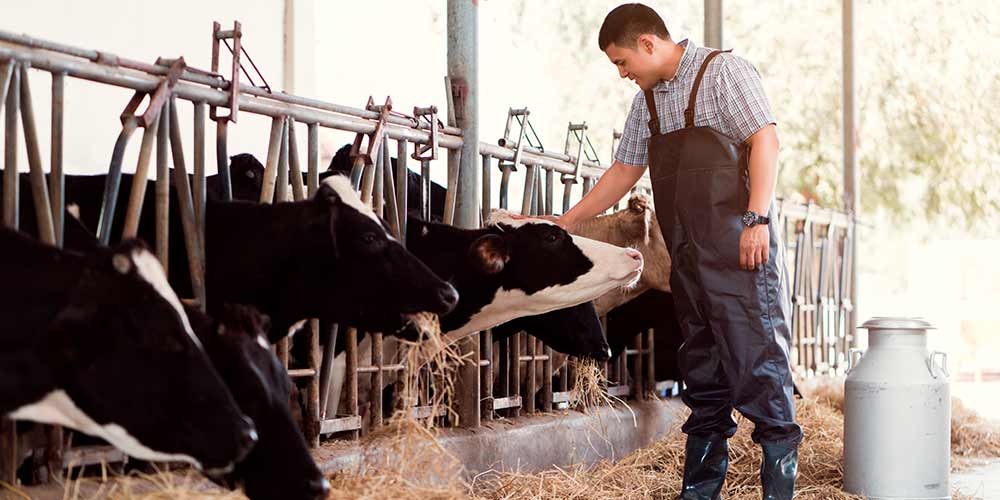
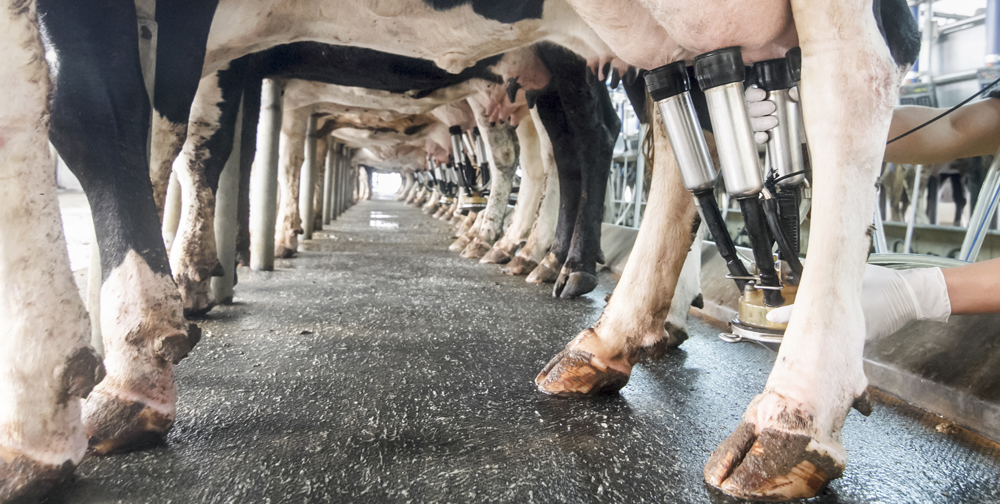
Pedro Razquin, José A. Valares. Milk production in the primary sector is a task that involves unending dedication from farmers and constant commitment to the quality and safety of this foodstuff. Throughout the year, one of the issues that can lead to great uncertainty for farmers is the uncontrolled presence of antibiotic residues in milk delivered daily. In most cases, this is due to human errors or to an unexpected change in the type of treatment for the animals at different times during lactation. Unfortunately, the consequences can be very serious for farms run under tight margins. For example, a farm with 100 cows producing 3,000 L per day can receive a penalty of over €2,000 by the industry, in addition to facing action from the health authority and other expenses derived from the destruction of contaminated milk. In some European countries, there is a long history of self-monitoring for these residues on the farm. In many cases, industry, veterinary and farming personnel collaborate in the financial and technical aspects of the control plan. This prevents many accidents without major consequences, by resolving problems on the farm. There are 2 important control points for farmers: Individual analysis of treated animals: It is fundamental to implement preventive management. No treatment is ever identical; births may be premature and the release kinetics of milk residues may vary. Carrying out a simple broad spectrum test, such as the Eclipse Farm 4G, before entering the cow into the daily milking routine will prevent unexpected tank contamination.   Milk tank analysis: Checking the milk in the tank for potential human error before collection is a procedure that can save a lot of trouble. The addition of milk from a cow under treatment can lead to accidental contamination of a 3,000 L tank of milk and a high concentration of residues. This situation could lead to problems in silos of up to 100,000 L within dairy plants if the milk is not analysed. At this stage, a wide spectrum test (Eclipse Farm 4G) can be performed if there is time before collection by the lorry, or a rapid beta-lactam and tetracycline test, such as Duplex BT Scan, if an immediate decision has to be made.   Fortunately, performing an individual check in cows or tanks today is a very simple task. Using small automatic analytical devices, a farmer can perform an antibiotic test in a few minutes. The results are sent to a mobile phone and can be shared in real time with the industry for integrated management. Find out about new antibiotic control solutions for the farm: Leer más Residuos antibióticos para el sector lácteo Eclipse FARM4G & COMET4 Leer más Leer más Residuos antibióticos para el sector lácteo BT Scan Strip & IRIS Leer más Leer más Residuos antibióticos para el sector lácteo Duplex BT Scan & IRIS Leer más [button target="_self" hover_type="default" font_weight="400" text="Discover Zeulab's complete line for antibiotic control in the dairy sector" link="https://www.zeulab.iatic.es/en/residuos-antibioticos-sector-lacteo/"]
Antibiotic Residues Dairy

DATA REVIEW: How to detect the 128 authorized medicines for mastitis?

Spanish Agency for Medicines and Health Products (AEMPS) authorizes a total of 128 drugs for treatment of mastitis in dairy cattle in Spain. A study carried out by our company in November 2019 with information available from CIMAVet shows that 34.4% of them are beta-lactams, 28.9% quinolones, 13,3% macrolides and 10.2% tetracyclines. Aminoglycosides (7%), sulfonamides (2.3%) and other antibiotics of different chemical structure (3.9%) complete the whole list.

Antibiotic Residues Dairy

Test4all: Antibiotics control by anyone, at anytime and anywhere

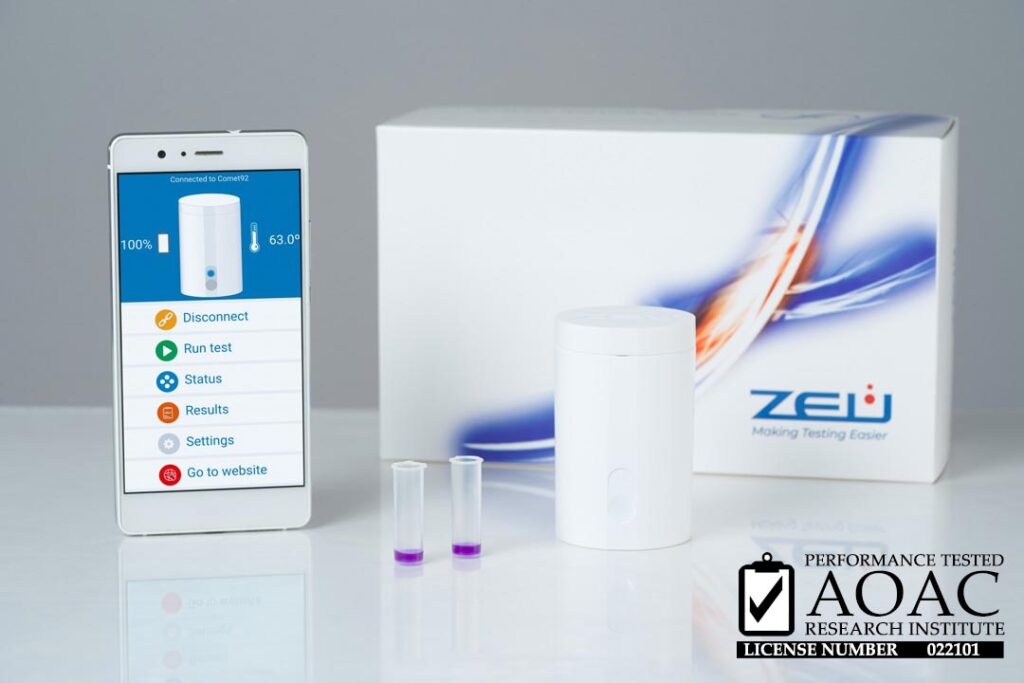
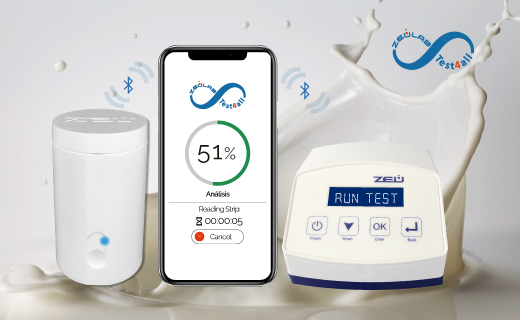
The daily management of milk production is an activity that involves the participation of many people, located in diverse places and with very limited time. Consequently, it is a system that requires a very high degree of organization so that all the steps of this process, from milking to processing in the plant, are well coordinated and carried out according to the established standards. Access to real time information from different points of the dairy production chain can be of key importance, to make the right decisions in our daily work. Antibiotics treatment of animals with health problems is of great benefit in farm productivity. It is however, very important to have good farm management to prevent undesirable residues that contaminate the farm´s tank or even the silo at the industry. The final consequences will be very serious for all parties involved. Simple monitoring at the production site, during transport or on arrival at the plant, would allow to prevent contaminations representing a great benefit for the responsible people. Thanks to the Test4all solution, it is possible today to perform an automatic antibiotics test with a small and easy-to-use portable device that, connected to our Smartphone, allows to have results in real time and to share them with those who are helping to obtain antibiotic-free milk. A farmer can analyse treated cows to prevent human error of contamination or confirm that the tank is ready for delivery before the truck arrives. A truck driver can perform an automatic analysis in a few minutes on arriving at the farm before loading the milk or even perform the test during transport, because Test4all runs the test and sends the results in real time. Upon arrival at the plant, a rapid test can be done where the results will automatically be available to the quality managers in the company system.   In all these cases, the results can be shared in real time thanks to the mobile connectivity of the system and a cloud specifically designed for consulting information. The multiple options of the Test4all system allow an adaptation to any type of company and user. This simple solution can even allow us to monitor other analytes such as Aflatoxin M1. Contact us, and we will help you to find out all the benefits of Test4all for your company. Leer más Aflatoxins AflaM1 Scan & IRIS Leer más Leer más Antibiotic residues for the dairy sector Beta Scan & IRIS Leer más Leer más Antibiotic residues for the dairy sector Rapid antibiotic test milk: Duplex BT Scan & IRIS Leer más
Scroll al inicio