Antibiotic Residues

Antibiotic Residues

Analytical guide for antibiotic residues in meat

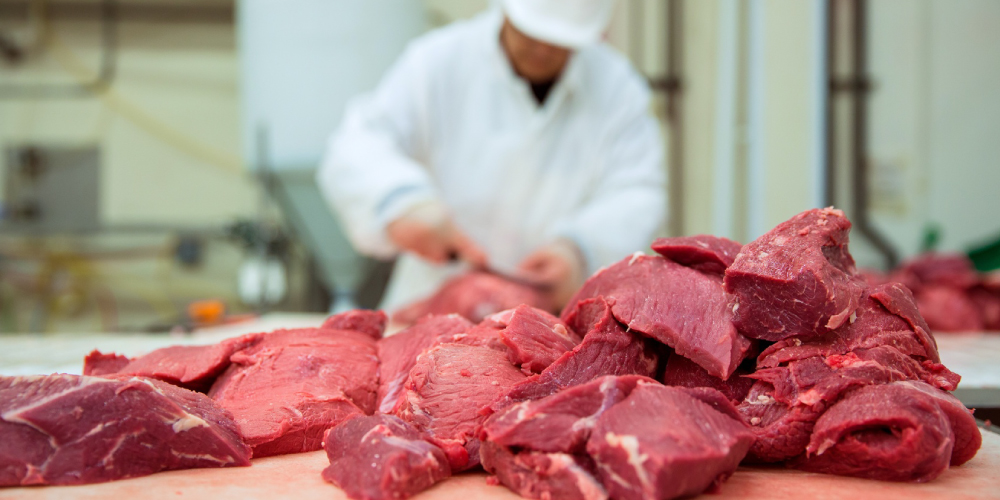
An antibiotic is a chemical substance produced by a living being or synthetic derivative that kills or prevents the growth of certain classes of sensitive microorganisms. They are generally drugs used in the treatment of bacterial infections, hence they are known as antibacterial or antimicrobial. There are currently more than 50 antibiotics approved for veterinary use. They can be classified into various groups according to their chemical structure: Aminoglycosides, Macrolides, Tetracyclines, Beta-lactams, Quinolones and Sulfamides. The use of antibiotics in the veterinary sector is widespread; with more than 75% of the antibiotics produced by the pharmaceutical industry being consumed in the livestock sector. The type of antibiotic used is determined by the diseases to be treated. Consequently, to prevent the presence of antibiotic residues in food, they must be properly managed, regarding their dose or suppression period, for example. The variety of antibiotic residues we might find in meat is as wide as the number of medicines available for the treatment of veterinary diseases. Therefore, it is best to choose a method that can detect a broad spectrum of antibiotics easily, quickly and at a low cost. These are screening methods, and are usually microbiologically based (Explorer). Starting from the logical assumption that most samples are free of residues, these methods lead to contaminated (positive) samples being easily identified from the rest. To determine the type and concentration of antibiotic in the contaminated sample, specific methods based on immunochemical (ELISAs) or chromatographic (LC-MS) techniques should be used. These are the so-called identification or confirmation methods. They are expensive and more labour-intensive, requiring more equipment and qualified personnel. Therefore, an adequate analytical strategy would be to perform an initial screening stage to identify contaminated samples and prevent this meat from reaching the market. The second phase would involve the food operator, e.g. a slaughterhouse, being able to decide whether to identify the antibiotic present in the sample and the concentration at which it is found. For this, identification and screening methods, such as ELISAs, rapid tests and LC-MS, are needed. If the operator (slaughterhouse) suspects the use of a certain antibiotic in an area or time of year, or wants to assess a type of supplier, it can launch a specific campaign to search for that particular contaminant. ELISA and LFIC (rapid test) methods are the most recommended, due to their specificity and ease of processing. EXPLORER 2.0 & E-READER: THE MOST EFFICIENT SCREENING IN MEAT ANALYSIS ZEULAB, a leading company in the development of antibiotic testing methods in meat, has designed a unique system that places it at the forefront of screening methods. The Explorer2.0 & e-Reader system is the most efficient solution for detecting a wide range of antibiotic residues in meat. Using this simple, low-cost, rapid test, the operator (slaughterhouse) can screen for residues from the main antibiotic groups: e.g. beta-lactams, tetracyclines, macrolides, sulphonamides and aminoglycosides (see technical data sheet). The system has been validated and recommended in Spain by the Mahadahonda National Reference Laboratory, which is dependent on the Spanish Agency for Food Safety and Nutrition, AECOSAN (Alimentaria, March 2016, no. 471). It has also been validated by the Belgian Reference Laboratory, ILVO (Validation Report, 2014) and the European Reference Laboratory, ANSES. QUINOSCAN: THE IDEAL SOLUTION FOR TOTAL SCREENING The Explorer 2.0 & e-Reader system detects all beta-lactam, tetracycline, sulfamide, macrolide and aminoglycoside antibiotics; and can be improved by combination with QuinoScan, the specific, rapid test for detecting quinolones. The combination of both tests provides screening for practically all antibiotic substances used in the veterinary field. TEST ELISA: FOR QUANTIFYING SPECIFIC ANTIBIOTIC RESIDUES When an analyst suspects the use of a specific antibiotic, the choice of the specific ELISA kit for that substance/group can identify and quantify it in the meat samples under study. CLASSIFICATION OF ANTIBIOTIC TESTING METHODS [button target="_self" hover_type="default" font_weight="400" text_align="center" text="Read this article in english" link="https://www.zeulab.iatic.es/en/knowledge-center/analytical-guide-for-antibiotic-residues-in-meat/"] Leer más Cribado microbiológico Explorer 2.0 Leer más Leer más Residuos antibióticos para el sector lácteo QuinoScan Leer más [button target="_self" hover_type="default" font_weight="400" text_align="center" text=" Discover the complete line of Zeulab for the control of antibiotic residues in meat " link="https://www.zeulab.iatic.es/en/sector-lacteo/"]

Antibiotic Residues, Conferences & Events

Zeulab has been granted with the TESTACOS project

The project will take place between 2018 and 2020. One of the project’s targets is developing a new test for antibiotics detection in live animals. Zeulab has more than 20 years of experience in vitro diagnostic tests for antibiotics detection in food. The biotechnological company has more than 20 tests for detection of antibiotics in food and a novel system, E-READER, which works with microbial tests (Eclipse or Explorer), controls assay time and reads the results in an automated way. The project was presented the 24th of January in the University of Zaragoza (UNIZAR) with all the partners. The project TESTACOS will help to increase the meat quality in France and Spain. During the three years’ project more than 4000 samples will be analyzed looking for antibiotics. Besides, new antibiotic tests for live animals will be developed to minimise contaminated products. The study will be carried out in the POCTEFA region (north-east of Spain and south of France). The project partners are: Agroalimentary Institute of Aragon (IA2-UNIZAR), the University of La Rioja, the University of Perpignan, the National Veterinary School of Toulouse, Public Health Laboratory of Bilbao, Biosentec (Toulouse) and Zeulab (Zaragoza). Read the complete news here.
Antibiotic Residues

The simplest and least time consuming method to test antibiotic residues in food

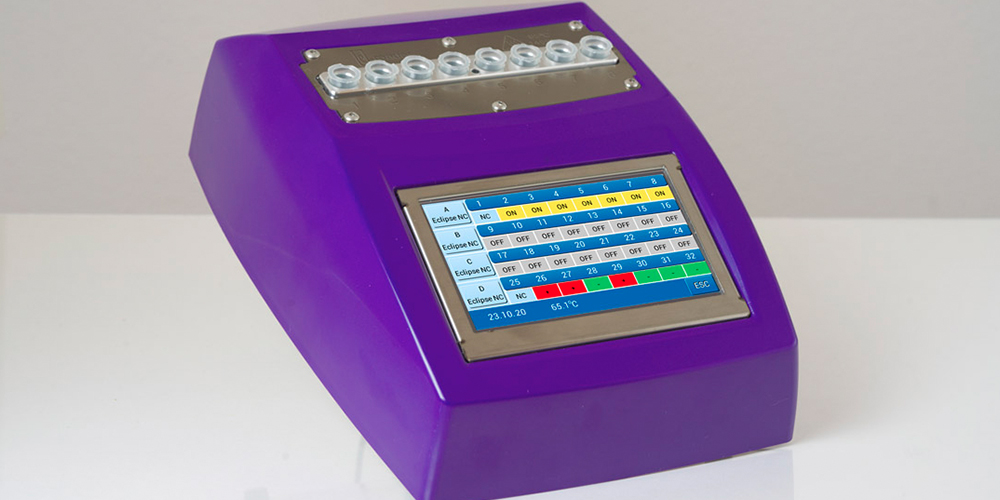
e-Reader; the innovative system that runs antibiotic analysis for you. A multi-residues analysis that detects more than 30 substances in a single assay complying with EU MRLs. e-Reader works with microbial tests (Eclipse or Explorer) where the assay is automatically carried out. So, it guarantees the best assay performance and saves the user’s time. Antimicrobials have made a major contribution improving animal’s health and welfare for decades. However, the misuse and overuse of these drugs in humans and animal production have led to antibiotic-resistant bacteria. According to the WHO, antimicrobial resistance is one of the most serious threats to global public health around the world today, causing 25.000 deaths in Europe (OCU, 2013 (1)) and 23.000 in the USA, (CDC-USA, 2013 (2)). Responsible use of antimicrobial substances together with antibiotic testing in food would contribute to reduce antimicrobial resistance. Simple and economic analytical tools that can be easily used by food and feed operators would help them to provide safe food within the current legislation. Microbiological tests, based on the inhibition of bacterial growth, detect a broad range of antibiotics and offer a high samples turnover. So, they are ideal for a first screening of antibiotics in food matrices. Within the microbiological multi-residue methods, the traditional “five plate method”, is still used as a reference method (3, 4). Nevertheless, this method is time consuming and requires laboratory facilities and skills. Commercial microbial ready-to-use tests, such us Eclipse or Explorer, are widely available and commonly used. These methods are based on Geobacillus stearothermophilus and use a pH color indicator (5, 6, 7). They are faster and easier to perform. However, the user has to decide, based on the color and in comparison to a negative control sample, if results are either positive of negative. Although, colors are usually clear, those samples with antibiotics close to the limit of detection would be more difficult to identify and can also be seen as positive or negative depending on who and how the colors are visualised. e-Reader provides standardized and objective results. Bactericide antimicrobials have the capability of killing the bacteria and produce a clear color change at the end of the assay. However, bacteriostatic drugs only slow the bacteria growth. So, although a blue color will indicate the presence of those antibiotics at the end point of the assay, if the test is incubated for longer time the bacteria could be able to re-grow turning the media to a yellowish color that would be identified as a negative result. Therefore, it is very important to end the assay at the optimal time without over incubation for an optimal assay performance. e-Reader performs the microbial test (Eclipse or Explorer) automatically, incubating at 65° C and monitoring the color in real time to calculate the bacteria growth kinetic. e-Reader uses an internal software to integrate time and color parameters to determine the endpoint of the assay, stopping automatically and interpreting qualitative results.   e-Reader is the simplest and least time consuming method available in the market for an onsite multi-screening of more than 30 antibiotics in milk and meat. After an easy (meat) or none (milk) sample preparation, adding the sample and viewing the results 3 hours later, the screening assay is completed. Numerical results are displayed on the screen and saved in an internal memory to assure traceability. References (1) Resistencia a antibióticos -Superbacterias. OCU-SALUD, septiembre 2013. (2) T. Frieden. Antibiotic resistance threats in the United States, 2013. US Department of Health and Human Services – Centers for Disease Control and Prevention. (3) V. Gaudin et al. Validation of a Microbiological Method: The STAR Protocol, a Five-Plate Test, for the Screening of Antibiotic Residues in Milk. Food Additives and Contaminants, 2004. (4) V. Gaudin et al. Validation of a Five Plate Test, the STAR protocol, for the screening of antibiotic residues in muscle from different animal species according to the European decision 2002/657/EC. Food Additives and Contaminants, 2010. (5) M. I. Berruga et al. Performances of Antibiotic Screening Tests in determining the persistence of Penicillin residues in ewe’s milk. Journal of Food Protection, 2003. (6) A. Montero et al. Detection of antimicrobial agents by a specific microbiological merhod (Eclipse 100 ®) for ewe milk. Small Rumiant Research, 2005. (7) V. Gaudin et al. Validation of a wide-spectrum microbiological tube test, the Explorer® test, for the detection of antimicrobials in muscle from different animal species. Food Additives and Contaminants, 2009. (8) L. Mata et al. Performance of Eclipse Farm test coupled to e-Reader for antibiotic residues detection in raw milk. Food Analytical Methods, 2015. (9) L. Mata et al. Validation of the Explorer® 2.0 test coupled to e-Reader for screening of antimicrobials in muscle form different animal species. Food Additives and Contaminants, 2014. (10) W. Reybroeck & Sigrid Ooghe. Validation of Eclipse Farm 3G + e-Reader with negative control method, 2015. Belgian Institute for Agricultural and Fisheries Research -ILVO-. (11) W. Reybroeck & Sigrid Ooghe. Validation of Explorer V2.0 + e-Reader, 2014. Belgian Institute for Agricultural and Fisheries Research -ILVO-.
Antibiotic Residues

Detection of antibiotic residues in feed: from farm to fork

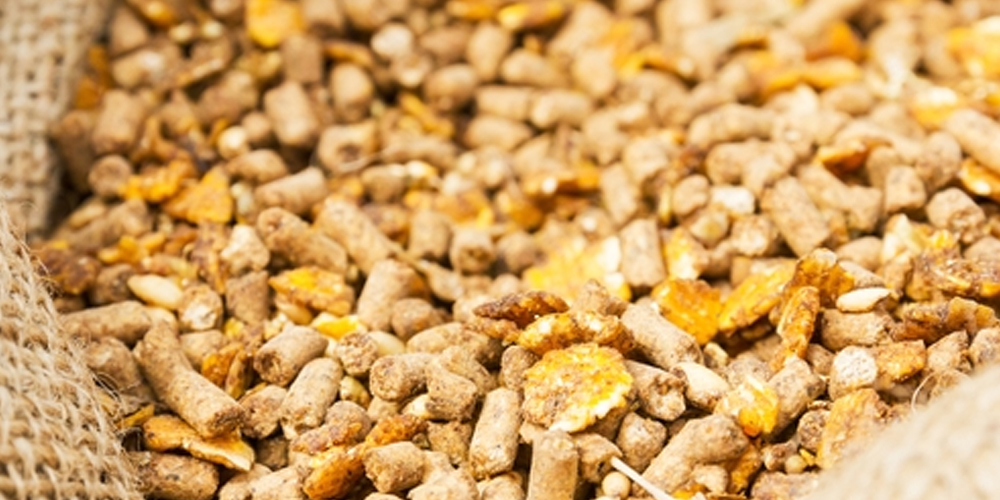
The use of antibiotics with therapeutical or prophylactical purposes is a common practice in livestock. These antimicrobials are often administered to food animals through medicated feedingstuffs. Antibiotics in feedingstuffs Medicated feedingstuffs may be defined as mixtures of veterinary medicinal products and feed intended to be fed to animals because of their therapeutic or preventive features. Antimicrobial products that are part of medicated feedingstuffs must have been authorised for the animal species which the feed is administrated to and must also be included in Council Regulation 2377/90. Medicated feedingstuffs usually contain high antimicrobial concentrations but it depends on the intended aim and physiological-health state of the animals. Common concentrations (mg/Kg of feed) of active substances in medicated feeds range between 50 and several thousands. Why is detection of antibiotic residues in feed interesting? A number of factors might play a role in the unintentional contamination of negative feeds with antibiotics (human error, improper production, handling and storage practices). As a consequence, small amounts of medicated feedingstuff may be left in production line or storage tanks and lead to a cross-contamination of next batches of negative feed. Risks of unintentional presence of antimicrobials in feedingstuffs Several potential risks arise from cross-contamination of negative feeds, both to animals and to consumers: Unexpected antibiotics in feedingstuffs could interact with other medical agents administered to animals. Therefore, a therapeutic failure might be observed associated with economic losses for the producer. A mixture of medicated and non medicated feeds could prompt sub-therapeutic concentrations of antimicrobials in feed, creating and ideal scenario for the induction and transfer of antibiotic-resistance mechanisms. In this way, these antimicrobials could become ineffective against animals pathologies and the resistance mechanisms could even be spread contributing to reduce effectiveness of human medical treatments. Moreover, these unintentional antimicrobials in feed could enter the food chain (eggs, milk, meat, etc) since withdrawal times will not be followed. Researchers have proved that low levels of cross-contamination (2 mg of sulphonamides/kg of feed) can be significantly involved in the presence of residues in animal tissues. In certain circumstances, residues of antimicrobials above maximum residues levels (MRL) could even be found in foods of animal origin. The detection of these illegal products by control mechanisms (self-management plans, Official controls, analysis in industries…) could give rise to considerable economic losses for the producer and legal isssues. In the worst case scenario, these contaminated foods could elude control barriers, reaching the consumer and could be linked to allergic reactions of toxicity in sensitized individuals. However, it is generally assumed that their main risk is the development of antibiotic resistance mechanisms in human pathogens. Methods for detection of antibiotic residues in feed. Different analytical procedures can be chosen to detect antibiotic residues in feed. Since antimicrobials do not share a common chemical structure, it would be advisable to use screening methods if the antimicrobials to be detected are not known. Screening methods are –generally- microbiological tests that allow the analysis of many samples with a single assay. These tests are relatively cheap and and they have a broad spectrum of sensitivity. They are usually easy-to-perform and economical tests capable of distinguish positive samples (samples that may contain antimicrobial residues levels above limits of detection (LOD) of the test). In a second step, more specific methods (immunological and chromatographic methods, mass spectrometry) might be performed with positive screening samples for identification and quantification of the antimicrobial residue. Explorer 2.0 and e-Reader: an innovative tool for antibiotic detection in feedingstuffs Explorer 2.0 is a qualitative test for the detection of inhibitory substances in several matrices and foods (raw meat, kidney, liver, feed and eggs). The test is based on the inhibition of microbial growth and can discriminate samples containing antimicrobial residues above LOD. The use of e-Reader coupled to Explorer 2.0 allows the integration of incubation and reading since the device will stop the assay in the most suitable moment to assure the best test sensitivity performance. Moreover, e-Reader will interpret assay results in an objective manner and store the data, guaranteeing system traceability. Feed sample preparation Weigh 1 ± 0.1 g of ground feed sample, place in a clean tube. Add 20 mL of PBST previously preheated (approximately 40ºC) Homogenise for at least 30 min using a magnetic stirrer or a roller until the sample is fully dissolved. Centrifuge for 15 min at 2000g. Alternatively, filter the mixture using a 0.45 μm filter. The supernatant is ready for the analysis. Test procedure Add 100 μl of sample. Incubation at room temperature for 20min. Remove samples by washing with distilled water. Seal the test tubes. Place the sample tubes in e-Reader to begin the assay. e-Reader will stop automatically the assay and results will be displayed on the screen. Test LOD Explorer 2.0 can detect a wide range of antibiotics in feed. The LOD (μg/Kg) for a number of antimicrobials representing the main families of antimicrobials are shown in the table.

Antibiotic Residues

Antibiotics in food: responsibility of all

Bacterial infections have been controlled for decades thanks to the efficiency of antibiotics. Now different sectors are warning about the necessity of an appropriate use of these drugs in order to preserve its unrivaled capacity The first studies using sulfonamides to treat infectious diseases began in the early 20th century. In just a few decades these drugs together with penicillin G help to decrease the rate of mortality caused by infections. These drugs have not only been were used in humans, but animals. In the forties and fifties, antibiotics began to be applied in veterinary medicine. Initially animals were treated to cure bacterial diseases or for prophylaxis in healthy animals. But, years later sub-therapeutic doses were discovered as growth promoters in production systems. In parallel with the increasing use of antibiotics, the scientists’ concern about the appearance of antibiotic resistances in bacteria was also growing. Antimicrobial growth promoters in feed were freely available without prescription while the use of antibiotic as therapy was restricted. In 1969, the Swann Committee recommended severe restrictions on antimicrobials in feed; only allowing those with no application as therapeutic agents in humans or animals, among others (Edqvist y Pedersen, 2000). Today, annual figure of deaths due to multiresistant bacteria infection in Europe is 25.000 people (OCU, 2013) and in USA, 23.000 people (CDC-USA, 2013). The sanitary authorities have become aware of this serious problem and therefore since 2006, the use of antimicrobials as growth promoter is forbidden in the European Union. However, this practice is still authorized in countries such as USA, where the 75% of commercialize antibiotics are for veterinary treatment; and China, where this figure reaches 50%. In addition, the World Health Organization (WHO) considers this problem among the three more serious health risks. The European Union began an ambitious plan in 2011, “Action plan against the rising threats from Antimicrobial Resistance”, than includes the appropriately use of antimicrobials in humans and animals and the improving monitoring and surveillance in human and animal medicine. Citizens are also active part in the resolution of this problem. We should make a responsible use of antimicrobials: only to take them when are prescribed and to observe time and dose treatment. But in addition we also can demand to comply with the rules and force the industry to take more restrictive measures in the use and control of antibiotics. This is happening in USA where consumers require meat without antibiotics and as a consequence, companies and restaurants offer food produced in a responsible manner. The antibiotics control in food has been legislated for years (nº 37/2010). Milk, meat, or fish must comply with legal levels for different antibiotics before being placed in the market. Dairy companies have a long history in antibiotic monitoring whereas in other food sectors the number of analysis is low. Nowadays, farmers, food processors and retailers could easily apply the available analytical tools to ensure that antibiotics are below the legal levels in our food. Just by using these rapid, simple and efficient methods food safety can be assured.

Antibiotic Residues

The presence of antibiotic residues in meat could affect production and food security of sausages

Bacterial starter cultures are fundamental for sausage fermentation. These lactic acid bacteria ferment the raw meat and guarantee that final product is acidic enough to kill pathogens that might have existed. University of Copenhagen and University Collage Cork have studied the effect of antibiotic residues, oxytetracycline, pencicillin and erythromycin, in the meat used for sausage production (Ingmer et al, mBio 2012 vol.3). Data show that residual antibiotics in the meat can prevent or reduce fermentation by the lactic acid bacteria, affecting the quality of the final product. Antibiotics are frequently used in veterinary medicine both for therapeutic value ant to enhance growth and food efficiency. Consequently, these practices might lead to a possible occurrence of residues in food. Food contaminated with antibiotic residues should be prevented from reaching the consumer. The detection of antibiotics is compulsory and levels should comply with the Maximum Residue Limits (MRL) state by the European Union (Commission Regulation (EU) No 37/2010). ZEU-INMUNOTEC, leader company in food quality, offers Explorerkit for detection of antibiotics en meat to avoid the presence of antibiotics in food chain. Source: mBiosphere

Scroll al inicio