Allergens

Allergens

Avoiding nuts cross-contamination in your food products by using rapid allergen tests.

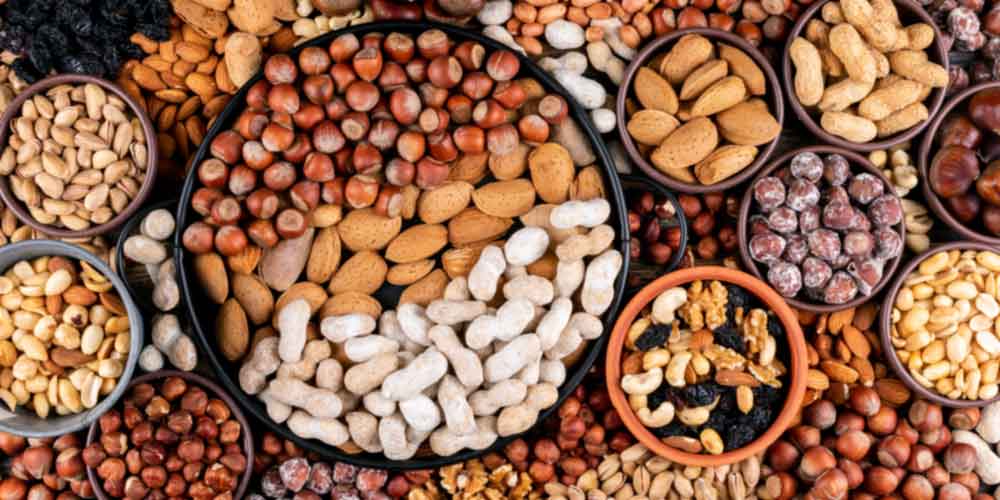
Avoiding nuts cross-contamination in your food  products by using rapid allergen tests. Nut allergy is one of the most common allergies in childhood, causing one of the most severe anaphylactic reactions. Depending on the characteristics of the diet, allergenic foods will vary from one geographical area to another. Thus, the peanut is the nut that causes the most allergic reactions in the United States, while in Europe it is the hazelnut. Therefore, the food industry is faced with the responsibility to ensure consumer safety by properly labelling nut-containing products and preventing cross-contamination of nuts during production in nut-free products. One of the tools that the food industry has adopted to control the presence of nuts and prevent cross contamination is the use of rapid allergen detection strips. These rapid strips offer manufacturers an effective and rapid approach to identifying the presence of allergenic nut proteins in foods and surfaces, allowing companies to take immediate action to prevent cross-contamination and ensure foods are safe to consume. Among the advantages offered by the use of quick strips are: Speed: These strips provide results in minutes, allowing food companies to perform real-time testing during production. Ease of use: The strips are simple to use and do not require sophisticated laboratory equipment. Production staff can perform tests efficiently. Sensitivity and specificity: The strips are designed to detect specific allergens with high sensitivity and specificity, minimizing false positives or negatives. Cross-contamination prevention: Early detection of allergens helps prevent cross-contamination in production facilities and ensures that final products are free of undeclared allergens. Regulatory Compliance: Using rapid allergen detection strips helps companies comply with food labelling regulations and standards, which is critical for transparency and food safety. Zeulab continues working to help the food industry with rapid strips for the determination of nuts, in this case the solution for the detection of walnuts (PROTEON EXPRESS WALNUT) has been developed that completes the current solutions for the detection of hazelnuts (PROTEON EXPRESS HAZELNUT) and almond (PROTEON EXPRESS ALMOND). [button target="_self" hover_type="default" text="Leer este artículo en español" link="https://www.zeulab.iatic.es/centro-de-conocimiento/protocolo-de-limpieza-alergenos-verifica-en-10-minutos/"] Leer más Rápidos Lab2GO Leer más Leer más Rápidos Proteon Soy Express Leer más Leer más Rápidos Test gluten: Proteon Gluten Express Leer más Leer más Rápidos Test de alérgeno de leche: Proteon Duo Milk Express Leer más [button target="_self" hover_type="default" font_weight="400" text_align="center" text="Discover Zeulab's complete line for the detection of water/marine toxins." link="https://www.zeulab.iatic.es/en/marine-water-toxins/"][button target="_self" hover_type="default" font_weight="400" text_align="center" text="Read this article in english" link="https://www.zeulab.iatic.es/en/centro-de-conocimiento/is-it-possible-to-detect-microcystins-in-one-hour/"]

Allergens

Do you know if your cleaning protocol for allergens is working correctly? Verify it in just 10 minutes

Food industries that work with allergens know the importance of having cleaning protocols in place capable of preventing any risk of allergen cross-contamination between different products made on the same production lines. Although they may be efficient from a hygienic standpoint, cleaning protocols may be ineffective in removing allergens. Visual inspection is insufficient to guarantee complete removal of allergens so a proper cleaning protocol must be designed. It must then be validated and routinely verified by analytical methods that determine the presence or absence of allergens on the production lines. The validation stage is to show that the designed cleaning protocol is adequate and meets the objective of eliminating allergens, usually by quantitative analytical methods. An example is an ELISA test, which can determine allergen concentration on a production line before and after the application of the cleaning protocol; thus determining whether the designed cleaning protocol is capable of removing allergens below the safety threshold. After validation, the cleaning process has to be verified in practice; thus demonstrating that, each time the cleaning process is used, it works as designed and validated with no deviations. In other words, the cleaning process must be capable of removing allergens every time it is used. For this, qualitative methods such as rapid strips can be used, to confirm the absence or presence of the allergen according to the safety threshold. Quick strips can verify the cleaning process in just 10 minutes, thus allowing food companies to continue with their daily production protocols. In addition, this can be done by any production line operator, as they do not require specific equipment or trained personnel. ZEULAB offers fast and simple analytical solutions to verify the absence of the main food allergens in production lines. [button target="_self" hover_type="default" text="Leer este artículo en español" link="https://www.zeulab.iatic.es/centro-de-conocimiento/protocolo-de-limpieza-alergenos-verifica-en-10-minutos/"] Leer más Rápidos Lab2GO Leer más Leer más Rápidos Proteon Soy Express Leer más Leer más Rápidos Test gluten: Proteon Gluten Express Leer más Leer más Rápidos Test de alérgeno de leche: Proteon Duo Milk Express Leer más [button target="_self" hover_type="default" font_weight="400" text_align="center" text="Discover Zeulab's complete line for the detection of water/marine toxins." link="https://www.zeulab.iatic.es/en/marine-water-toxins/"][button target="_self" hover_type="default" font_weight="400" text_align="center" text="Read this article in english" link="https://www.zeulab.iatic.es/en/centro-de-conocimiento/is-it-possible-to-detect-microcystins-in-one-hour/"]
allergen-test-processed-foods
Allergens

Are you using the right test to detect allergens in processed foods?

Food allergens are proteins with very different physical and chemical properties and size. Some processes, such as fermentation, hydrolysis or high heat treatment, can alter their chemical structure and reduce their allergenic properties, although not completely eliminating them. These treatments can also, therefore, affect the detection capacity of allergen tests. The methods commonly used for the analysis of food allergens are based on the specific union between the allergen (antigen) and an antibody (IgG), obtained specifically for the allergenic protein to be detected. These tests, called immunoassays, can be in rapid strip formats or ELISA tests. The strip format tests are easy to perform by any operator, without the need for specific materials or equipment, and can identify a trace presence in a few minutes. Their use in the analysis of contact surfaces during food production or in controls for the processed product helps to ensure proper labelling. ELISA tests are more laborious to carry out, but quantify the amount of allergen in the sample, and so can be used in production line cleaning validation or in final product analysis. Soy, egg or milk proteins, among others, are added to foods such as meat, bakery and pastry products to provide texture, flavour or the characteristic appearance of the product. High heat treatment prolonged for hours makes it difficult to detect traces of these allergens. Processing conditions vary according to the food or manufacturer, so it can be difficult to ensure that the test is detecting the allergen properly in the treated product. Therefore, the allergen test needs to be validated for a specific product and treatment, to ensure allergen control is effective. If not, you may have a control system in place, with its attendant investment in time and money, but you could be breaking the regulations or even triggering a food alert. Recently, our Zeulab team helped a customer optimise its soy detection test in a meat product that was heated for several hours. Following the development of a specific additive added to the extraction buffer, the detection level of the assay was improved 10-fold. At Zeulab, we can assess whether the test sensitivity is appropriate for the levels of allergens present in your product after heat treatment, and perform a personalised study to modify the sample preparation procedure to ensure greater extraction of the allergen. Leer más Rápidos Lab2GO Leer más Leer más Rápidos Proteon Egg Express Leer más Leer más Rápidos Test de alérgeno de leche: Proteon Duo Milk Express Leer más [button target="_self" hover_type="default" font_weight="400" text_align="center" text="Discover Zeulab's complete portfolio of allergen control" link="https://www.zeulab.iatic.es/en/alergenos/"] Related articles: [latest_post type="boxes" number_of_colums="4" number_of_rows="1" text_from_edge="yes" order_by="date" order="DESC" title_tag="h4" display_time="1" display_comments="0" display_like="0" display_share="0" category="Alergenos" text_length="0"]
Allergens

7 things to bear in mind when labelling a gluten-free food

Approximately 1% of the world's population suffers from coeliac disease, This is why there are more and more gluten-free food products on the market to cater for people with coeliac disease. If one of your products containing gluten shares a production line with another that does not, and you need to ensure the latter remains gluten-free, these 7 recommendations will be of great help: IDENTIFY YOUR RISKS 1) Find the areas or points in your production process where there may be a risk of cross contamination from gluten; those areas or parts of the equipment where material containing gluten may get trapped are all risk points. 2) Design measures to prevent or reduce this possible cross contamination. The use of cleaning protocols which include specific detergents to remove allergenic proteins may be a good option. 3) Evaluate the effectiveness of these measures. CHECK YOUR PRODUCT FORMULATION Check that all the ingredients you use in the product are gluten-free. Your ingredient supplier can provide you with this information, along with a certificate of analysis. Remember that, following a change in supplier or a modification in the product formulation, you will have to verify that the ingredients are gluten-free. For greater peace of mind, you can establish a periodic control of raw materials. STORE YOUR INGREDIENTS CORRECTLY If your company works with ingredients that contain gluten, these must be clearly identified and separated from the rest of the ingredients by a physical barrier that prevents cross-contamination with gluten. Colour marking or labelling areas designated for ingredients with gluten helps prevent human error. PREVENT CROSS CONTAMINATION DURING PRODUCTION We have already discussed how to store ingredients to prevent gluten cross contamination. But what about the production process itself? If you use the same production lines for both gluten-free products and those containing gluten, you should ensure that the cleaning has been effective and that no traces of gluten have remained. Quick strips are useful for quickly and easily determining the absence of gluten on surfaces, to prevent any risk of cross contamination. CONTROL THE FLOW OF YOUR STAFF You may have verified that your manufacturing process control measures are effective, but have you considered the product may become contaminated afterwards? In some cases, the movement of personnel may pose a risk to the product. A good example is the rest areas where personnel eat. Special care must be taken with personnel who come into contact with foods containing gluten as it may be retained by their clothing and contaminate a gluten-free product later. LABEL YOUR PRODUCT IN ACCORDANCE WITH CURRENT LEGISLATION When labelling a gluten-free product, current legislation indicates a maximum concentration for it of less than 20 ppm. Again, quick strips are a simple, fast and economic solution to determine the concentration of gluten in your product. Many quick strips can also determine concentrations below the legal limit; thus providing higher levels of safety for your product, as required by certain distribution surfaces. BE CAREFUL WITH HYDROLYSED AND FERMENTED FOODS If your product undergoes a hydrolysing or fermentation process during its production, such as gluten-free beer, you will know that these technological processes can affect the structure of gluten. As with gluten-free foods, to label these products as gluten-free, you must verify that its gluten content is less than 20 ppm. ZEULAB offers you quick and simple analytical solutions to verify both the absence of gluten on surfaces and in foods, so you can justify the labelling of your products as gluten-free. [button target="_self" hover_type="default" font_weight="400" text_align="center" text="Read this article in english" link="https://www.zeulab.iatic.es/en/knowledge-center/7-things-to-bear-in-mind-when-labelling-a-gluten-free-food/"] Leer más Rápidos Lab2GO Leer más Leer más Rápidos Proteon Egg Express Leer más Leer más Rápidos Test de alérgeno de leche: Proteon Duo Milk Express Leer más [button target="_self" hover_type="default" font_weight="400" text_align="center" text="Discover Zeulab's complete portfolio of allergen control" link="https://www.zeulab.iatic.es/en/alergenos/"]
Allergens

Comparison of the different analytical methods for allergens in food

Food allergies are caused by one or more proteins in food. Consequently, whenever possible, it is best to choose a direct, specific method that detects that allergenic protein; unequivocally identifying the specific presence of that target protein in the sample to be analysed, and differentiating it from other compounds. Using non-specific, indirect methods represents a very high risk in the self-control plan of a food company. Thus, measuring total protein or ATP provides only a general indicator of the cleanliness of the production line. There are 3 general method types to test for allergens in food, with each having different advantages and applications: Immunoassays (ELISA and rapid strip tests): These are simple tests easily applied in the industry because the necessary technical qualification is low and they do not require expensive equipment. Their great advantage is that they are direct and specific and based on detecting the allergenic protein by means of a specific antibody. These methods are most recommended for industry and analysis laboratories as long as there is a standardised kit. Molecular techniques (PCR): These are more complex tests, which require greater technical qualification and more expensive equipment. They are specific, but indirect; as they are based on identifying the gene that codes for the allergenic protein. They are suitable in cases where commercial immunochemical tests are not available or when the sample undergoes severe heat treatment. Chromatography techniques with mass spectroscopy (LC-MS): This requires highly expensive instrumentation and specialist personnel with experience. They are direct and specific, and are based on specifically detecting peptides of the allergenic protein by mass spectroscopy. They are suitable as confirmatory methods and for standardisation of reference methods. A very helpful scientific work was recently published comparing these 3 methodologies. The authors studied the correspondence between detection limits for the 3 methodologies and the reference doses of the VITAL 2.0 program. This program offers food manufacturers a reference level framework based on clinical risk analysis. The results of this article show that overall, immunochemical methods achieve the best detection levels and would therefore be the most suitable for self-monitoring at critical points. At ZEULAB we develop immunochemical tests adapted for the analysis of allergens in food and work surfaces that meet the sensitivity and specificity requirements of the VITAL program. The PROTEON Express tests are designed to perform a simple test with all the material included in the kit. Lab2Go lets you use these tests where and whenever necessary. Our extensive experience in allergen analysis means we can help the food industry and laboratories implement the most appropriate methodology. Contact us for any help you need Leer más Allergens Lab2GO Leer más Leer más Allergens Milk allergen test kit: Proteon Duo Milk Express Leer más Leer más Allergens Proteon Milk Leer más [button target="_self" hover_type="default" font_weight="400" text_align="center" text="Discover Zeulab's complete portfolio of allergen control" link="https://www.zeulab.iatic.es/en/alergenos/"]
Allergens

Are the analytical methods for the detection of allergens in food adequate to verify the reference doses based on clinical risk ?

A study published a few months ago (Holzhauser T. et al, 2020) investigated the correspondence between the detection limits of various methodologies used to analyse allergens in food (immunoassays, PCR and MS) and the established reference doses in the VITAL 2.0 programme for 4 serving sizes (5, 50, 250 and 500 grams). Remember that the VITAL (Voluntary Incidental Trace Allergen Labelling) programme aims to offer food manufacturers a risk analysis-based methodology to avoid the unnecessary and abusive use of preventive labelling, and thus offering more adequate information to consumers. The VITAL programme reference doses are based on clinical evidence to protect between 95% and 99% of the allergen-sensitive population. This study, however, did not use the latest reference dose update, VITAL 3.0, which includes more allergens and revises the doses and action levels for the others, as more information became available and the protocol for estimating doses improved. The information obtained by the authors in the article is expressed as mg/kg of total protein of the specific allergenic ingredient, which is how the action levels are expressed in the VITAL programme for the clinical reference doses. Within each family of methods, however, there may be differences due to various factors, such as recovery of the target molecules from complex and/or highly processed matrices. The graphs show that overall immunochemical methods (red circles) have the best detection levels and can be used even with the action levels for the largest serving sizes (250 and 500 grams), where the concentration to be detected has to be lower. For allergens, peanuts are detected at similar levels in all 3 methodologies. For soybeans and hazelnuts, immunochemical methods offer the best performance; while PCR-based molecular methods (blue circles) have insufficient detection limits for milk and eggs. The ZEULAB kit detection limits for the VITAL 3.0 action levels: The reference or action levels of the new VITAL 3.0 programme revision for various allergens were previously explained in a LinkedIn article using a mean portion of 100 g of food (Mata L., 2019) as an example. The following table compares the action levels for 2 serving sizes (100 and 200 grams) with respect to PROTEON Express, the ZEULAB rapid kit detection limits, to check how the rapid tests are adapted to these situations: Detection limits and action levels are expressed in mg/kg or ppm. The detection limits are established as the lowest dose that gives a positive result in over 95% of repetitions. Therefore, lower levels of the allergen could also give a positive test result. *For gluten, the legislation establishes a limit of 20 ppm, regardless of the portion of food to be consumed. ** The reference dose (ED) for almonds has not been established, so the one for hazelnuts is used. As mentioned in the previous section, to compare the suitability of the detection methods, it is very important to specify a concentration unit for the allergen: in this case, mg/kg (ppm), for total protein of the specific allergenic ingredient. This is because the method detection limits are often represented in other units which can transmit inaccurate information and lead to erroneous interpretations. To establish the maximum concentration of the allergen that can be admitted in a prepared food, we have to take into account the size of the portion that can reasonably be consumed by an individual, which depends on each product. The table includes the allergen concentrations for 100 and 200 gram rations of food as an example. However, in some cases, the servings consumed may be higher or lower and action levels must therefore be modified. For example, if we consume a glass of soy drink, a reasonable serving may be 200 g and the action level for the presence of milk protein would be 1 ppm; while, in the case of a sauce, a serving of 50 g could be reasonable and the action level for the same allergen would be 4 ppm. Leer más Rápidos Proteon Egg Express Leer más Leer más Rápidos Test de alérgeno de leche: Proteon Duo Milk Express Leer más Leer más Rápidos Proteon Almond Express Leer más [button target="_self" hover_type="default" font_weight="400" text_align="center" text="Discover Zeulab's complete portfolio of allergen control" link="https://www.zeulab.iatic.es/en/alergenos/"]
Allergens

Allergens with most notifications reported by the rapid alert system for food and feed (RASFF)

The RASFF (Rapid Alert System for Food and Feed) is a tool used to assure the food safety of the food products in the European Union (EU) marketplace. Yearly, the RASFF publishes a report with all the notifications in relation to food products which can involve a risk for consumers. The analysis of allergen notifications reported by the RASFF in the last 5 years (Figure 1) shows a notably increment, moving form 113 notifications in 2016 to 217 notification in 2019, leading a percentage increase of the 92%. Figure 1.Number of notifications of food allergen reported by RASFF between 2015-2019. A deeper analysis of the notification of the period of time studied (2015-2019), can help us to identify the allergens (according to the list published in the EU Regulation 1169*2011) with the highest number of notifications (Figure 2). Figure 2. Number of notifications related to allergen reported by RASFF between 2015-2019 From the figure 2, 4 allergens can be highlighted with more than 1000 notifications: Milk and derivatives (211 notifications) Gluten (161 notifications) Nuts (almonds, Hazelnuts, lupins, etc.) (101 notifications) Soya (100 notifications) This high number of notifications can be related with the fact that these allergens are widely used by food industries due to its technical food properties and/or for being basic ingredients in the formulation of a variety of food products. PROTEN Express tests by ZEULAB offer solutions to the food industries for the rapid detection of food allergens. Among them, PROTEON DUO MILK, which combines in the same assay the ability to detect β-lactoglobulin (indicator of the presence of serum proteins) and casein, can be especially useful in food industries that carry out different production processes using milk, whey or caseinates. From ZEULAB, we help and guide our clients to select the suitable allergen test for their activities. If you want, we can advise you to perform your allergen food analysis. Leer más Rápidos Proteon Egg Express Leer más Leer más Rápidos Test de alérgeno de leche: Proteon Duo Milk Express Leer más Leer más Rápidos Proteon Almond Express Leer más [button target="_self" hover_type="default" font_weight="400" text="Discover Zeulab's complete portfolio of allergen control" link="https://www.zeulab.iatic.es/en/alergenos/"]
Allergens

The most critical points when handling raw materials

Every company department plays an essential role in good allergen risk management. The arrival of allergenic raw materials at our plant is our first contact with them and so “Reception and storage” are the foundations for the entire process to flow without basic errors. Reception: We review the main points to help us prevent cross-contamination with incoming allergenic raw materials: Bulk materials are unloaded in specially enabled areas. Allergenic raw materials and semi-finished products are identified at reception, their labelling is checked and they are kept apart from other products. If samples are required for analysis, different utensils are used for sampling to avoid cross contamination. Disposable or specific utensils can be used, with colour codes for sampling equipment. We should have a special protocol for “allergenic material spills”. [button size='medium' style='' text='Find out how we can help you in allergen management' icon='' icon_color='' link='https://www.zeulab.iatic.es/en/alergenos/' target='_self' color='' hover_color='' border_color='' hover_border_color='' background_color='' hover_background_color='' font_style='' font_weight='' text_align='' margin=''] Storage: During storage and handling of allergenic raw materials and semi-finished intermediate products, special attention must be paid to their identification and separation from others, to prevent cross-contamination or the use of an allergenic ingredient by mistake in a recipe. The most important storage matters are reviewed below: We should have a warehouse area specifically to stored allergenic raw materials. If it is not possible to have this due to lack of space, allergenic material should always be stored on the lowest shelves. More care is required when working with powder ingredients, as they produce aerosols that remain suspended in air. This post may help you. Once the original container is opened, allergenic raw materials and semi-finished products must be stored in closed containers with clearly visible labels. These containers can be reused only for the same raw material or semi-finished product. To re-use them for other products, they must be cleaned appropriately and this cleaning must be validated; thus guaranteeing the effectiveness of the cleaning system to eliminate allergenic proteins. More information is provided in this article about school kitchens. All updated information about our raw materials is accessible at any time. In addition, we recommend you periodically verify the effectiveness of measures to protect against cross-contamination. This will help you in decision making and taking corrective measures at the plant. [button size='medium' style='' text='Contact our expert, Beatriz Santos.' icon='' icon_color='' link='mailto:bsantos@zeulab.iatic.es' target='_self' color='' hover_color='' border_color='' hover_border_color='' background_color='' hover_background_color='' font_style='' font_weight='' text_align='' margin='']   ZEULAB Proteon Express tests can be adapted to the allergen analysis at the time and in the place needed. A quick analysis during reception of raw materials can be conducted without the need for a laboratory. The kit has material to perform the tests very easily and results are obtained in 10 minutes.
Allergens

The value of surface analysis in the control of allergens

The commitment of food operators to guarantee consumer-friendly labelling is a task for various areas in the company's business. A good management plan implies thorough knowledge of the ingredients, close cooperation with suppliers and good practices for all staff. Food preparation in shared facilities adds an extra risk factor because it is often not easy to control unwanted cross-contamination with ingredients intended for other foods. This contamination is mainly caused by 2 routes: Inadequate cleaning of facilities, especially surfaces that come into contact with food. Contamination after cleaning of these surfaces; mainly due to suspended particles or aerosols that remain in the air for some time before being deposited on work surfaces. This cross-contamination can be controlled via two approaches with different consequences: Product analysis to confirm if food is free of the allergen at the end of the production process. Otherwise, preventive labelling should be implemented, although it could difficult without putting the product's traceability at risk. Performing surface testing in production areas, to prevent such a problem contaminating the manufactured product.   Surface analysis recommendations: The following key points should be taken into account for surface analysis to achieve the desired results: The test should be optimised for surface analysis; the procedure is not the same as that used for food analysis. The effectiveness of the surface cleaning protocol should be validated according to specific guideline recommendations, such as those of the Food and Drink Industry Federation, FIAB. It should also be routinely verified that these initial conditions are maintained over time. The best way to sample a surface is using a swab and the extraction buffer included in the kit. It is very important to use the swab provided by the manufacturer, as not all swabs are suitable. The one provided by the manufacturer must guarantee the maximum recovery of the allergen. Alternatively, if wet cleaning is performed, the rinse water can be analysed. Initially, a broad mapping can be done to locate “hot spots” where it is more difficult to remove residues, or unexpected sources of contamination which are common for ingredients that can be dispersed in aerosols, dust or steam. ELISA tests usually have lower detection limit than rapid strips and many samples can be analysed in a single assay. Consequently, they are very useful when initial prevention measures are putting in place in facilities where production lines are shared. Once these spots are located and tested, rapid strips can be used routinely before starting a production run or after cleaning. These analyses can be performed in as little as 10-15 minutes, allowing very quick preventive measures to be taken.   How to interpret the results to determine the level of risk in the food: A very frequent question when interpreting a positive or negative result on a surface is to express this result in terms of the risk resulting from the presence of the allergen in the final product after production. To answer this question fully, the particularities of an industry need to be known. The procedure described below can help an operator in determining the level of risk in a particular case. The example chosen is the determination of the presence of milk proteins on a line with a food contact surface area of 10 m2 and product production of 500 kg using the Proteon Duo Milk Express test. A section of this surface is analysed, for example 100 cm2, following the kit protocol. The test detection limit is 0.7 µg/100 cm2*, so if the result is: Positive: the contamination is greater than 700 µg (0.7 mg) of milk protein in the total surface area of 10 m2. Negative: the allergen is present at less than 700 µg (between 0 and 0.7 mg) of milk protein in the total surface area of 10 m2. A positive result always leads to corrective measures being taken. However, if the result is negative, the level of confidence or safety that this result gives for the final product needs to be established. Thus, dividing 0.7 mg (of allergen) by 500 kg (of product) provides the theoretical maximum amount of traces in the product. In this case, the maximum allergen present on the surface is 0.0014 mg/kg (ppm); under the most extreme assumption that 100% of the allergen ends up contaminating the product homogeneously. This value of 0.0014 ppm is then compared with a recognized reference value. Although current legislation does not specify a maximum dose for allergens, and therefore there are no specific recommendations, data based on scientific evidence that helps is beginning to be compiled: A widely accepted model is that established by the levels in the VITAL 3.0 initiative (column 3 in the table). According to VITAL, for this specific case of milk, the minimum level of intake that can cause an allergic reaction is 0.2 mg of milk protein. If this is contained in an average 100 g portion of food, this is equivalent to a concentration of allergen in the food of 2 ppm (0.2 mg/100 g) for the contaminant to cause an adverse reaction. Thus, comparing the VITAL 3.0 risk reference value of 2 ppm with the maximum possible amount of traces of the allergen in the food, 0.0014 ppm, it can be verified there is an assured safety level of more than 1400 times for a negative test result. Consequently, the operator can be confident of working with a very high level of safety. Table. Food safety level for a negative surface result. Estimate for a surface area of 10 m2 and 500 kg of product:  Test detection limit (calculated for a surface area of 100 cm2); VITAL 3.0 limit (minimum level of intake for an allergic reaction); Maximum amount in food (Maximum theoretical concentration of the allergen in the food for a negative surface analysis result); Safety factor (quotient of the VITAL 3.0 limit and maximum amount expressed as a safety level multiple). Thus, the safety level for an allergen in a production run can always be calculated by
Allergens

Allergens management in the food industry II: Staff

Good allergens management is not possible without bearing in mind the staff, from the top official, the staff which produce the alimentary products, cleaners to the visitors. We must mainly take care of two aspects: an adequate training in allergens and a good hygiene. Staff training must consider the following points: To have general information about allergens and about the consequences of their undeclared presence in the products. To know the allergens presence in raw material and ingredients. To be aware about the damages and risks in all the manufacturing stages. To be fully abreast of all the measures taken on the design of equipment and installations to reduce the risks in relation to allergens. To know the procedures of storage, cleaning, packaging, reprocessing, control of residues and labelling. To take into account the Good Manufacturing Practice to reduce cross-contamination. To be aware about the procedures of the personal flow in the installations (for example: people who change production lines, movement to the canteen, etc.) To know the information of the supplier: specifications, reports.

Scroll al inicio