Nombre del autor:Santiago Mendoza

Marketing Manager at Zeulab. Passionate about marketing and communication.

RSC

Zeulab has carried out a CSR campaign with the Vicente Ferrer Foundation

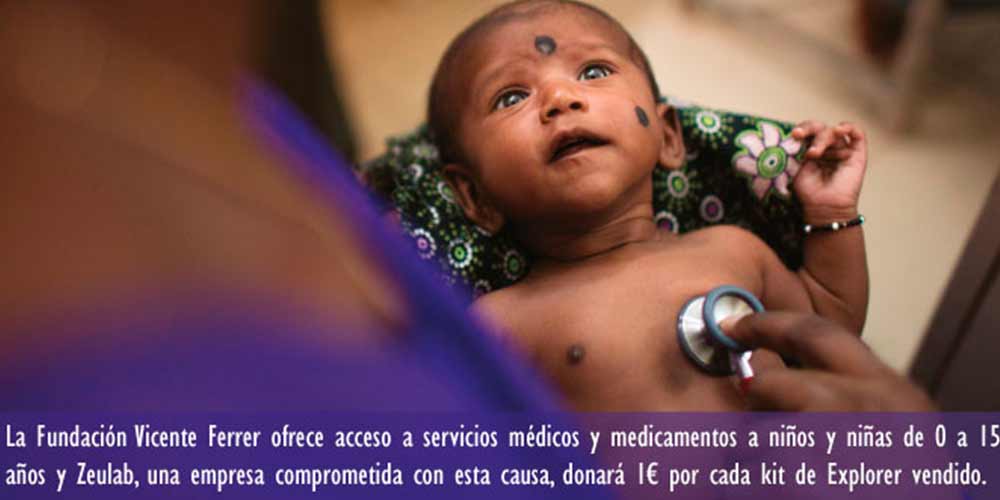
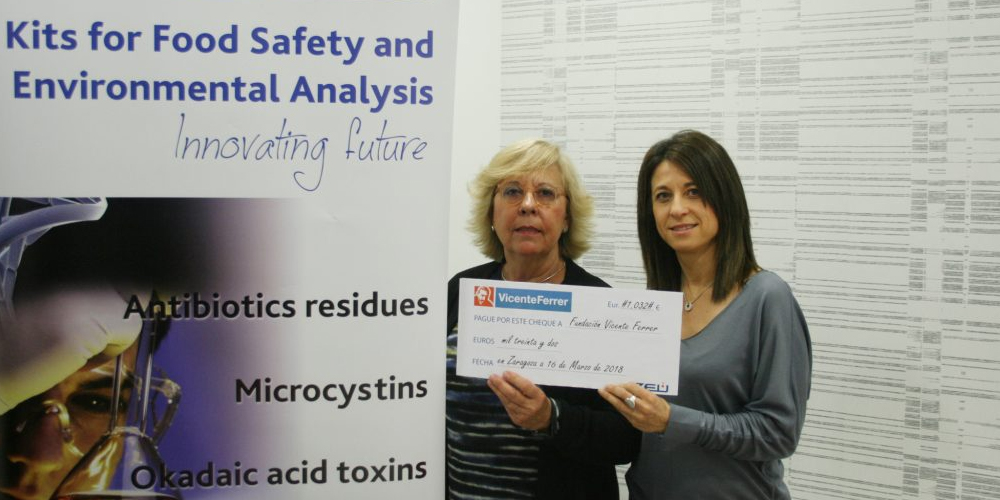
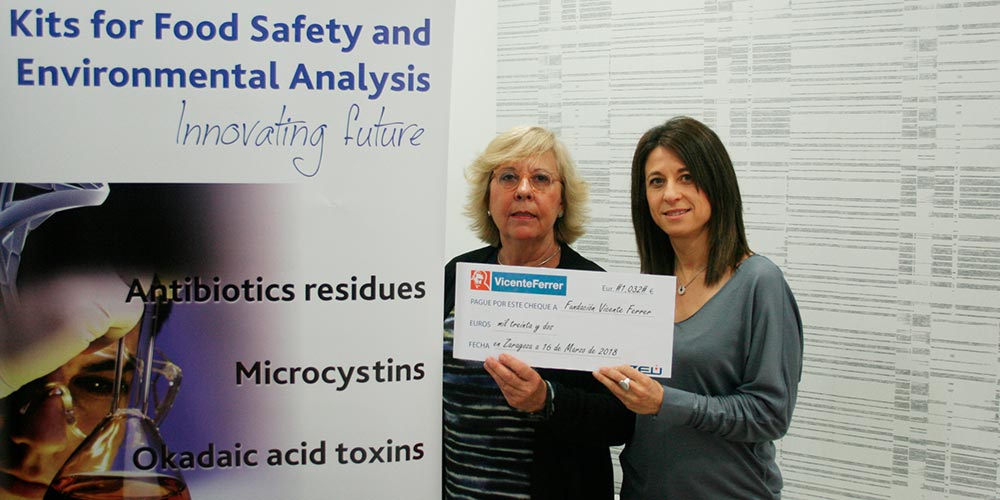
Zeulab has carried out a CSR campaign with the Vicente Ferrer Foundation during 2017. The campaign consisted in assigning 1€ to the Foundation for each Explorer kit sold in the last year. The entire amount was donated for improving the education quality in India, for children with cerebral palsy in Kuderu (the Foundation’s Centre in India). Doctor Elena Dominguez, Sales & Marketing Director at Zeulab, gave the donation to Julia López-Madrazo, Vicente Ferrer Foundation’s agent in Aragon. Thank you to all our customers, partners and everybody who has helped with this campaign. In addition, we want to invite everybody to collaborate with Zeulab in future solidary campaigns. Muchas gracias a todos nuestros clientes que nos han ayudado con esta causa, además queremos aprovechar para invitar a todos aquellos que quiera seguir colaborando con nosotros en las futuras iniciativas sociales que desde Zeulab seguiremos implementando. If you are interested in giving a donation, supporting or collaborating with the Vicente Ferrer Foundation, please visit their webpage.

RSC

Zeulab colabora con la Fundación Vicente Ferrer con su campaña de RSC

Zeulab ha colaborado con la Fundación Vicente Ferrer tras finalizar la campaña de RSC que se ha llevado a cabo durante todo el año 2017. La campaña consistía en la donación del 1€ por cada kit de Explorer vendido durante el pasado año. El importe íntegro fue donado para el acceso a la educación de calidad a niños y niñas con parálisis cerebral en India, ayudando a la mejora de la del centro de Kuderu de la Fundación.

Antibiotic Residues, Conferences & Events

Zeulab has been granted with the TESTACOS project

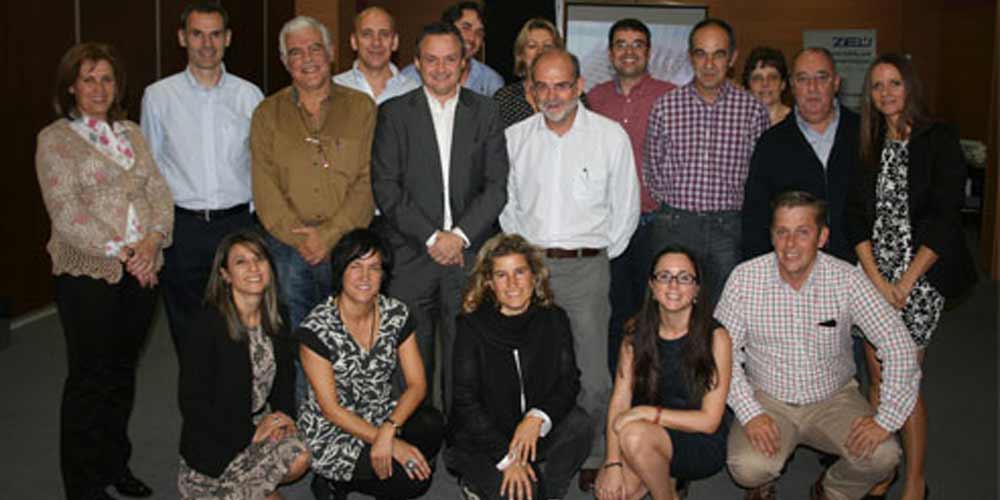
The project will take place between 2018 and 2020. One of the project’s targets is developing a new test for antibiotics detection in live animals. Zeulab has more than 20 years of experience in vitro diagnostic tests for antibiotics detection in food. The biotechnological company has more than 20 tests for detection of antibiotics in food and a novel system, E-READER, which works with microbial tests (Eclipse or Explorer), controls assay time and reads the results in an automated way. The project was presented the 24th of January in the University of Zaragoza (UNIZAR) with all the partners. The project TESTACOS will help to increase the meat quality in France and Spain. During the three years’ project more than 4000 samples will be analyzed looking for antibiotics. Besides, new antibiotic tests for live animals will be developed to minimise contaminated products. The study will be carried out in the POCTEFA region (north-east of Spain and south of France). The project partners are: Agroalimentary Institute of Aragon (IA2-UNIZAR), the University of La Rioja, the University of Perpignan, the National Veterinary School of Toulouse, Public Health Laboratory of Bilbao, Biosentec (Toulouse) and Zeulab (Zaragoza). Read the complete news here.
Proyectos I+D

Desarrollo de una solución pionera de autocontrol en animales vivos para minimizar la presencia de residuos de antibióticos en la cadena alimentaria del área transfronteriza España -Francia (EFA 148/16)

El objetivo principal es el desarrollo, por la colaboración de centros de investigación y empresas a ambos lados de la frontera, de herramientas analíticas pioneras e innovadoras que detecten residuos de antibióticos, sulfamidas y quinolonas en animales vivos y en carne comercial de distintas especies, garantizando de este modo una reducción de los riesgos de salud asociados a la producción cárnica y un plan de medidas de gestión y control de residuos para el sector agroalimentario de la región. Los objetivos específicos del Proyecto son: Desarrollo y validación de un test integral de detección de antibióticos, sulfamidas y quinolonas para un fácil autocontrol de estos residuos tanto en animal vivo como en la carne comercializada A) Desarrollo e industrialización de un test biológico de cribado para detección de antibióticos y sulfamidas en animales vivos. B) Desarrollo e industrialización de test químicos para la detección de quinolonas en animales vivos y carnes comercializadas. Evaluación de la presencia de antibióticos, sulfamidas y quinolonas en la carne comercializada de distintas especies animales (ovino, vacuno, porcino y aves) en la región transfronteriza (Bilbao, Logroño, Zaragoza, Toulouse y Perpignan); y demostración de la necesidad de implantar nuevos protocolos de actuación. Plan de Comunicación. Elaboración de una guía metodológica específica sobre detección temprana de residuos de antibióticos en la cadena alimentaria y la necesidad de implantar las herramientas desarrolladas, para su difusión entre asociaciones ganaderas y otros actores implicados en la producción y comercialización de productos cárnicos: por razones de salud pública y como estrategia para diferenciar la carne producida en las regiones transfronterizas como carne "libre" de antibióticos. Duración: 01/01/2018 - 31/12/2020 El proyecto está cofinanciado al 65% por el Fondo Europeo de Desarrollo regional (FEDER) a través del Programa Interreg V A España/Francia/Andorra - (POCTEFA  2014-2020). El objetivo de POCTEFA es reforzar la integración económica y social de la zona fronteriza España-Francia-Andorra. Su ayuda se concentra en el desarrollo de actividades económicas, sociales y medioambientales transfronterizas a través de estrategias conjuntas a favor del desarrollo territorial sostenible. Más información en: www.testacos.com www.poctefa.eu
Jornadas & Eventos

Zeulab participa en el IV Congreso Internacional de Calidad y Seguridad Alimentaria Acofesal

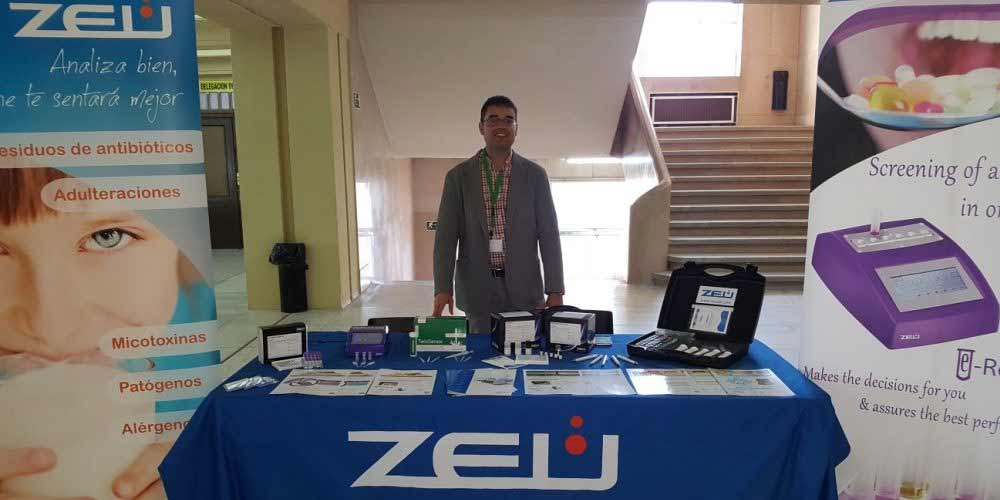
Los pasados 14, 15 y 16 de junio, se celebró en la Universidad Complutense de Madrid el IV Congreso Internacional de Calidad y Seguridad Alimentaria Acofesal con un gran éxito de asistencia, más de 70 trabajos presentados y la presencia de un importante número de expositores. El nivel general de las ponencias y mesas redondas fue elevada y la participación de los asistentes muy activa, demostrando el gran interés suscitado por los temas propuestos.

RSC

Zeulab collaborates with the Vicente Ferrer Foundation

At Zeulab we believe that cooperation, solidarity and development must be fundamental pillars in business philosophy. For this reason, for years, we have been collaborating with different NGOs transmitting our commitment to eradicate the inequalities and mobilize consciousness as well. This year, the cooperation will take place with the Vicente Ferrer Foundation; NGOs committed to the improvement of the living conditions of the most disadvantaged communities in India. India is a very complex country where more than 1,295 million people. According to the World Bank about 300 million people live under the poverty line, i.e., on less than $1.25 a day. The FVF works on the causes of the problems and collaborates with communities to provide sustainable solutions that meet the real needs of the population. The main areas of activity of the Foundation are the States of Andhra Pradesh and Telangana, but over the years they have expanded their intervention to new areas within those States, making it so their project benefit more people living in extreme poverty every day. In addition, the general objective of the FVF Health Sector to provide access to a proper healthcare network proper, to medicines and the infrastructure necessary to improve the quality of life in the most disadvantaged populations. In Zeulab we know very well how important the use of antibiotics can be on many occasions, in the same way that we are very aware of the importance that its correct use has. The detection of antibiotics as well as avoiding the abusive use of them, can prevent serious damage to human and animal health. The voices in the scientific and medical fields that warn of the real risk posed by the growing ineffectiveness of some of the major antibiotics due to the development of antibioresistance in bacteria that cause disease are numerous. So much so that the World Health Organization considers this problem amongst the three most serious health risks which humanity must face in the coming decades. EXPLORER 2.0 is a qualitative diagnostic kit that allows the detection of inhibitory substances in a range of food and matrices (meat, liver, kidney, eggs or feed). The test is based on the inhibition of microbial growth and allows to differentiate from a simple and quick way of samples containing Antimicrobial residues above the limits of detection of the test. In the framework of our cooperation with the FVF, our commitment will be donate €1 for every sale of this kit, joining in this way our efforts to combat all these issues. If you are interested in collaborating with the Vicente Ferrer Foundation, you can get in touch directly with the Foundation or consult all intervention options on their Web site.

RSC

Zeulab colabora con la fundación Vicente Ferrer

  En Zeulab pensamos que la cooperación, la solidaridad y el desarrollo deben ser pilares fundamentales en la filosofía empresarial. Por esta razón, desde hace años, colaboramos con distintas ONGs transmitiendo así nuestro compromiso de erradicar las desigualdades y movilizar las conciencias. Este año, la cooperación se llevará a cabo con la Fundación Vicente Ferrer (FVF); ONG comprometida con la mejora de las condiciones de vida de las comunidades más desfavorecidas de la India.

RSC

ZEULAB colabora con Oxfam Intermón

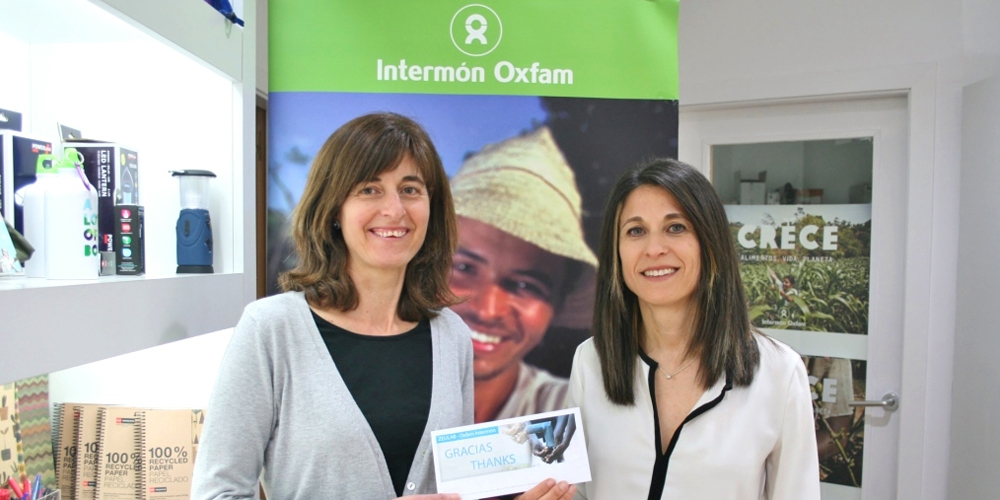
Zeulab ha colaborado con Oxfam Intermón tras finalizar la campaña de responsabilidad social que llevó a cabo durante el 2014. El 1% de las ventas de MicroCystest fueron donadas a Oxfam Intermón colaborando con la campaña «Un mundo sin Agua» propuesto por Zeulab, contribuyendo a que las familias etíopes tengan acceso a agua potable.

Patógenos

Listeria y Listeriosis

Listeria es un género de bacilos gram + de los cuales Listeria monocytogenes es la única especie patógena para el ser humano por transmisión alimentaria. Una toxiinfección alimentaria con Listeria monocytogenes es potencialmente mortal. Su peligrosidad radica principalmente en la distribución ubiquitaria que presenta y en la capacidad que tiene de crecer a baja temperatura y a concentraciones elevadas de sal. A pesar de que la incidencia de la listeriosis es muy baja (normalmente inferior a un caso por cada 100.000 habitantes al año) la tasa de mortalidad se sitúa entorno al 20-30%.

Scroll al inicio