Nombre del autor:Santiago Mendoza

Marketing Manager at Zeulab. Passionate about marketing and communication.

Patógenos

Métodos de análisis para Salmonella y Listeria

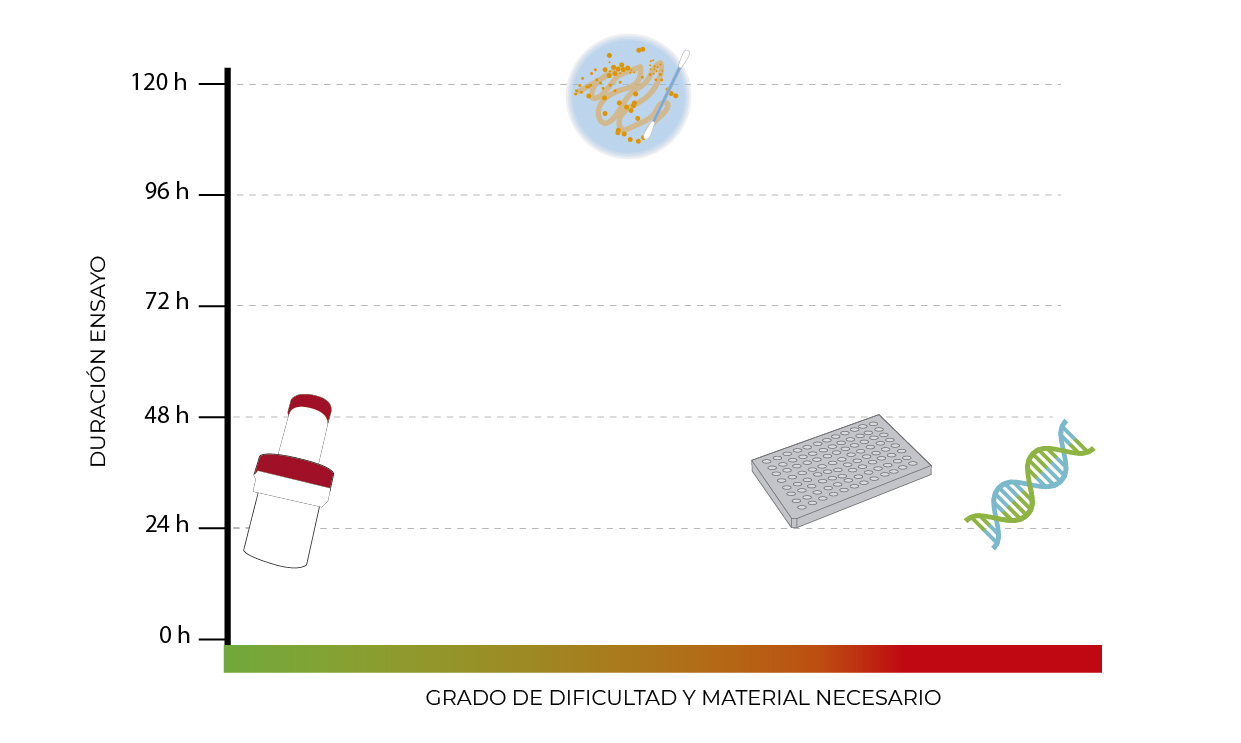
El control de patógenos, Listeria y Samonella en alimentos es una de las cuestiones principales en la seguridad alimentaria. Los laboratorios de control y las empresas de alimentación tienen que realizar pruebas de diagnóstico para detectar si en alguna de las fases de producción los alimentos sufren una contaminación. Frente a los métodos microbiológicos convencionales, los avances tecnológicos han dado lugar a una amplia gama de métodos que son hoy los más utilizados ante la demanda de resultados analíticos rápidos, desde un mínimo de 24 a 120 horas (dependiendo del análisis y del patógeno a analizar).

Pathogens

Salmonella or Listeria monocytogenes can cause your business closure

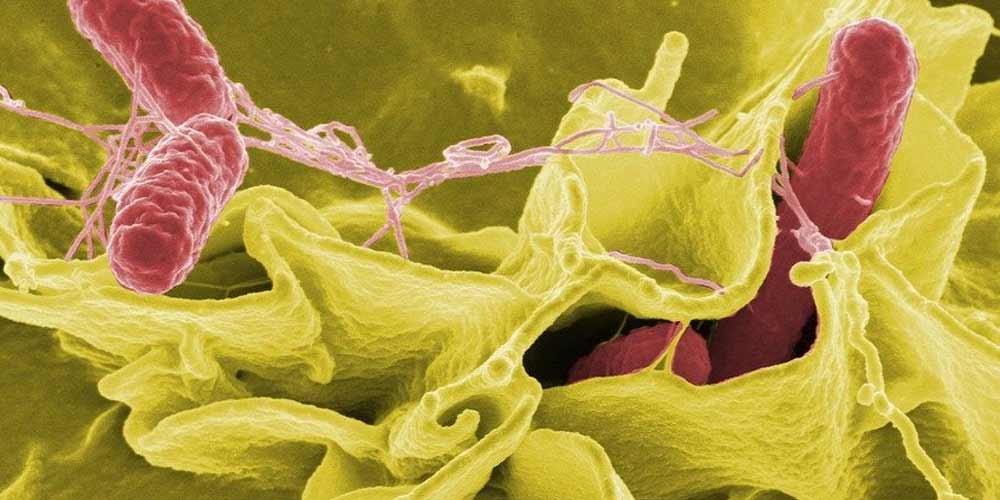
Recent cases of food poisoning (in 2019) due to Salmonella and Listeria show that appeared in the media have highlighted the importance of the control and analysis of pathogens (Listeria monocytogenes and Salmonella) and the consequences for consumers and companies in the food sector. They have been serious cases, like 5 dead from eating sandwiches in the hospital in the UK, 5 dead by consuming trout and smoked salmon or French Government stopped  the production of a cheese company after finding Listeria in their products.

Patógenos

Salmonella o Listeria monocytogenes, pueden causar el cierre de tu negocio

Los recientes casos de toxiinfecciones alimentarias que han aparecido en los medios de comunicación, han puesto de manifiesto la importancia del control y análisis de patógenos (Listeria monocytogenes y Salmonella) y las consecuencias para consumidores y empresas del sector alimentario. Han sido casos graves, como los 5 fallecidos en un hospital de Reino Unido, 5 fallecidos por el consumo de trucha y salmón ahumado o una mujer francesa que perdió a su bebé por comer queso contaminado por Listeria.

RSC

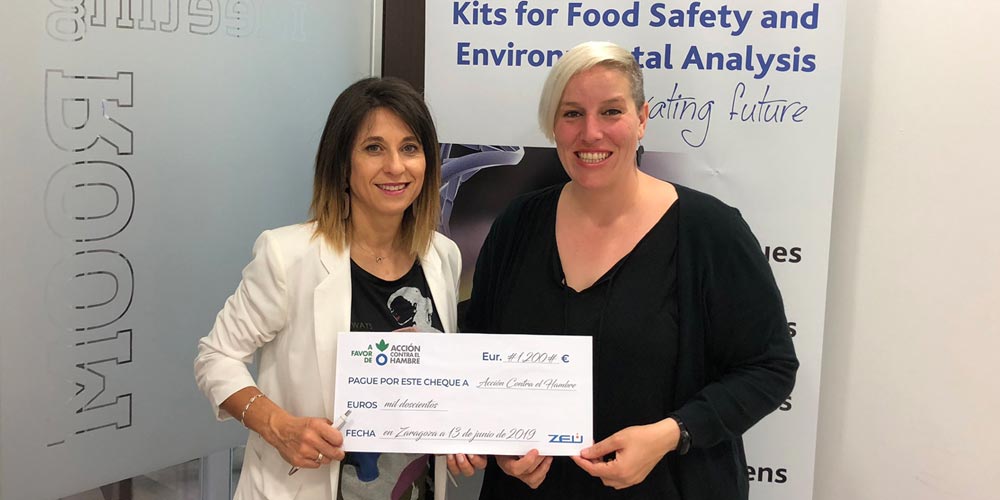
Gracias a su campaña Analiza contra el Hambre» Zeulab hace entrega de una donación a favor de Acción Contra el Hambre»

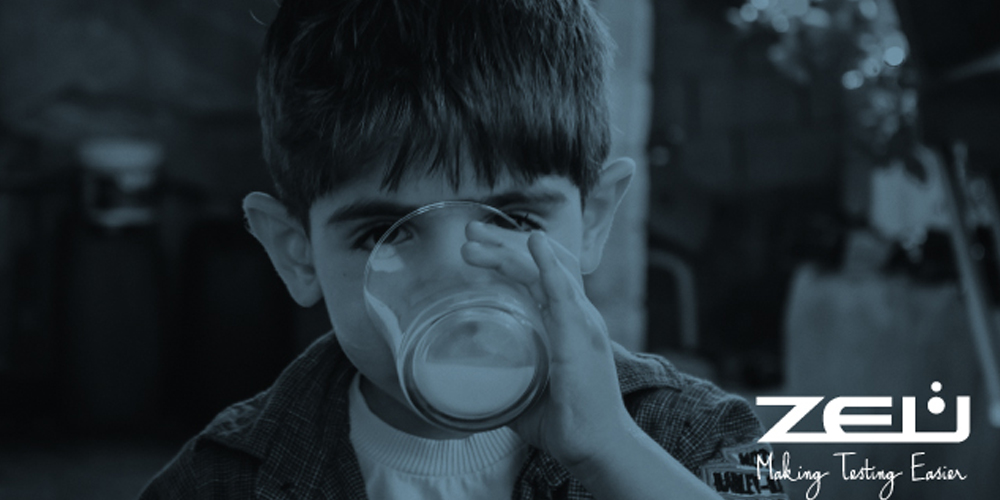
Los clientes de Zeulab han contribuido con las compras de los productos de la línea de antibióticos  a que la empresa de biotecnología zaragozana haya podido colaborar con Acción Contra el Hambre tras finalizar la campaña de RSC que se ha llevado a cabo durante los últimos 12 meses. La campaña se ha realizado bajo el eslogan: “Analiza contra el hambre” en la que Zeulab realizaba una aportación por cada venta de uno de sus productos Explorer, Eclipse, Equinox o e-Reader vendidos durante el periodo de la campaña. De esta manera Zeulab hace extensible a todos sus clientes sus acciones de Responsabilidad Social Corporativa y su compromiso con la sociedad.

Patógenos

¿Por qué se producen los brotes de Listeria en la industria alimentaria?

La industria alimentaria cumple con la legislación europea, entre ellos el Reglamento (CE) nº 2073/2005 que determina los criterios microbiológicos que afectan a los productos alimenticios. Aun realizando los controles que marca la legislación y enviando muestras a laboratorios externos o internos para su análisis, pueden ocurrir contaminaciones como los últimos casos recientes acontecidos en el territorio nacional. En el caso de la Listeria monocytogenes, siendo una bacteria ubicua es relativamente sencillo que una instalación o equipo se contamine. Hay que destacar el peligro de la bacteria Listeria monocytogenes, la cual puede formar biofilms y desarrollar tolerancia a los desinfectantes, formando focos de contaminación persistentes y de difícil eliminación como por ejemplo líneas de procesado alimentario, extractores, sistemas de refrigeración, suelos, desagües, etc. De ahí la importancia de analizar periódicamente no solo los productos alimenticios, sino que también las superficies.

RSC

Zeulab has been granted with the “Premio Aragón Investiga” award in the 2018 edition

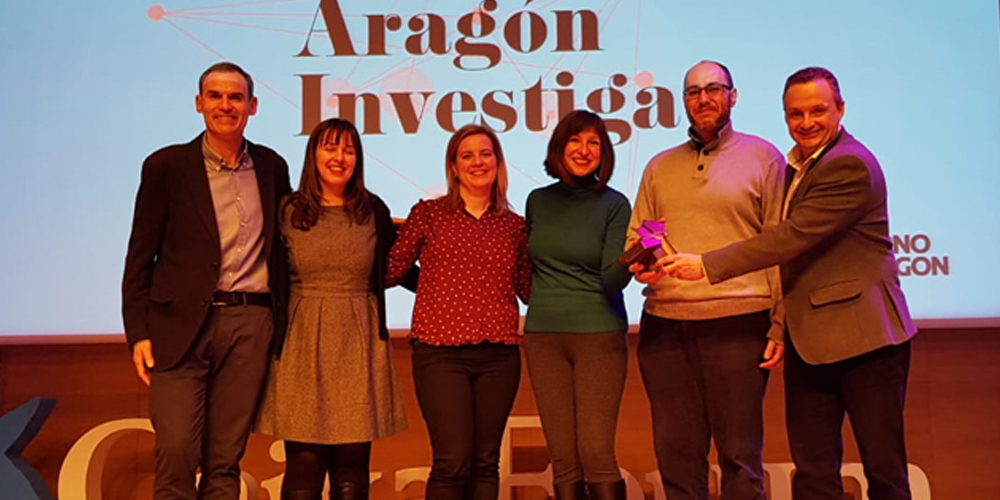
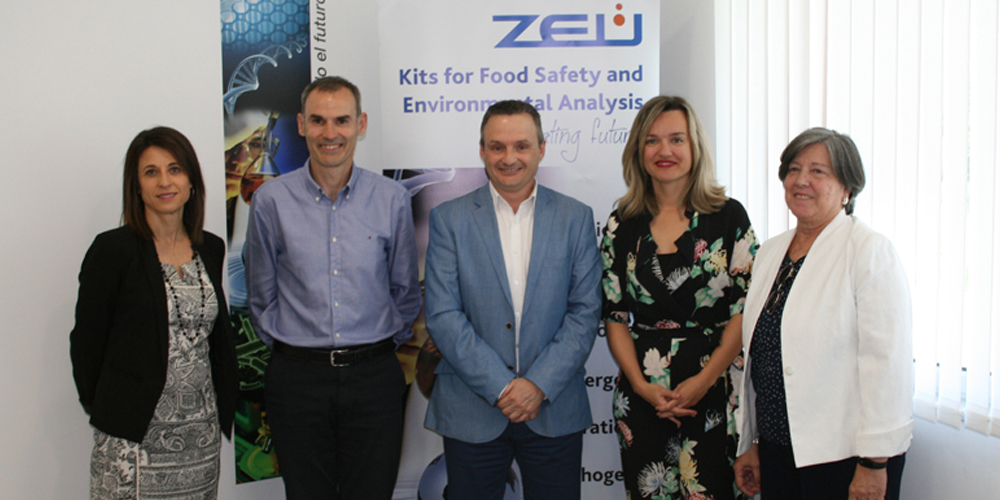
This Prize is intended to award the companies that have been recognized for their support to research, innovation or knowledge transfer in Aragón. Pilar Alegría, Innovation Advisor, Research and University of the Aragon Government, was responsible for awarding the private sector granting the prize to Zeulab. Luis Mata, our Technical Director received the award at the Caixaforum building in Zaragoza. In his speech, Luis Mata, thanked the recognition and remarked the award is “a boost to our company is self-steem”. He also remarked the experience of the company with 24 years of life, highlighting of its staff (10 PhDs, 14 graduates or with masters degrees of a total of 40 workers.) From the start, Zeulab has collaborated with public research centres. As a result, we have been able to accelerate the development and market-placing of our new products. Zeulab has collaborated with public research centres in the development of most of its 30 projects. Zeulab also has participated in 28 scientific publications (6 of them in 2018), more than 80% of them in collaboration with others public researching groups. Thanks to this effort, from the beginning of our activity at Zeulab we have developed more than 50 innovative products commercialized in 40 countries around the world, providing differential elements in the market making than unique or with novel technical features.

RSC

Zeulab ha sido galardonado con el “Premio Aragón Investiga del Gobierno de Aragón en su edición de 2018″

El Premio Aragón Investiga está destinado a las organizaciones que se hayan distinguido por su dedicación y apoyo a la investigación, a la innovación o a la transferencia de conocimientos en Aragón. Pilar Alegría, Consejera de Innovación, Investigación y Universidad del Gobierno de Aragón, fue la encargada de entregar el premio en la categoría de entidad privada a nuestro director técnico Luis Mata, en el salón de actos del edificio CaixaForum de Zaragoza.

RSC

Zeulab collaborates with Action Against Hunger

At Zeulab we think that cooperation, solidarity and development must be the three pillars in our business philosophy. For this reason, for years, we have been collaborating with different NGOs transmitting our commitment to eradicate the inequalities and mobilize consciousness as well. This year, the cooperation will take place with Action Against Hunger; NGOs that works fighting again the consequences and causes of malnutrition in over 40 countries. More than 5,000 humanitarian professionals share a vision: a world without hunger. The vision of AAH is a world without hunger, because we are the first generation that can achieve this; moreover its goal is to save lives by erasing hunger through prevention, detection and treatment of malnutrition. In addition, since 2012 they also work in Spain on issues of entrepreneurship and employability. Everything collected through this collaboration campaign will go to the general activity of Action Against Hunger, and its projects to combat child malnutrition, water and sanitation and income generation in more than 50 developing countries. WATER: We aim to guarantee access to water and basic sanitation, which are both necessary for the life and development of communities SANITATION: When faced with health risks, our aim focuses on reducing diseases related to poor water, hygiene and sanitation conditions HYGIENE: Hygiene promotion is related to improved quality of life through awareness-raising campaigns NUTRITION: Good nutrition is the foundation of human well-being and will contribute to improving problems associated with poverty, health, education, gender differences and employment. HEALTH: We treat the conditions linked to malnutrition and prevent nutritional deterioration that could lead to illness. FOOD SECURITY: The availability, access and consumption of nutritional food guarantees food security. LIVELIHOOD: Our livelihood interventions aim to guarantee people’s dignity without having to depend on external aid. From Zeulab we have been working and developing tests for the detection of antibiotics for many years and we know how important their correct use is. The detection of antibiotics as well as avoiding the abusive use of them can prevent serious harm of food, for both human and animal. It should be noted that from the scientific and medical world is being denounced the risk posed to people and animals by the increasing inefficiency of some of the main antibiotics due to the development of antibiotics in the bacteria that cause the diseases. So much so that the World Health Organization (WHO) considers this problem among the three most serious health risks that humanity must be fancing in the coming decades. Our line of antibiotic detection allows the detection of inhibitory substances in various foods and matrices (milk, meat, liver, kidney, eggs or feed). The test is based on the inhibition of microbial growth and allows simple and rapid differentiation of samples containing antimicrobial residues above the detection limits of the test. In the framework of our collaboration with Action Against Hunger, our commitment will be to donate part of the sales of the product lines for the detection of antibiotics: Explorer, Equinox, Eclipse and also e-Reader, thus combating our efforts to combat all situations of hunger that exist. If you are interested in collaborating with Action Against Hunger, you can get in touch directly with the NGO or consult all intervention options on their website.

RSC

Zeulab colabora con Acción Contra el Hambre

En Zeulab pensamos que la concienciación, la solidaridad y la cooperación deben ser la bandera en nuestra filosofía de empresa. Por esta razón, desde hace años, colaboramos con distintas ONGs transmitiendo nuestro compromiso de erradicar las desigualdades, movilizar las conciencias y colaborar por un mundo más justo.

Scroll al inicio