Nombre del autor:Pedro Razquin

Pedro Razquin is Owner and CEO at ZEULAB, he is also President of the biotechnology cluster of Aragon. Developing solutions for Food Security.

Alérgenos

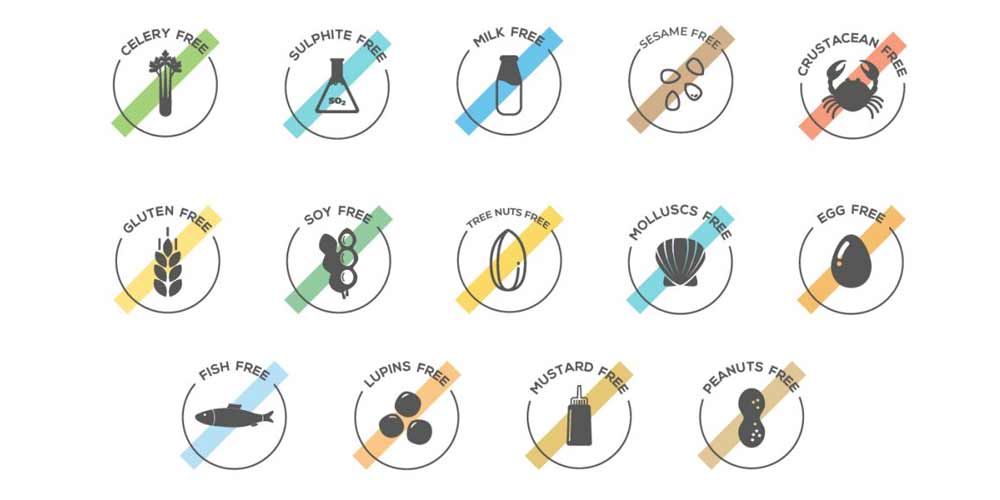
Los 14 alérgenos alimentarios de declaración obligatoria

Normativa alérgenos alimentarios: Todas las empresas del sector alimentario deben controlar la gestión de alérgenos alimentarios en sus productos para evitar cualquier problema de contaminación propia y de los futuros consumidores. Las alergias alimentarias son un problema de salud pública y por tanto el reglamento de la Unión Europea 1169/2011 así como el Real Decreto nacional 126/2015, los recogen e identifican obligar a las empresas a su correcto etiquetado y control. Las personas que sufren alergia o intolerancia a uno o varios alimentos deben eliminar estrictamente de su dieta los mismos, esto es lo que hace imprescindible una correcta información al consumidor de los ingredientes alérgenos que contienen los alimentos envasados y sin envasar.

Residuos Antibióticos

El método más simple y rápido para analizar residuos de antibióticos en alimentos.

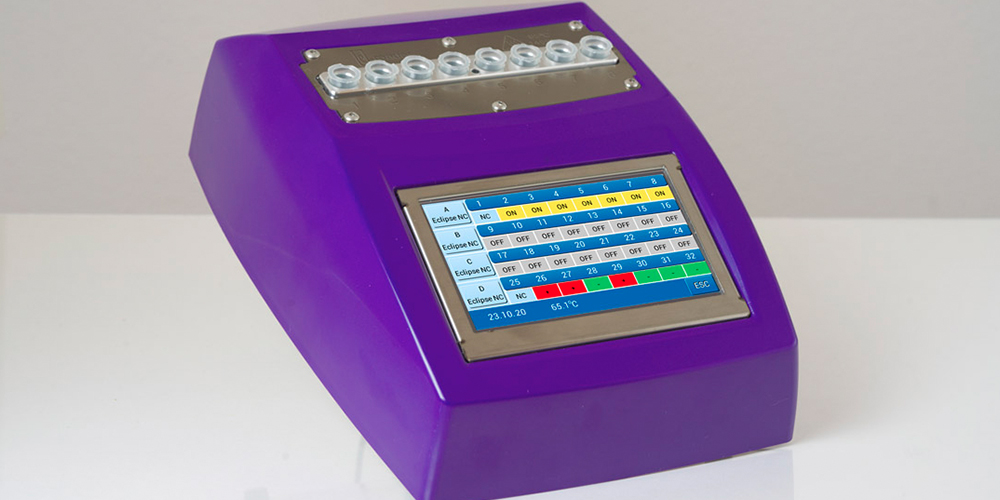
e-Reader un sistema innovador que hace el análisis de antibióticos por tí. Es un método multi-residuos que detecta más de 30 sustancias en un sólo análisis y cumple con los LMR de la UE. e-Reader funciona con tests de inhibición microbiana (Eclipse o Explorer) automatizando el ensayo . Así, se garantiza el mejor funcionamiento y ahorra tiempo al usuario.

Antibiotic Residues

The simplest and least time consuming method to test antibiotic residues in food

e-Reader; the innovative system that runs antibiotic analysis for you. A multi-residues analysis that detects more than 30 substances in a single assay complying with EU MRLs. e-Reader works with microbial tests (Eclipse or Explorer) where the assay is automatically carried out. So, it guarantees the best assay performance and saves the user’s time. Antimicrobials have made a major contribution improving animal’s health and welfare for decades. However, the misuse and overuse of these drugs in humans and animal production have led to antibiotic-resistant bacteria. According to the WHO, antimicrobial resistance is one of the most serious threats to global public health around the world today, causing 25.000 deaths in Europe (OCU, 2013 (1)) and 23.000 in the USA, (CDC-USA, 2013 (2)). Responsible use of antimicrobial substances together with antibiotic testing in food would contribute to reduce antimicrobial resistance. Simple and economic analytical tools that can be easily used by food and feed operators would help them to provide safe food within the current legislation. Microbiological tests, based on the inhibition of bacterial growth, detect a broad range of antibiotics and offer a high samples turnover. So, they are ideal for a first screening of antibiotics in food matrices. Within the microbiological multi-residue methods, the traditional “five plate method”, is still used as a reference method (3, 4). Nevertheless, this method is time consuming and requires laboratory facilities and skills. Commercial microbial ready-to-use tests, such us Eclipse or Explorer, are widely available and commonly used. These methods are based on Geobacillus stearothermophilus and use a pH color indicator (5, 6, 7). They are faster and easier to perform. However, the user has to decide, based on the color and in comparison to a negative control sample, if results are either positive of negative. Although, colors are usually clear, those samples with antibiotics close to the limit of detection would be more difficult to identify and can also be seen as positive or negative depending on who and how the colors are visualised. e-Reader provides standardized and objective results. Bactericide antimicrobials have the capability of killing the bacteria and produce a clear color change at the end of the assay. However, bacteriostatic drugs only slow the bacteria growth. So, although a blue color will indicate the presence of those antibiotics at the end point of the assay, if the test is incubated for longer time the bacteria could be able to re-grow turning the media to a yellowish color that would be identified as a negative result. Therefore, it is very important to end the assay at the optimal time without over incubation for an optimal assay performance. e-Reader performs the microbial test (Eclipse or Explorer) automatically, incubating at 65° C and monitoring the color in real time to calculate the bacteria growth kinetic. e-Reader uses an internal software to integrate time and color parameters to determine the endpoint of the assay, stopping automatically and interpreting qualitative results.   e-Reader is the simplest and least time consuming method available in the market for an onsite multi-screening of more than 30 antibiotics in milk and meat. After an easy (meat) or none (milk) sample preparation, adding the sample and viewing the results 3 hours later, the screening assay is completed. Numerical results are displayed on the screen and saved in an internal memory to assure traceability. References (1) Resistencia a antibióticos -Superbacterias. OCU-SALUD, septiembre 2013. (2) T. Frieden. Antibiotic resistance threats in the United States, 2013. US Department of Health and Human Services – Centers for Disease Control and Prevention. (3) V. Gaudin et al. Validation of a Microbiological Method: The STAR Protocol, a Five-Plate Test, for the Screening of Antibiotic Residues in Milk. Food Additives and Contaminants, 2004. (4) V. Gaudin et al. Validation of a Five Plate Test, the STAR protocol, for the screening of antibiotic residues in muscle from different animal species according to the European decision 2002/657/EC. Food Additives and Contaminants, 2010. (5) M. I. Berruga et al. Performances of Antibiotic Screening Tests in determining the persistence of Penicillin residues in ewe’s milk. Journal of Food Protection, 2003. (6) A. Montero et al. Detection of antimicrobial agents by a specific microbiological merhod (Eclipse 100 ®) for ewe milk. Small Rumiant Research, 2005. (7) V. Gaudin et al. Validation of a wide-spectrum microbiological tube test, the Explorer® test, for the detection of antimicrobials in muscle from different animal species. Food Additives and Contaminants, 2009. (8) L. Mata et al. Performance of Eclipse Farm test coupled to e-Reader for antibiotic residues detection in raw milk. Food Analytical Methods, 2015. (9) L. Mata et al. Validation of the Explorer® 2.0 test coupled to e-Reader for screening of antimicrobials in muscle form different animal species. Food Additives and Contaminants, 2014. (10) W. Reybroeck & Sigrid Ooghe. Validation of Eclipse Farm 3G + e-Reader with negative control method, 2015. Belgian Institute for Agricultural and Fisheries Research -ILVO-. (11) W. Reybroeck & Sigrid Ooghe. Validation of Explorer V2.0 + e-Reader, 2014. Belgian Institute for Agricultural and Fisheries Research -ILVO-.

Toxinas de Agua y Marinas

Microcistinas y su detección en agua

Afloramiento de algas en aguas continentales Las cianobacterias (algas verde-azuladas) son procariotas unicelulares que crecen y se desarrollan principalmente en aguas continentales. Son organismos autótrofos que realizan fotosíntesis oxigénica y que tienen una participación esencial en la cadena alimentaria de diversos ecosistemas. Sin embargo, bajo determinadas circunstancias (eutrofización, cambio climático, etc.) son capaces de crecer de forma descontrolada dando lugar a” blooms” o afloramientos. Afloramiento de cianobacterias en el lago Santa Claire en Estados Unidos. El afloramiento de las cianobacterias puede llegar a ser observable incluso desde el espacio. http://earthobservatory.nasa.gov/NaturalHazards/view.php?id=86327&src=twitter-nh&linkId=16012048 Peligrosidad por liberación de toxinas

Pathogens

Answers to FAQs in pathogen analysis

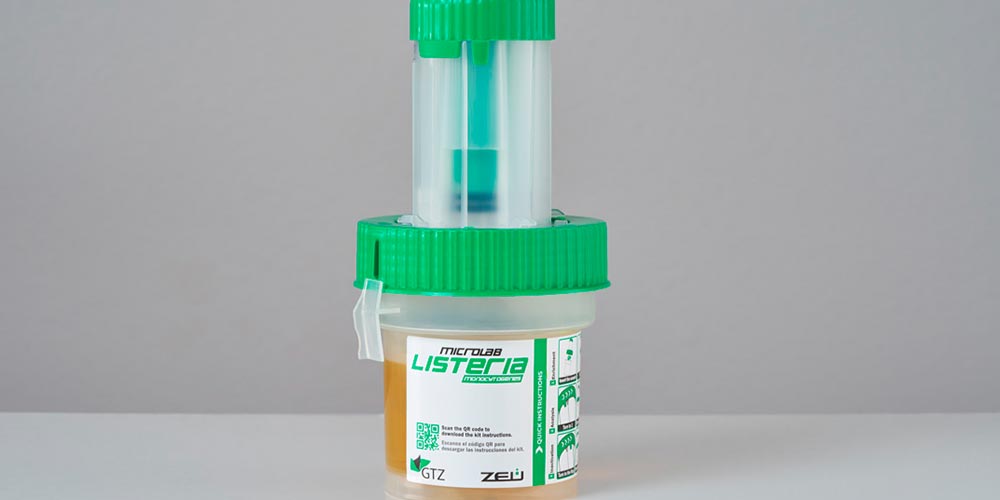
Does the food legislation allow a pathogen test in a food production plant? The legal regulation that regulates the microbiological quality of foods is mainly included in the EC Regulation No. 2073/2005 that establishes the microbiological criteria that a food must meet in terms of food safety and the EC Regulation No. 852/2004 regarding the hygiene of food. These regulations describe how food operators must control microbiological risks in their production facilities. According to these indications it is very important to select a specific method for the detection of the pathogens of interest and that at the same time can be implemented safely according to the available resources. MicroLab allows self-control in the plant, guaranteeing the safety of the food produced, as well as that of its employees. It is an assay that is carried out entirely in a hermetically sealed device, eliminating the risk of contamination derived from the analysis. Do I need to have a laboratory in my facilities to carry out a pathogen test? With the new Microlab device you do not need a lab. A small space to place a stove at 37°C and a table where to place a scale is all you need to analyze Salmonella or Listeria in your facilities. Does the analysis of pathogens imply contamination risks for my installations or workers? The available methodologies for pathogen analysis involve the transfer, between different containers, of samples that may contain high concentrations of pathogens, posing a risk of contamination. However, the use of Microlab to detect Salmonella and / or Listeria eliminates this risk since the device is hermetically closed after depositing the sample, thus preventing the exit of any liquid or gas generated during the test. In addition, the enriched medium is neutralized by eliminating the presence of any microbial growth.
Water and Marine Toxins

Microcystin detection in water

Algal blooms in freshwater lakes Cyanobacteria (blue-green algae) are unicellular prokaryotes that thrive mainly in freshwater lakes. Being autotroph organisms they accomplish oxygenic photosynthesis playing a significant role in the food chain of several ecosystems. However, under certain circumstances (eutrophication, climatic change, etc.), they can grow and lead to uncontrolled blooms. Cianobacteria bloom in Saint Claire lake (USA). Cyanobacteria blooms are observable even from space. http://earthobservatory.nasa.gov/NaturalHazards/view.php?id=86327&src=twitter-nh&linkId=16012048 Harmful effect of toxin release The risk of these uncontrolled blooms is related to the capacity that some particular genera have in producing pathogenic toxins. The most common and dangerous toxin is called microcystin and is produced by Microcystis, Anabaena, Planktothrix, Nostoc and Anabaenopsis. It is generally accepted that half of the blooms are toxic. Microcystins are secondary metabolites that are normally located inside cyanobacteria cells. However, when toxins are released, normally due to cellular lysis, the freshwater becomes contaminated and its consumption turns hazardous not only just for humans but for animals too. It is important to address that toxin analysis does not indicate the presence of the microorganism. This issue may become a problem in drinking water treatment plants as toxin may release after cellular lysis. Therefore, it is advisable to perform an intracellular microcystin analysis prior to drinking water treatment. During the last years the concern regarding cyanotoxin toxicity has not been limited to drinking and recreational water but to the intake of food that has been exposed to toxins (i.e. vegetables, fish and mollusks, which specially have a great bio-concentrating capacity). Until recent years, microcystins were linked exclusively to freshwater environments. Nevertheless, these toxins are very stable and persistent and may appear in marine water as well (due to downstream toxin transport). In fact, several studies have verified microcystin accumulation in mollusk bivalbes ready for human consumption. Microcystins Microcystins are mainly hepatotoxic and its long term exposition leads to a direct carcinogenic effect in the liver. They specifically inhibit serin/threonine phosphatases type 1 and 2A from mammals, which have tumor suppressor functions. Once the toxin is accumulated in the liver, they promote cytoskeleton disorganization, lipid peroxidation, loose of plasmatic membrane integrity, DNA fragmentation, apoptosis and finally necrosis. Microcystins are cyclic heptapeptides composed by natural and no natural amino acids. They are very stable and thermoresistent and more than 100 variants have been described. Four of them (LR, RR, LA and YR) are especially frequent. WHO recommends consumption of drinking water with microcystin LR concentration bellow 1 µg/L. Molecular structure of the main microcystins. Microcystins are cyclic heptapeptides formed by natural and no natural amino acids. Amino acids variations in X and Y positions lead to microcystin diversity (more than 100 known variants). Factors promoting toxin release Cyanobacteria grow is associated to high concentration of nutrients being fosforous the element that controls cell proliferation. Nitrogen availability is also important especially in those species that cannot fix atmospheric nitrogen. Temperature rise, luminosity rise or low water turbulence are factors that also trigger cyanobacteria grow. Potentially cyanotoxin producing blooms can thrive without toxin synthesis and release. One of the reasons arises from the factor that toxin and no toxin producing cyanobacteria normally coexist in a given bloom. The ratio between toxic and no toxic strains can vary significantly in space and time; factors involved are not completely understood at present. Besides, the presence of a toxic strain does not imply that the toxin is being synthesized. A number of studies have tried to find a correlation between toxin synthesis and physic-chemical parameters (lake depth, temperature, nutrients, etc.) and biological parameters (number of genes related with toxin biosynthesis, amount of chlorophyll, biomass, etc.). However, no one of them has been successful and direct analysis of the toxin is the only reliable method so far. Toxin detection Several methodologies have been described concerning microcystin analysis in water. The choice of a specific method is related to the use of the analytical results derived. The following table summarizes the main features among the current methodologies. METODO PROPIEDADES BIOASSAY Real toxicity measurement No specific No respect animal welfare PHOSPHATASE INHIBITION Fastest Specific and very sensitive Real toxicity measurement  (target: PP2A) HPLC Specific but less sensitive Need of standards for every molecule Does not measure real toxicity ELISA Fast and sensitive Irregular cross reactivity against other microcystins/ False positives Does not measure real toxicity The methods can be divided in screening and confirmatory methods. Mouse bioassay, ELISA and PP2A inhibition assays are among the first ones. Screening methods have to be sensitive enough to avoid false negatives, fast, simple and allow the treatment of a high number of samples. On the other hand, the confirmatory methods are the only methods that allow unequivocal identification of the molecule, being HPLC and LC-MS the representative ones. The disadvantage of these instrumental methods is that they require standards for every molecule that want to be identified. Sometimes, in the case of microcystins, this is not possible as more than 100 variants exist. The methods can also be classified as structural or functional methods. The first ones are based on its physic-chemical properties (HPLC, immunochemical methods) while the second ones use the biological target of the toxins (PP2A inhibition assay and mouse bioassay). It is clear that both strategies are perfectly complementary. It is advisable to use a screening method first, and if possible based on the toxigenic potential, followed by a confirmatory method. Sometimes, a positive sample could never be confirmed as there are no standard for all the discovered microcystins. An important factor to take into account in microcystin analysis is that toxins can be confined inside the cells and have to be released first for the correct analysis. There are several documented methods concerning lysis and toxin extraction. However, not every method has been tested in terms of recovery and may give rise to toxin underestimation. More importantly, de extraction method has to be compatible with the analytical technique. Microcystest MicroCystest is a simple and rapid enzymatic test for the detection of microcystins and nodularins in drinnking and recreational water. The toxicity of microcystins is associated with the inhibition of

Alérgenos

Comer sin alergias: nuevo reto de la industria agroalimentaria

ZEULAB, junto con otras empresas y organismos de investigación se unen en el proyecto SOLMILK para dar respuesta a las necesidades nutricionales de la población con alergia a las proteínas de la leche Sólo en Europa más de 17 millones de personas tienen alergia a algún alimento, especialmente niños y jóvenes. En España, el porcentaje de alérgicos en el primer año de vida se sitúa entre el 0,36% y el 1,95%. La leche ocupa el tercer lugar en las patologías alérgicas por detrás del huevo y el pescado. En este contexto, ZEULAB junto con las empresas ILAS y Laboratorios Ordesa, la FIBHDC  (Fundación Investigación Biomédica del Hospital Clínico San Carlos), la Universidad de Zaragoza y el centro tecnológico AZTI participan en SOLMILK, un proyecto de desarrollo experimental con el que se pretende elaborar ingredientes y alimentos específicos que no produzcan alergia y sean más tolerables para la población sensible.

Residuos Antibióticos Lácteo

¿Residuos de tilosina en la leche?

La tilosina es un antibiótico bacteriostático del grupo de los macrólidos desarrollado para uso veterinario. Se produce de forma natural por la bacteria Streptomyces fradiae y actúa inhibiendo la síntesis de proteínas bacterianas mediante la inhibición de la subunidad 50S de los ribosomas.

Scroll al inicio