Nombre del autor:Pedro Razquin

Pedro Razquin is Owner and CEO at ZEULAB, he is also President of the biotechnology cluster of Aragon. Developing solutions for Food Security.

Residuos Antibióticos

Cuidemos la salud de todos, evite comer carne con residuos de antibióticos

Garantizar que la carne esté libre de residuos de antibióticos es de obligado cumplimiento por todos los operadores implicados en la cadena alimentaria. La OMS (Organización Mundial de la Salud) insiste en la importancia de la prevención y control de las bacterias resistentes en el sector ganadero. Recomienda administrar antibióticos a los animales únicamente bajo supervisión veterinaria y no utilizar antibióticos para promover el crecimiento ni para prevenir enfermedades.

Allergens

Advantages and disadvantages of the main analytical methods used in allergen management

Analytical methods are needed for a correct management and control of potential allergen cross-contamination, as well as the reinforcement of the quality of the manufacturing and cleaning processes. According to European regulation No 1169/2011, it is mandatory to report specific allergens present in a product. Direct methods are recommended because they allow the detection of specific allergenic proteins, avoiding false positives, because they are able to distinguish accurately the presence of a particular allergen. The main guides which advise on the risk management of food allergens recommend the use of rapid immunochromatographic tests LFIC for routine verification controls. Rapid tests stand out for their easy of use and rapidity, as well as their specificity. They can be used in site by workers and do not require a reader equipment, since the interpretation is visual. A method incorrectly used in the industry is the one based on ATP detection. ATP is a molecule used by living organisms (animals, plants and microorganisms) to provide energy to chemical reactions. Detection is performed using bioluminescence assays, and so a special reader device is required. This method detects biological contamination, being useful for showing the cleanliness level. However, ATP detection is not equivalent to allergenic protein’s detection on surfaces. The reason of use in such cases is usually based on the assumption that if ATP has been removed from the surface, allergenic proteins would have been removed too, but there is no evidence about it. Besides, some components of the detergents or even the water could interfere in the detection of ATP. Furthermore, microorganisms that live in the water are a source of ATP, so that basal levels have to be established in each facility. Another technique which is used to assess the presence of allergens is the quantification of total proteins. It is an indirect method based on a color change. It is a simple technique with some limitations. The main inconvenient is that it does not detect the specific allergenic protein but total proteins. This, together with its high detection limit (3 µg of total protein versus 40 ng/cm2 in the case of gluten rapid test, for example), makes false negatives possible, so allergens can be present when the signal is negative. Also, a special equipment is required for read the results. Below, a table where the main advantages and disadvantages of these techniques are shown: Zeulab manufactures rapid tests LFIC: PROTEON EXPRESS. These kits not only offer allergen detection on surfaces, but also in final product and rising waters. They are simple tools, perfect for suppliers control (raw materials, semi-processed products, processed products, etc), as well as for manufacturing and cleaning processes verification, and cross-contamination control. Their used is extended to industrial manufacturing, retail and kitchens in the catering sector.

Allergens

Management of allergens in food industry

Food allergies are the exaggerated response of our immune system against the consumption, contact or inhalation of a food, its derivatives or an additive contained in the same. There is an increasingly important public health problem since its prevalence is increasing. Management of allergens in the food industry is not a new system, but it is already an integral part of the food security control. An effective allergen management system should take into account all operations, from the supply of raw materials to production, handling or packaging. The legislation only requires to inform of the presence of 14 allergens in foods, either because they are included in the list of ingredients or because a cross contamination occurs during its production or distribution. However, the management of allergens must be integrated into the Good Manufacturing Practices (GMP) and into the Hazard Analysis and Critical Control Points (HACCP) aiming to avoid contaminations and minimize the unintentional appearance of allergens in products. Certainly, this process involves being aware of the raw material composition used in the processes, as well as organizing them, carrying out the production in an orderly manner and implementing a very exhaustive cleaning. Our primary goal as a company involved in allergen security is to inform customers about its products, through a series of posts about the major risks the operators in the chain are facing during the different stages in development, production and distribution,. Also, our objective is to advise them about the preventive tools that they have at their disposal to ensure the correct labelling of processed products, in order to protect sensible customers to these kinds of foods.

Ring Tests

Selection and use of test kits by accredited laboratories

The European co-operation for Accreditation or EA is an association of national accreditation bodies in Europe that are officially recognised by their national Governments to assess and verify organisations that carry out evaluation services such as certification, verification, inspection, testing and calibration. Laboratories want to be able to trust and have confidence in the goods and services they buy and use. As a consequence, there has been a growth in specified national and international standards for products, processes and services. ENAC is one these national accreditation entities (Entidad Nacional Acreditadora) with authority to grant accreditations in accordance with the European Regulation in Spain. ENAC has elaborated a new guide providing information and indications about the requirements that should be required by laboratories. Commercial kits are used by laboratories in their usual practice. They represent a tool which is easy to use as they contain the necessary components and reagents ready to use, requiring a shorter time to obtain the results. In addition, they are standardized and reliable tools. In some cases, as the ENAC indicates, «there are situations where kits are the only analytical tool available to apply appropriate methods and procedures for laboratory testing,» since they provide great specificity and sensitivity in the biomolecules detection. In addition to the internal validations made by manufacturers that ensure the proper operation of commercial kits, laboratories must be able to reproduce the results. The monitoring of the manufacturer’s indications together with good analytical practices are fundamental to avoid a deficient application. Laboratories must correctly select the kits that suit their analytical needs. On the other hand, this guide also indicates that, after choosing a kit, the laboratory should explain its acceptance criteria and carry out an internal validation. For laboratories it is vital to ensure that the kit is valid and suitable for the intended use. In conclusion, the validations provide confidence and information to the laboratories on the correct execution of the protocol of the test kits. These include information on specificity and selectivity testing, precision, calibration, sensitivity and measurement range declarations, among others.

Conferences & Events

Zeulab takes part in the IV Food Quality & Safety International Congress Acofesal

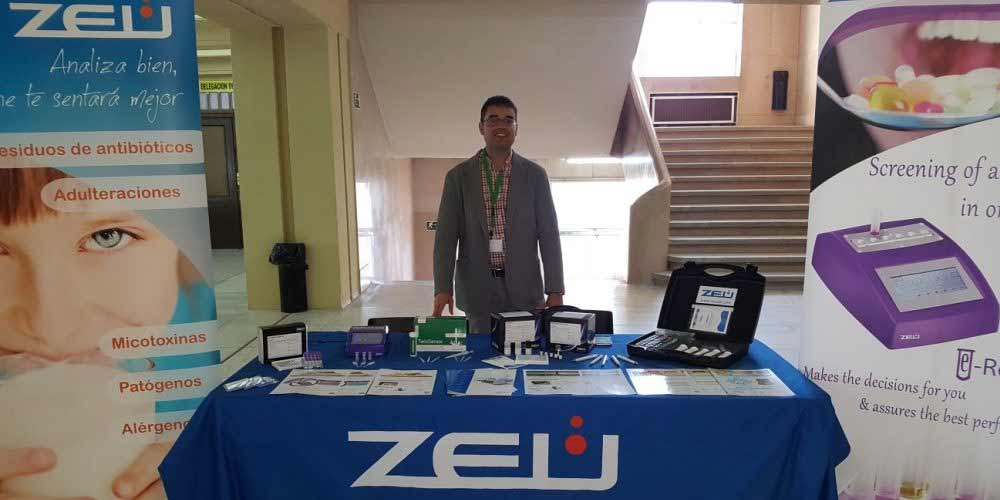
The overall level of the presentations and round tables, as well as the participation, was elevated, demonstrating the great interest aroused by the proposed subjects. The presence of representatives of the food industry, distribution, catering industry, research centers, public and private laboratories, as well as certification entities, consulting companies and consumer associations, shows once again that food safety is a very topical issue. The Congress opened on the 14th with an initial conference focused on trends and global challenges in food production. Topics related to animal welfare, quality, vegetable certificationand antibiotic resistance requirements generated a great interest throughout the morning of the 15th. Sessions related to new technologies applied to food hygiene, quality laboratories and certification were also developed during that morning. The afternoon session was focused on allergen management and generated an interesting and active subsequent discussion. In relation to this issue, our colleagues from the Zeulab technical department, Luis Mata and Patricia Galán, presented two poster about allergen detection on work surfaces and allergens incidence in kitchenware in school canteens. Day 16 began with three sessions related to food analytical control and certification to ensure the quality and R&D&I in food security. During the round table regarding food analytical control, José A. Valares, Key Account Manager of ZEULAB, presented the paper «control of antibiotics residues throughout the food chain». This paper approached the attendees to the known concept «from the farm to the table» which implies that all operators in the food chain, from primary producer to processing industry or distribution, are responsible for ensuring the food safety. It is therefore necessary to put analytical tools of self-control within the reach of all. In this context, ZEULAB has developed “e-Reader”, a simple method for antibiotics detection in food. Finally, the Congress was closed with a general round table involving all attendees focused on online trade food.

Interlaboratorios

Guía para la selección y utilización de kits de ensayo por los laboratorios acreditados

Los kits comerciales son herramientas cada vez más utilizadas por los laboratorios en su práctica habitual. Representan una herramienta de fácil uso y aplicación directa ya que contienen los componentes necesarios y los reactivos listos para usar, requiriendo de un menor tiempo para la obtención de los resultados. Además, son herramientas estandarizadas, robustas y fiables.

Patógenos

Infecciones alimentarias por Escherichia coli Shigatoxigénico

La relevancia sanitaria de Escherichia coli como microorganismo responsable de infecciones alimentarias es conocida desde hace décadas. No obstante, los recientes brotes en Europa y en los EEUU, como el ocurrido en 2011 en Alemania (conocido en España como la «crisis de los pepinos») que afectó a 3942 personas, de las cuales 53 murieron; o los más recientes en Julio y Septiembre de 2013 en los EEUU (en el restaurante mejicano «Federico’s» y por consumo de ensalada de pollo lista para el consumo) han puesto de manifiesto la relevancia de este patógeno alimentario y la ineficacia de los sistemas actuales de seguridad alimentaria para su vigilancia y control.

Allergens

Analytical methods of allergen detection

Food allergens are components of foodstuff and additives that when digested, in contact or inhale cause an immune reaction known as food allergy. Although some allergies occur more frequently than others, and there are about 160 foods that can cause allergic reactions, the most common ones are those to the cow milk, eggs, legumes (including soy), wheat/gluten, fish, shellfish, fruits, and nuts, such as peanuts and walnuts. The declaration of allergens is mandatory, even if the possibility of the allergen to be present is small. At present, European regulation No 1169/2011 expands the UE Regulation with specific requirements regarding the declaration of allergens in food. This regulation insists on most food allergy incidents can be traced back to non-prepacked food. The information on potential allergens is considered very important and affects both commercial and collective catering service, retailers selling unpackaged food, and official labeling. In order to ensure a high level of protection for consumers and to facilitate their choice, products put on the market must be safe and adequately labeled: any substance or ingredient causing intolerances or allergies used in the manufacture or preparation of a food and still present in the finished product, even if in an altered form, must be declared. There are several methods for assessing the presence of allergens in food matrices, surfaces and rinsing waters, which are grouped into two: – Direct methods detect allergenic proteins (gluten, soy, milk β-lactoglobulin, etc.) in a specific and sensitive way. Some of these methods are: Rapid immunochromatographic strips test (presence/absence of allergen). It is an immunochemical technique which uses specific antibodies. They are really easy-to-use test and can be easily run on-site as not qualified personnel, neither laboratory equipment is needed. ELISA kits (quantitative analysis of specific allergens). It is also an immunochemical technique. They require laboratory equipment and qualified personnel Mass spectrometry, which require highly qualified personnel and highly expensive laboratory equipment. –  Indirect methods do not detect allergenic proteins:   Genetic techniques. The genes of allergenic proteins, ie, their DNA thanks to PCR assays. They are        only useful when protein detection assays are not available. Total proteins detection (allergenic proteins plus those which are not). There are different        techniques, e.g. colorimetric techniques like Biuret, Bradford and BCA methods. Neither these        methods are specific.   Detection of ATP, a molecule used by all living organisms to provide energy in chemical reactions, is considered an indirect method. However, this technique is not allergen specific and it is only useful for indicating the cleanliness level, so that it should not be considered as such. Every method has advantages and disadvantages according to their rapidity, reliability, ease of use, etc. There is not a perfect method but some of them can suit better than others the users’ needs. Customers must be informed on specific allergens. On this basis, direct detection methods would be the appropriate techniques to correctly and specifically declare the allergens which may be present in a product or a meal. In addition, direct detection methods are more sensitive and avoid false positives, as they distinguish the specific presence of allergens. Food and Drink Europe launched in 2013 its Guidance on Food Allergen Management for Food Manufacturers. This guide recommends the use of on-site rapid strips LFIC for routine check-ups and ELISA kits for result confirmation on a regular basis. In case of ambiguous results, it is advisable to carry out confirmatory tests by PCR. However, because of the low sensitivity of the PCR technique for certain allergens, it should only be used when no other detection technology is available.

Allergens

Analysis of allergens on work surfaces: “cotton cheats”

Have you ever wondered if the cleaning that you do is really effective? The answer is especially important when we talk about cross-contamination through food allergens. People who are allergic to foods may suffer a reaction in the presence of very small amounts of the allergen (in the order of parts per million or ppm). This reaction can be mild like a hive or very serious as is the case of the dreaded anaphylactic shock. In recent years, due to the growing importance of this problem, the food industry is making an effort to improve the information on the content of food allergens in products offered to the consumer. However, there are still many products where the reference “may contain…” appears on the label, theoretically the result of the impossibility of controlling cross-contamination with ingredients of other products that are manufactured in the same facility. This labelling generates confusion and reduce the range of foods available for allergic consumers (DunnGalvin et al., 2015;) Marchisotto et al., 2016; Muraro et al., 2014). As well as the increase in the number of alert notifications RASFF shows them the threat posed to their health food allergens present in products that do not appear on the labelling. As we discussed in our blog, in order to reduces the use of the words «may contain» and reduce the presence of non- intentional allergens, it is important that all members of the food industry consider allergens as a danger and are integrated within a HACCP system. An effective tool to confirm that the practices of handling and cleaning are being done correctly is the control of allergens on work surfaces and analytical tools. But don’t forget that to make useful application of analytical techniques the user has to have information in order to understand what the applicability and scope of the test being performed is. For this reason ZEULAB in collaboration with the University of Zaragoza and Madrid’s Hortaleza District Health Department, has conducted a study to demonstrate the analytical conditions for the realization of this type of analysis. The work that has been published recently in the journal Food Control shows the development of a method that combines the recovery of material allergen of surfaces through the use of swabs and further analysis both qualitatively, with a rapid strip, and quantitatively through a test ELISA (Galan-Malo et al., 2017). The objective of this work has been to develop a method that is both as simple as possible without losing technical performance and has initially focused on the analysis of residues of milk and egg. Three important aspects of the method have been evaluated in the study: swab material, composition of the extraction solution, and temperature and time of removal before the trial. Swabs made of five different materials were analyzed and of these selected the higher yield was obtained. The results indicated that cotton was the material that worst captures the remains of milk and egg. So, that famous phrase saying «cotton does not deceive» does not apply in this context. Therefore, it is very important that the material supplied or recommended by the manufacturer is used for analysis of allergens on surfaces and that swabs from another source, are not used since they could compromise the results of the analysis. In this work, the analysis of allergens in two types of surfaces were evaluated namely melamine and stainless steel. These two types of surface are located in the facilities of the food industry or in the kitchens of canteens and of which there was not much information available about the effectiveness of the methods of analysis. The results showed that the ELISA test is able to detect levels as low as 0.04 µg of egg and 0.2 µg of milk. The rapid tests put their detection limit at 0.07 µg of egg and 0.6 µg of milk depending on the analyzed surface. From a practical point of view, the rapid tests are very useful and have proven their validity for the routine check after cleaning of equipment and facilities. In a few minutes they let you verify if the cleaning procedure has been correctly carried out and whether the measures of containment against cross-contamination are adequate and effective. On the other hand, the ELISA tests due to its greater sensitivity and especially to provide quantitative results, are a very useful tool for the validation of cleaning procedures. This type of testing should be conducted periodically or after the introduction of relevant changes in the cleaning procedure. A proper use of these tools will improve allergy risk management plans and reduce the indiscriminate use of preventive labeling.

Residuos Antibióticos Lácteo

Novedades legislativas del BOE en el sector lácteo

  Con fecha 3 de marzo de 2017 se ha publicado en el BOE el Real Decreto 198/2017, por el que se modifican el Real Decreto 1728/2007 y el Real Decreto 752/2011 que establecen la normativa básica de control que deben cumplir los operadores del sector lácteo. Estas modificaciones afectan a todos los operadores del sector lácteo y hacen referencia a la normativa básica de control de sus productos y a los análisis que la presente legislación les obliga a llevar a cabo.

Scroll al inicio