
Nombre del autor:Patricia Galán

PhD in Science. Researcher at Zeulab.

Allergens

The most critical points when handling raw materials

Every company department plays an essential role in good allergen risk management. The arrival of allergenic raw materials at our plant is our first contact with them and so “Reception and storage” are the foundations for the entire process to flow without basic errors. Reception: We review the main points to help us prevent cross-contamination with incoming allergenic raw materials: Bulk materials are unloaded in specially enabled areas. Allergenic raw materials and semi-finished products are identified at reception, their labelling is checked and they are kept apart from other products. If samples are required for analysis, different utensils are used for sampling to avoid cross contamination. Disposable or specific utensils can be used, with colour codes for sampling equipment. We should have a special protocol for “allergenic material spills”. [button size='medium' style='' text='Find out how we can help you in allergen management' icon='' icon_color='' link='https://www.zeulab.iatic.es/en/alergenos/' target='_self' color='' hover_color='' border_color='' hover_border_color='' background_color='' hover_background_color='' font_style='' font_weight='' text_align='' margin=''] Storage: During storage and handling of allergenic raw materials and semi-finished intermediate products, special attention must be paid to their identification and separation from others, to prevent cross-contamination or the use of an allergenic ingredient by mistake in a recipe. The most important storage matters are reviewed below: We should have a warehouse area specifically to stored allergenic raw materials. If it is not possible to have this due to lack of space, allergenic material should always be stored on the lowest shelves. More care is required when working with powder ingredients, as they produce aerosols that remain suspended in air. This post may help you. Once the original container is opened, allergenic raw materials and semi-finished products must be stored in closed containers with clearly visible labels. These containers can be reused only for the same raw material or semi-finished product. To re-use them for other products, they must be cleaned appropriately and this cleaning must be validated; thus guaranteeing the effectiveness of the cleaning system to eliminate allergenic proteins. More information is provided in this article about school kitchens. All updated information about our raw materials is accessible at any time. In addition, we recommend you periodically verify the effectiveness of measures to protect against cross-contamination. This will help you in decision making and taking corrective measures at the plant. [button size='medium' style='' text='Contact our expert, Beatriz Santos.' icon='' icon_color='' link='mailto:bsantos@zeulab.iatic.es' target='_self' color='' hover_color='' border_color='' hover_border_color='' background_color='' hover_background_color='' font_style='' font_weight='' text_align='' margin='']   ZEULAB Proteon Express tests can be adapted to the allergen analysis at the time and in the place needed. A quick analysis during reception of raw materials can be conducted without the need for a laboratory. The kit has material to perform the tests very easily and results are obtained in 10 minutes.
Alérgenos

Los puntos más críticos en la manipulación de materias primas

Cada departamento de la empresa es esencial para realizar una buena gestión de riesgos de alérgenos. La llegada de materias primas alergénicas a nuestras instalaciones, es el primer contacto con las mismas y por tanto “La recepción y almacenamiento” son los cimientos para que todo el proceso fluya sin errores de base. Recepción: Repasamos los principales puntos que nos van a ayudar a prevenir posibles contaminaciones cruzadas con las materias primas alergénicas entrantes: Si son a granel, realizaremos su descarga en zonas especialmente habilitadas. Identificaremos las materias primas alergénicas y productos semielaborados en la recepción, comprobaremos su etiquetado y las separaremos del resto de productos. Si recogemos muestras para el análisis de las materias recibidas, evitaremos usar los mismos utensilios para no contaminar unas muestras con otras. Podemos usar utensilios específicos, usando códigos de color para estos equipos de muestreo, o bien desechables. Contaremos con un protocolo especial para casos de “derrame de alérgenos”.   [button size='medium' style='' text='Descubre cómo podemos ayudarte en la gestión de alérgenos' icon='' icon_color='' link='#' target='_self' color='' hover_color='' border_color='' hover_border_color='' background_color='' hover_background_color='' font_style='' font_weight='' text_align='' margin='']   Almacenamiento: Durante el almacenaje y manipulación de materias primas alergénicas y productos intermedios semielaborados deberemos prestar especial atención en la separación e identificación de estos productos de los demás, para evitar contaminaciones cruzadas y posibles confusiones en las recetas, usando un ingrediente alergénico por error. Revisamos las cuestiones más importantes en el almacenaje: Dispondremos de una zona de almacén habilitada específicamente para materias primas alergénicas, en caso de que esto no sea posible por falta de espacio, las colocaremos siempre en las estanterías más bajas. Si trabajamos con ingredientes en polvo, todavía deberemos de estar más atentos, ya que generan aerosoles que quedan en suspensión. Este post te puede ayudar. Una vez abierto el contenedor original hemos de guardar las materias primas y productos semielaborados alergénicos en envases cerrados y con etiquetas identificativas bien visibles. Estos envases solo podrán reutilizarse para la misma materia prima o producto semielaborado. Si deseamos reutilizarlos para otros productos, podremos hacerlo tras realizar una limpieza que haya sido validada, garantizando así la eficacia de que nuestro sistema de limpieza elimina las proteínas alergénicas. Si deseas ampliar información aquí tienes este artículo de cocinas en colegios. Tendremos accesible en cualquier momento toda la información actualizada sobre nuestras materias primas. Además, te recomendamos la verificación periódica de la eficacia de las medidas de protección contra contaminaciones cruzadas. Te ayudará a anticipar la toma de decisiones y medidas correctoras en la planta. [button size='medium' style='' text='Contacta con nuestra experta Beatriz Santos' icon='' icon_color='' link='mailto:bsantos@zeulab.iatic.es' target='_self' color='' hover_color='' border_color='' hover_border_color='' background_color='' hover_background_color='' font_style='' font_weight='' text_align='' margin='']   Los test Proteon Express de ZEULAB, permiten adaptar el análisis de alérgenos al momento y lugar que necesites, pudiendo realizar un análisis rápido en la recepción de las materias primas sin necesidad de laboratorio. Con el material proporcionado en el kit podemos realizar los tests de forma muy sencilla y obtener los resultados en 10 minutos.
Alérgenos

El valor del análisis de superficies en el control de alérgenos

El compromiso de los operadores alimentarios para garantizar un etiquetado que proteja al consumidor representa un esfuerzo en diversos ámbitos de la actividad de la compañía. Un buen plan de gestión implica un conocimiento exhaustivo de los ingredientes, una cooperación estrecha con los proveedores y unas buenas prácticas de todo el personal.   La elaboración de alimentos en instalaciones compartidas añade un factor extra de riesgo porque en muchas ocasiones no es fácil controlar las contaminaciones cruzadas indeseadas con ingredientes destinados al resto de alimentos. Estas contaminaciones pueden ser originadas principalmente por 2 vías: La limpieza insuficiente de nuestras instalaciones, especialmente de las superficies que entran en contacto con los alimentos. Una contaminación post limpieza de dichas superficies principalmente originada por partículas o aerosoles que permanecen un tiempo en suspensión antes de depositarse en las superficies de trabajo. El control de estas contaminaciones cruzadas se puede abordar mediante dos enfoques con consecuencias diferentes: La realización de un análisis del producto nos permitirá confirmar al final del proceso productivo si el alimento está libre del alérgeno. En caso contrario, deberíamos aplicar el etiquetado preventivo, algo difícil de llevar a la práctica sin poner en riesgo la trazabilidad del producto. Si nos adelantamos realizando un control de superficies de las áreas de producción podremos evitar este problema antes de tener un producto fabricado contaminado. Recomendaciones en el análisis de superficies: Cuando abordamos el análisis de superficies es importante tener en cuenta algunos puntos clave para conseguir los resultados esperados: Es esencial asegurarse que el test que vayamos a emplear está optimizado para el análisis de superficies. El procedimiento no es igual al utilizado para el análisis de alimentos. Debemos comenzar por validar la eficacia del protocolo de limpieza de superficies de acuerdo a las recomendaciones de guías específicas como la de la FIAB. Pero además no debemos olvidarnos de verificar en rutina que las condiciones establecidas inicialmente se mantienen en el tiempo. La forma más adecuada para realizar una buena toma de muestra de superficie es mediante la ayuda de un hisopo o torunda y el buffer de extracción incluido en el kit. Es muy importante emplear el hisopo proporcionado por el fabricante. No todos los hisopos son aptos. El proporcionado por el fabricante debe garantizar la máxima recuperación del alérgeno. Alternativamente, en caso de realizar limpiezas húmedas, se pueden analizar las aguas de aclarado. En una primera fase, se puede hacer un mapeo amplio para localizar aquellos “puntos calientes” donde son más difíciles de eliminar los residuos o encontrar algún foco de contaminación imprevisto que suele ser común cuando se trata de ingredientes que pueden dispersarse como aerosoles en forma de polvo o de vapor. Los test ELISA por sus características técnicas suelen presentar un límite de detección más bajo que las tiras rápidas y permiten analizar muchas muestras en un solo ensayo. En consecuencia, son muy útiles cuando se comienzan a implantar medidas de prevención en instalaciones con líneas compartidas. Una vez que se localizan y se controlan dichos focos, en rutina es muy interesante utilizar tiras rápidas justo antes de iniciar cada producción o tras la limpieza. Estos análisis pueden realizarse en tan solo 10-15 minutos permitiendo una toma de medidas preventivas muy rápidas. Cómo interpretar los resultados para determinar el nivel de riesgo en el alimento: Una duda muy frecuente en la interpretación de un resultado positivo o negativo en superficies es la traducción de este resultado en términos de riesgo de la presencia del alérgeno en el producto final tras la producción. Aunque para responder a esta cuestión de forma completa, es necesario conocer las particularidades de cada industria, el caso que se describe a continuación puede ayudar a un operador a determinar su nivel de riesgo de forma similar. El caso elegido es la determinación de la presencia de proteínas de leche en una línea con una superficie de contacto con alimentos de 10 m2 y una producción de 500 kg de producto mediante el test Proteon Duo Milk Express. Analizaremos una parte de esta superficie, por ejemplo 100 cm2, siguiendo el protocolo del kit. Como el límite de detección del test es de 0.7 µg/100 cm2 (*), mediante una sencilla regla de tres, sabremos que si obtenemos: Un resultado positivo, tendremos una contaminación superior a 700 µg (0,7 mg) de proteína de leche en la superficie total de 10 m2. Un resultado negativo indicaría ausencia del alérgeno o trazas entre 0 y 700 µg, o sea menos de 0.7 mg en la superficie total de 10 m2. El resultado positivo nos obliga siempre a tomar medidas correctoras. Ante un resultado negativo, nos podemos preguntar cuál es el nivel de confianza o seguridad que nos aporta dicho resultado en el producto final. Para determinarlo comenzamos con una sencilla operación, dividimos 0.7 mg entre 500 kg de producto para conocer la cantidad máxima teórica de posibles trazas en el producto. En el supuesto más extremo de que el 100% del alérgeno presente en la superficie terminase contaminando el producto de forma homogénea, esta cantidad siempre sería inferior a 0.0014 mg/kg (ppm). El segundo paso es comparar este dato de 0.0014 ppm con un valor de referencia reconocido. Aunque la legislación vigente no incluye dosis máximas de alérgenos, y por tanto no hay recomendaciones específicas, sí que comienza a haber datos basados en evidencias científicas que pueden ayudarnos. Un modelo ampliamente aceptado son los niveles establecidos en la iniciativa VITAL 3.0 (columna 3 de la tabla). De acuerdo a VITAL y para este caso concreto de leche, el nivel mínimo de ingesta que puede provocar una reacción alérgica es de 0.2 mg de proteínas de leche. Esto representaría que una ración media de 100 g de alimento tendría que estar contaminada con al menos 2 ppm (0.2 mg/100 g) de concentración para provocar una reacción adversa. Por tanto, si comparamos el valor de referencia de riesgo de VITAL 3.0 de 2 ppm con la cantidad máxima posible de trazas del alérgeno en el alimento, 0.0014 ppm, comprobamos
Allergens

The value of surface analysis in the control of allergens

The commitment of food operators to guarantee consumer-friendly labelling is a task for various areas in the company's business. A good management plan implies thorough knowledge of the ingredients, close cooperation with suppliers and good practices for all staff. Food preparation in shared facilities adds an extra risk factor because it is often not easy to control unwanted cross-contamination with ingredients intended for other foods. This contamination is mainly caused by 2 routes: Inadequate cleaning of facilities, especially surfaces that come into contact with food. Contamination after cleaning of these surfaces; mainly due to suspended particles or aerosols that remain in the air for some time before being deposited on work surfaces. This cross-contamination can be controlled via two approaches with different consequences: Product analysis to confirm if food is free of the allergen at the end of the production process. Otherwise, preventive labelling should be implemented, although it could difficult without putting the product's traceability at risk. Performing surface testing in production areas, to prevent such a problem contaminating the manufactured product.   Surface analysis recommendations: The following key points should be taken into account for surface analysis to achieve the desired results: The test should be optimised for surface analysis; the procedure is not the same as that used for food analysis. The effectiveness of the surface cleaning protocol should be validated according to specific guideline recommendations, such as those of the Food and Drink Industry Federation, FIAB. It should also be routinely verified that these initial conditions are maintained over time. The best way to sample a surface is using a swab and the extraction buffer included in the kit. It is very important to use the swab provided by the manufacturer, as not all swabs are suitable. The one provided by the manufacturer must guarantee the maximum recovery of the allergen. Alternatively, if wet cleaning is performed, the rinse water can be analysed. Initially, a broad mapping can be done to locate “hot spots” where it is more difficult to remove residues, or unexpected sources of contamination which are common for ingredients that can be dispersed in aerosols, dust or steam. ELISA tests usually have lower detection limit than rapid strips and many samples can be analysed in a single assay. Consequently, they are very useful when initial prevention measures are putting in place in facilities where production lines are shared. Once these spots are located and tested, rapid strips can be used routinely before starting a production run or after cleaning. These analyses can be performed in as little as 10-15 minutes, allowing very quick preventive measures to be taken.   How to interpret the results to determine the level of risk in the food: A very frequent question when interpreting a positive or negative result on a surface is to express this result in terms of the risk resulting from the presence of the allergen in the final product after production. To answer this question fully, the particularities of an industry need to be known. The procedure described below can help an operator in determining the level of risk in a particular case. The example chosen is the determination of the presence of milk proteins on a line with a food contact surface area of 10 m2 and product production of 500 kg using the Proteon Duo Milk Express test. A section of this surface is analysed, for example 100 cm2, following the kit protocol. The test detection limit is 0.7 µg/100 cm2*, so if the result is: Positive: the contamination is greater than 700 µg (0.7 mg) of milk protein in the total surface area of 10 m2. Negative: the allergen is present at less than 700 µg (between 0 and 0.7 mg) of milk protein in the total surface area of 10 m2. A positive result always leads to corrective measures being taken. However, if the result is negative, the level of confidence or safety that this result gives for the final product needs to be established. Thus, dividing 0.7 mg (of allergen) by 500 kg (of product) provides the theoretical maximum amount of traces in the product. In this case, the maximum allergen present on the surface is 0.0014 mg/kg (ppm); under the most extreme assumption that 100% of the allergen ends up contaminating the product homogeneously. This value of 0.0014 ppm is then compared with a recognized reference value. Although current legislation does not specify a maximum dose for allergens, and therefore there are no specific recommendations, data based on scientific evidence that helps is beginning to be compiled: A widely accepted model is that established by the levels in the VITAL 3.0 initiative (column 3 in the table). According to VITAL, for this specific case of milk, the minimum level of intake that can cause an allergic reaction is 0.2 mg of milk protein. If this is contained in an average 100 g portion of food, this is equivalent to a concentration of allergen in the food of 2 ppm (0.2 mg/100 g) for the contaminant to cause an adverse reaction. Thus, comparing the VITAL 3.0 risk reference value of 2 ppm with the maximum possible amount of traces of the allergen in the food, 0.0014 ppm, it can be verified there is an assured safety level of more than 1400 times for a negative test result. Consequently, the operator can be confident of working with a very high level of safety. Table. Food safety level for a negative surface result. Estimate for a surface area of 10 m2 and 500 kg of product:  Test detection limit (calculated for a surface area of 100 cm2); VITAL 3.0 limit (minimum level of intake for an allergic reaction); Maximum amount in food (Maximum theoretical concentration of the allergen in the food for a negative surface analysis result); Safety factor (quotient of the VITAL 3.0 limit and maximum amount expressed as a safety level multiple). Thus, the safety level for an allergen in a production run can always be calculated by
Allergens

Allergens management in the food industry II: Staff

Good allergens management is not possible without bearing in mind the staff, from the top official, the staff which produce the alimentary products, cleaners to the visitors. We must mainly take care of two aspects: an adequate training in allergens and a good hygiene. Staff training must consider the following points: To have general information about allergens and about the consequences of their undeclared presence in the products. To know the allergens presence in raw material and ingredients. To be aware about the damages and risks in all the manufacturing stages. To be fully abreast of all the measures taken on the design of equipment and installations to reduce the risks in relation to allergens. To know the procedures of storage, cleaning, packaging, reprocessing, control of residues and labelling. To take into account the Good Manufacturing Practice to reduce cross-contamination. To be aware about the procedures of the personal flow in the installations (for example: people who change production lines, movement to the canteen, etc.) To know the information of the supplier: specifications, reports.

Allergens

New Proteon Duo Milk Express

ZEULAB launchs PROTEON DUO MILK EXPRESS, an easy, rapid, and reliable test for dual detection of β-lactoglobulin and casein in foodstuff, rinse water and surfaces. Specially designed for the food industry and related businesses. Main characteristics of the test: Double rapid test: milk and its by-products detection in 10 min. Versatile: valid for highly processed food. Simple:no previous training or additional equipment are required Economic: 2 detections with only one rapid dip-stick test. Food allergies represent a major health problem in developed countries. Undeclared allergens as contaminants in foodstuffs suppose a high risk for allergic people. According to different studies, the incidence of cow’s milk protein allergy is 0.3-7%. Milk is the first food introduced into children’s diet after breastfeeding. Therefore, cow’s milk protein is the first allergen which develops an allergic reaction1. Milk allergy, together with egg and fish, is the main cause of allergy in infants and children younger than 3 years-old. Although 85% of patients become milk tolerant in adulthood, 40% of children allergic to milk also develop allergies to other food and 28% to environmental agents. The only way to avoid an allergic reaction is to stop ingesting the allergen. Therefore, providing a correct ingredient list to the consumer is of a paramount importance. According to the European Union (Annex II, Regulation (EU) 1169/2011 2,3) and other countries regulation, such as USA4 and Japan5, milk or any milk by-products must be listed in the label. Many non-dairy products can contain milk or its by-products as ingredients, as well as being present as hidden allergens in a lot of products. Therefore, they must be monitored to ensure a correct labelling. Caseinates, for example, are used to stabilize emulsions, as well as to increase shelf life, improve nutritional content, and enhance flavors and aromas in products such as baked goods, meat products, cream soups or coffee creamers6. Regarding whey proteins, their functional properties include gelation, emulsification, foaming, flavour or aroma in products such varied as meats, beverages, breads, cakes, or soups7. PROTEON DUO MILK EXPRESS is a double test for detection of milk by combining the presence of β-lactoglobulin (β-LG), as indicator of whey proteins, and casein showing presence of caseinates. It is an immunochromatographic test in strip format, based on specific antibodies obtained against β-LG and casein which are bound to red particles, will react with these proteins when they are present in the sample, producing one or two red test lines. In addition, a blue line (control line) indicates that the test has worked properly. Food or working surfaces containing milk residues above the limit of detection will show, two red lines. In case of samples containing either of whey or caseinates, a control blue line and a β-LG or casein red line will appear, respectively. PROTEON DUO MILK EXPRESS detects the main milk allergen indicators. Therefore, it is especially useful when the source of milk in unknown, such as control of suppliers or in industries where different production processes using whole milk, whey or caseinates are carried out. Single tests targeting only one of these groups of proteins are suitable for detection of milk, but they can miss out the presence of some by-products. High temperatures or high pressures as well as cleaning procedures with alkaline detergent can alter the protein structure. Therefore, the double detection of β-LG and casein is also recommended in those circumstances as the probability of detecting milk increases. PROTEON DUO MILK EXPRESS has been validated, according to the guideline AOAC 2016 8,9, 10 with a wide range of matrices, including pastries, cold meat, pâté, ice-cream, infant formulas, beverages or alcoholic drinks. 1Bobe et al. (2007) Composition of Milk Protein and Milk Fatty Acids Is Stable for Cows Differing in Genetic Merit for Milk Production. J Dairy Sci. 90: 3955-3960. 2Regulation (EU) No 1169/2011 of the European Parliament and of the Council of 25 October 2011 on the provision of food information to consumers (http://eur-lex.europa.eu/legal-content/EN/TXT/PDF/?uri=CELEX:32011R1169&from=ES) 3Guidance on food allergen management for food manufactures (2013), Food and Drink Europe, Brussels, Belgium (http://www.fooddrinkeurope.eu/uploads/press-releases_documents/temp_file_FINAL_Allergen_A4_web1.pdf) 4Department of health and human services, Food and Drug Administration (https://www.gpo.gov/fdsys/pkg/FR-2016-05-27/pdf/2016-11865.pdf) 5Consumer Affairs Agency, Government of Japan (http://www.caa.go.jp/en/) 6https://www.ulprospector.com/en/eu/Food/Detail/16980/419669/Calcium-Caseinate 7http://www.milkingredients.ca/index-eng.php?id=195 8Appendix M: Validation Procedures for Quantitative. Food Allergen ELISA Methods: Community Guidance and Best Practices. AOAC 2012 (http://www.eoma.aoac.org/app_m.pdf) 9Appendix F: Guidelines for Standard Method Performance Requirements. Official Methods of Analysis (2016), AOAC INTERNATIONAL, Rockville, MD, USA (http://www.eoma.aoac.org/app_f.pdf) 10Standard Method Performance Requirements (SMPRs®) for Detection and Quantitation of Selected Food Allergens. AOAC SMPR 2016.002. AOAC INTERNATIONAL, Rockville, MD, USA (https://www.aoac.org/aoac_prod_imis/AOAC_Docs/SMPRs/SMPR%202016_002.pdf).
Alérgenos

Gestión de alérgenos en la industria alimentaria

Las alergias alimentarias son la respuesta exagerada de nuestro sistema inmunitario ante el consumo, contacto o inhalación de un alimento, de sus derivados o de un aditivo contenido en el mismo. Son un problema cada vez más importante de salud pública ya que su prevalencia va en aumento.

Alérgenos

Métodos analíticos de detección de alérgenos

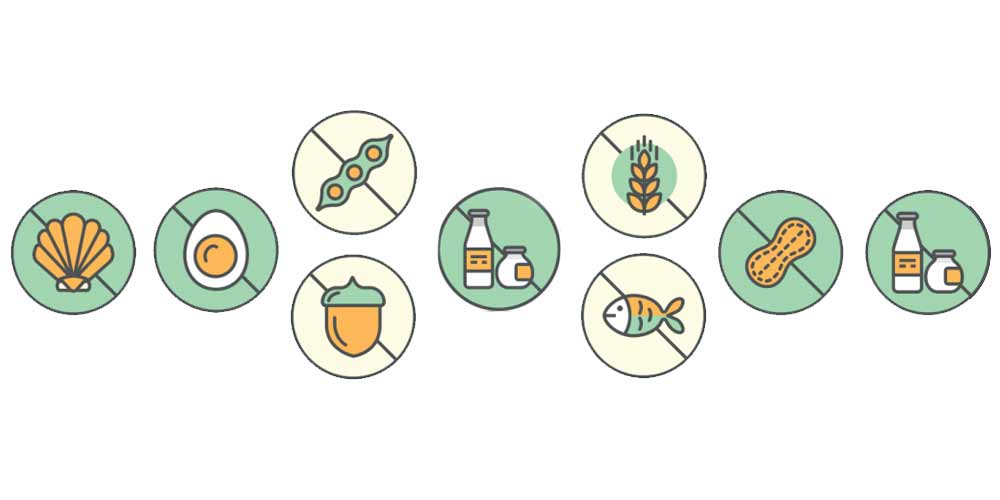
Los alérgenos alimentarios son componentes de los alimentos y aditivos cuya ingesta, contacto o inhalación provocan una reacción inmunológica que se conoce como alergia alimentaria. Algunas alergias se dan con mayor frecuencia que otras, y pese a que son alrededor de 160 los alimentos que pueden provocar reacciones alérgicas, los más comunes son la leche de vaca, los huevos, las legumbres (incluida la soja), el trigo/gluten, el pescado, el marisco, las frutas, y los frutos secos, como los cacahuetes y las nueces.

Alérgenos

Análisis de alérgenos en superficies de trabajo: El algodón sí engaña

  ¿Alguna vez te has preguntado si realmente la limpieza que efectúas es eficaz? La respuesta es especialmente importante si hablamos de contaminación cruzada por alérgenos alimentarios. Las personas que son alérgicas a los alimentos pueden sufrir una reacción en presencia de cantidades muy pequeñas del alérgeno (del orden de ppm o partes por millón). Esta reacción puede ser leve como una urticaria o muy grave como es el caso del temido shock anafiláctico.

Scroll al inicio